Product1 publisher2 min readPublished
Florida revokes plate-reader permits it already issued for state highways
Two Republican states moved against automated license plate readers inside three weeks, one revoking permits it had already granted and one cutting off state money, while Flock Safety's cancellation count keeps climbing.
The Product Desk · Product desk
What happened
- Data collected by Secure Justice shows more than 214 cities and counties have dropped Flock Safety since 2021, with more than 90 of those cancellations coming in the last month alone.
- Florida banned local police from placing license plate reading cameras on state highways, citing growing divisions over law enforcement's use of vehicle tracking technology from Flock and others.
- Flock said in the past month that it will limit retention periods and install mandatory reporting features, after years of criticism over how officers use its search tools.
Compiled by The Product DeskSomething wrong?How this is made
Why it matters
- constraint Neither state action reaches a camera that is already installed, so a chief or a county manager who wants out of an existing Flock deployment gets no cover from Tallahassee or Austin and has to make that argument locally.
- exposure The Texas freeze worked through the money, so any vendor selling through an earmarked state fund now inherits the political risk of the officials who appointed the board doing the spending.
- decision A council voting on renewal has to defend a public safety benefit that Flock asserts and that Techdirt says no data supports. The burden sits with the buyer to produce case outcomes of its own.
- contradiction Techdirt reports competitors are absorbing the same tax dollars, so the state actions and the cancellations tell you about one vendor's standing, not about demand for plate readers.
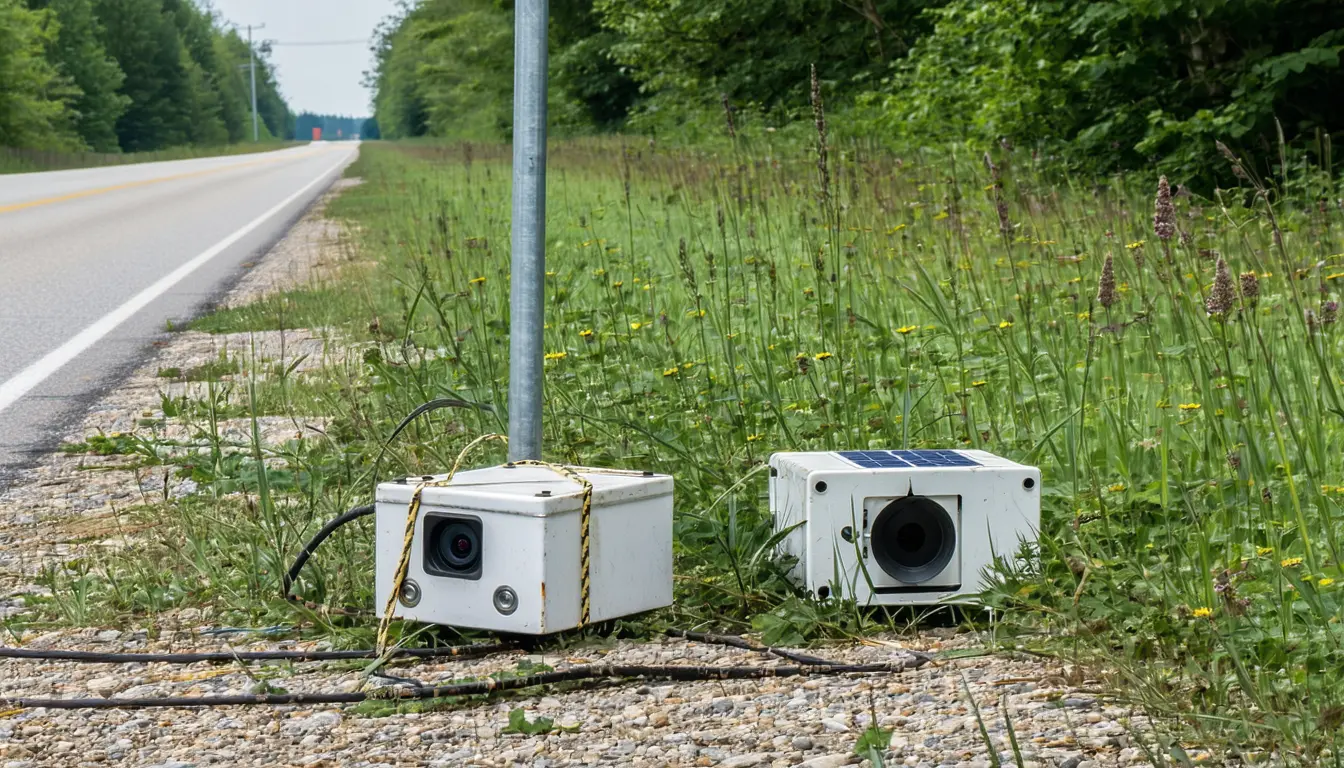
Florida's Department of Transportation went further than turning down new applications. It said it would revoke permits it had previously issued for the cameras and would no longer issue new ones inside its jurisdiction [4]. Hardware already bolted to state highway poles comes off them. Governor Ron DeSantis said last week that the use of automated license plate readers has "gotten out of control" [5]. The ban stops at the state right of way, and a town that keeps its cameras on local streets is untouched [6].
Texas got there through the accounting. Abbott's order blocking state agencies from spending money on Flock cameras came while the Texas Tribune was asking why a small state agency had tapped at least $30 million from a fund dedicated to catalytic converter theft to help pay for at least 3,200 cameras for law enforcement agencies across the state [7][8]. Those two figures work out to roughly $9,400 per camera [18]. Six of the seven board members of the Motor Vehicle Crime Prevention Authority are appointed by Abbott [9].
The order is not retroactive, and cameras bought with the money will apparently still be allowed to operate [10]. Asked whether the directive affected the state police force's camera network, a DPS spokesperson said the agency will pause installing additional cameras but will continue using existing ones for a variety of "legitimate public safety efforts" [11].
Ninety cancellations inside a month is about 42 percent of everything Flock has lost since 2021 [17]. Techdirt does not report Flock's total number of contracts, so no one outside the company can state a churn rate from it [19]. A council member facing a renewal vote gets ninety precedents from the past four weeks.
Flock's network ingests 20 billion plate reads a month, searchable by officers nationwide with very little in the way of restrictions [13]. Flock says the cameras increase public safety, and according to Techdirt no data supports the claim [15]. The new retention limits and mandatory reporting features landed in the same month as the cancellations, and Techdirt wrote that most of them are being put in place to prevent cops from committing crimes [14].
Can the agency name cases it closed that turned on a plate read, and can it pull, without asking the vendor, the log of every outside agency that searched its jurisdiction's data last quarter. More than 206 Texas law enforcement agencies can already reach the DPS camera network [12]. If producing that log takes an email to Flock, the reporting feature belongs to Flock.
What to watch
- Whether Florida counties and towns keep their own plate-reader contracts once FDOT permits lapse on state roads.
- Whether Flock publishes the actual retention periods and says who can read the mandatory reporting logs.
- Whether the Motor Vehicle Crime Prevention Authority has to return or reallocate the catalytic converter theft money.