Build1 distinct publisher2 min readPublished
Each team turned its own switch on a cue from the keynote stage. The constraint that governed every market afterwards was whether payments there could answer in real time, the way US credit cards did.
The Engineer · Build desk

Compiled by The EngineerSomething wrong?How this is made
The toggle list is a dependency graph. Signups enabled, streaming open, payment routing enabled: that is the order Kasia Trapszo, a principal engineer on the Netflix commerce platform, gave in her InfoQ talk [5][8]. No transaction wraps those three. Signups ahead of payment routing means accounts you reconcile afterwards. Payment routing ahead of signups means a live route carrying nothing, which costs nothing. "Roughly at the same time" [4] is the honest name for a commit protocol whose coordinator was a man on a stage saying a line [3].
The pattern transfers under conditions. Every toggle has to be safe in either position for the length of the skew, and the skew here is however long it takes a person to hear a cue and click. Verification has to resolve in seconds and per country: the teams watched dashboards, and what confirmed the launch was signups arriving from markets Netflix had never supported [5][6]. The owners also have to fit in one building. When Trapszo joined the payments team, Netflix had fewer than 2000 employees globally and less than half of those were in engineering [14], so under a thousand engineers [15], about a year before the launch [17]. That room does not exist at ten times the headcount.
Underneath the toggles sits the assumption that actually bounded expansion. The pre-expansion model was US credit cards, which are easy to use online and make recurring billing straightforward [11]. PayPal followed, putting a set of payment methods behind one real-time facade [12]. Both authorize synchronously and return an immediate verdict, so Netflix could confirm the customer immediately [13]. Design on top of that and entitlement becomes a function of the authorization response: the signup path can grant access because the money question already has an answer. A market where the answer arrives hours later leaves that function without an input, and the repair is in billing, not in the payment adapter.
That is where my source stops. The published transcript breaks off mid-sentence at "Architecturally, the comm" [18], so I cannot tell you what Netflix built instead. What generalises is Trapszo's constraint on the work itself: nobody gets to shut subscriptions down for a couple of weeks, so a stack that carries billing, entitlement and payment processing has to be evolved while it is running [9][10].
Ranked by verification strength, evidence, and original report placement.
Netflix's commerce platform comprises the billing system, entitlement and payment processing.
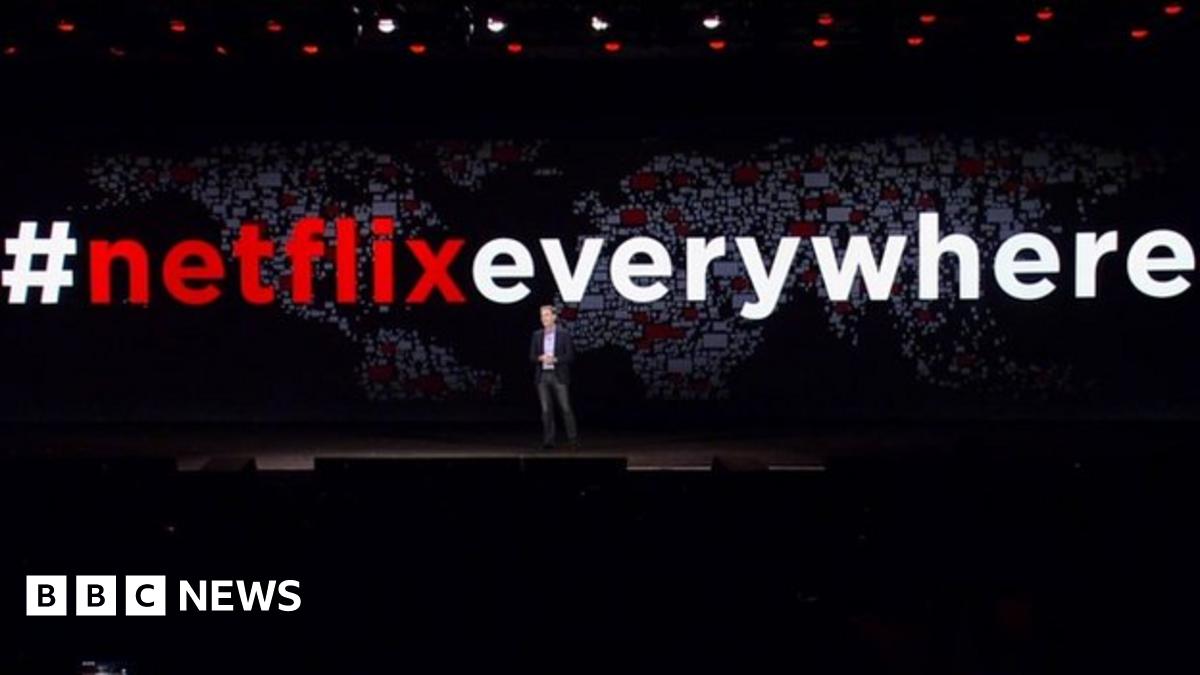
In 2016, Reed Hastings, then CEO of Netflix, gave the keynote speech at the Consumer Electronics Show (CES).
The point of the keynote was to announce that Netflix would become available globally, launching in 130 additional countries all at the same time.
The announcement was the launch: Netflix engineers sat in a cafeteria in Building B in Los Gatos waiting for their cue in Hastings' speech to turn their individual feature toggles.
Launching Netflix globally was not one big red button but a set of feature toggles owned by different engineering teams, all of which needed to be pressed roughly at the same time for the launch to be feasible.
When Hastings said the line, signups were enabled, streaming opened and payment routing was enabled, and the engineers then watched the dashboards.
Distinct publishers with included, body-backed reporting in this cluster.
1 article · August 28, 2026
Follow any of these and your For You feed starts watching them — no settings page required.
product
PayPal stopped saying no. Payments teams should now plan for a Stripe-owned checkout rail3 distinct publishers
leadership
AI's answer keys are being written for $85 an hour by people who cannot get other work1 distinct publisher
build
A bank API team deploying several times an hour says Claude Code is for analysis, not code1 distinct publisher
product
Iowa's attorney general defends the Paramount merger by pricing its delay1 distinct publisher
Evidence-backed comparisons of source perspectives and observed adoption signals. Read the methodology
Which Builder, Operator, and Investor concerns the observed source mix emphasized—not a truth score.
Evidence, demonstrated adoption, hype gap, incentives, and confidence are assessed independently, each on its own current evidence. How these are measured.
One insider, no second look
Every fact here comes from a single Netflix engineer narrating Netflix's platform to a conference room. The detail is the sort only someone in that cafeteria has — Building B, the cue in Hastings' line, the return-code classification behind the retry logic — and precisely the sort no outsider can check. Our own bookkeeping wobbled once too: the spot where we noted the transcript ending is not where it ends; the text runs on through the four-component description and then breaks off mid-word.
Real, at one company, told from inside
The launch is not hypothetical: 130 markets went live together and, on this account, took signups and payments the same evening. But the visible surface stops there — no volumes, no market count today, no sense of how many payment methods followed PayPal or how the retry model fared once instruments stopped answering instantly. This is one organisation running one platform, described by the platform's own custodian.
The speaker undersells; our framing oversells
Trapszo goes out of her way to deflate: this is not a story about a perfect architecture, she says, it is messy tradeoffs. The stretch belongs to us. Our line about real-time answerability governing every market afterwards reaches past what this excerpt earns, because the text is still describing the tidy US card-and-PayPal world when it cuts out, and never gets to the markets that broke it.
Employer's launch, retold by the survivors
A principal engineer on a conference stage recounting her company's biggest cutover is doing hiring-brand work alongside teaching, and the retrospectives that get scheduled are the ones about nights that went well. InfoQ's interest runs parallel: presentation transcripts pull exactly this audience. None of that makes the account untrue — it does mean the messy tradeoffs are narrated by the side that came through them.
Credible voice, thin record
The internal arithmetic holds up — eleven years at Netflix against a keynote ten years back puts her on the payments team about a year before the toggles flipped — and a named principal engineer is about as authoritative as first-party engineering history gets. What keeps this in the middle is structural: one source, nothing corroborating, and a transcript that stops mid-thought before the architecture story it promised arrives.