Build1 publisher3 min readPublished
Taiwan's pre-listing market prices PieceMakers at NT$55bn ahead of its first volume program
A Nanya-backed designer says DRAM hybrid-bonded to the processor belongs between on-die SRAM and HBM for inference. Design fees are almost 40 percent of its first-half revenue, and the first volume program is not booked before 2027.
The Engineer · Build desk
What happened
- PieceMakers, a DRAM designer backed by Nanya Technology, began trading on Taiwan's Emerging Stock Board on September 16 at a NT$740 reference price, according to Cnyes ahead of the debut.
- The stock opened at NT$1,035, traded as high as NT$1,205, and closed its first session at NT$915, which is 23.6 percent above the reference price.
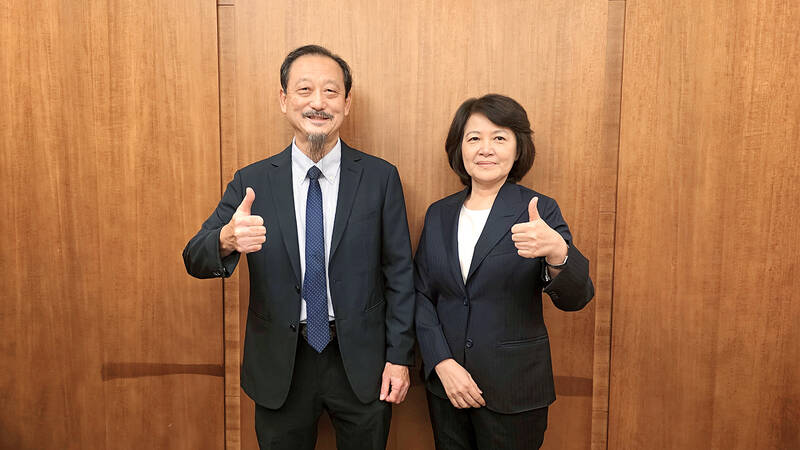
- President Lee Hsiao-wen told Cnyes the company bets inference memory diverges from training memory, with DRAM hybrid-bonded to the processor sitting between Nvidia's SRAM-only Groq LPU and HBM.
- Revenue from the AI custom design unit rose from around 4 percent of the total in 2024 to almost 40 percent in the first half of 2026, paid as non-recurring engineering fees.
Compiled by The EngineerSomething wrong?How this is made
Why it matters
- constraint PieceMakers and the Etron joint venture queue for the same packaging processes, so Formosa Advanced Technologies' TSV and die-stacking readiness sets the earliest date either design can ship in volume.
- decision An accelerator designer that picks hybrid-bonded DRAM commits engineering fees now for silicon whose royalty and turnkey phase is scheduled to begin in 2027, and pays for the design work either way.
- exposure The roughly NT$55.3 billion implied at the close comes from market-maker trading in a float the parent seeded, so anyone marking the position is marking a pre-listing quote.
- contradiction Nanya calls PieceMakers half of an AI-memory strategy while trimming about 3 percent of its stake as commodity DRAM prices climb. That puts the second half's funding on the first half's disposals.
The positioning claim can be checked against two published bandwidth figures. Nvidia's Groq 3 LPU carries 512MB of SRAM on the die and 150 TB/s of bandwidth, with no HBM or DRAM attached [21]. PieceMakers rates HiBaLL, the 3D-stacked version of its HBLL part, at more than 1 TB/s [13]. Those two numbers are at least 150 times apart [4]. So the argument for hybrid-bonded DRAM is capacity behind the interface, not bandwidth. The report has no capacity or power figure for HiBaLL. A buyer comparing it with an HBM stack would want both.
HBLL is old silicon. The 2D die is rated at 144 GB/s, taped out in 2016 for Intel's HPC line, and published at ISSCC in 2017 [12]. The stacked part claims roughly seven times that throughput [5]. Ten years separate that tape-out from the first half of 2026, when custom AI design work reached almost 40 percent of revenue, up from around 4 percent in 2024 [6][11].
Both halves of Nanya's edge-memory plan depend on Formosa Advanced Technologies. The Formosa Plastics Group test and assembly affiliate is building the through-silicon-via and die-stacking processes that PieceMakers and the Etron joint venture both need [19]. Nanya capitalised that venture, announced on Aug. 7, 2025, at NT$500 million on an 80/20 split, to design custom high-bandwidth memory for edge AI devices instead of data center accelerators [17]. Nanya president Pei-Ing Lee said earlier in 2025 that the company would not compete in HBM3 or HBM3E, TrendForce reported [18].
At its Sept. 7 briefing the company said it would move from direct product sales to custom design paid as non-recurring engineering fees, then to IP licensing, royalties and turnkey production from 2027, UDN reported [10]. Chairman Joseph Ting told TechNews the first volume customer program will not contribute to the financials until 2027 at the earliest [4]. NRE fees are paid for the engineering, whether or not a part ever ships. Tom's Hardware calls the margin curve a pre-royalty NRE business [16].
At the NT$915 close, 60.4 million shares put the company near NT$55.3 billion, against about NT$44.7 billion at the NT$740 reference [1][5][7]. Emerging Board shares trade through market makers ahead of any formal listing application [6]. Nanya seeded the float with 715,000 shares at NT$740, about 1.2 percent of shares outstanding, and remains the largest holder at 33.96 percent [8][3]. That sale raised NT$529.1 million [2], slightly more than the entire capitalisation of the Etron venture [7].
PieceMakers described its buyers to Cnyes by category: developers of cloud AI inference accelerators, international semiconductor players and North American customers, with some programs in design and verification [14]. Qualcomm CEO Cristiano Amon's Computex keynote backdrop in June listed PieceMakers among Taiwan ecosystem partners, and neither company has defined the relationship [15].
What to watch
- A named volume customer, or a tape-out date on Formosa Advanced Technologies' stacking line.
- A formal main-board listing application. That would move pricing off market makers.
- Any statement from Qualcomm or PieceMakers defining the relationship behind the Computex slide.