Product1 publisher3 min readPublished
Paris prosecutors open a criminal inquiry into women filmed by camera glasses
France's data regulator has fewer than 10 workplace complaints about smart glasses on file and says a recording light is not adequate notice on its own. Companies are already asking it whether they can ban the glasses at the door.
The Product Desk · Product desk
What happened
- The Paris prosecutor's office has opened at least one criminal inquiry into sexual harassment allegations linked to camera glasses. No word yet on whether anyone has been identified.
- France's CNIL told Reuters it holds fewer than 10 complaints about the glasses in workplaces, plus a run of questions from companies asking whether they may ban them on their premises.
- Article 226-1 of the French penal code punishes recording someone's image without consent with up to a year in prison and a 45,000 euro fine, but it applies in private places, and the pavement sits outside it.
- Australia's finance minister, Katy Gallagher, asked the public service commission on Thursday for advice on whether the glasses should be banned in commonwealth workplaces.
Compiled by The Product DeskSomething wrong?How this is made
Why it matters
- exposure Germany's HateAid has already put Meta, Ray-Ban, Oakley and several retailers on a criminal complaint, so manufacturers and the shops selling the hardware are reachable too, alongside the person wearing it.
- constraint A workplace rule that requires recording to be visibly indicated is unenforceable on the regulator's own reading of the indicator light. The only version a receptionist can apply is a rule about the eyewear itself.
- decision With the question now sitting with Australia's public service commission for commonwealth workplaces, employers that benchmark against government policy will shortly have a door rule to copy or to refuse.
- contradiction Reuters reported outright bans at some UK cinemas while the UK Cinema Association said in August it knew of none among its members, so an operator looking for a venue precedent to cite cannot confirm one exists.
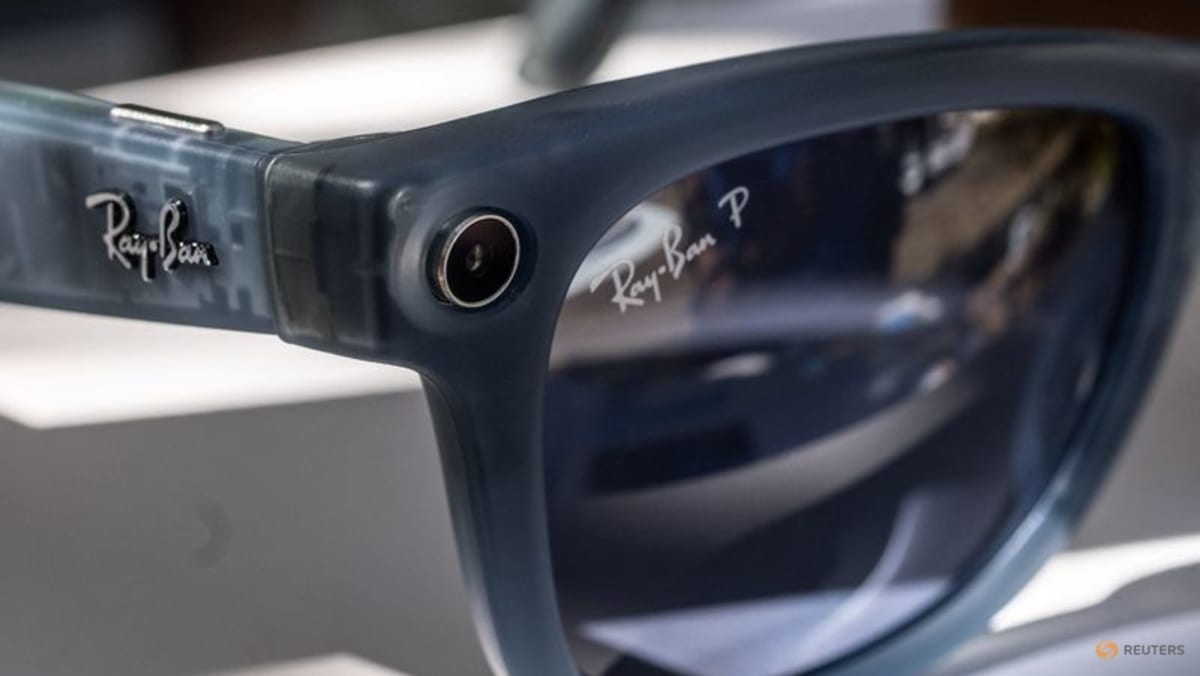
The filming under investigation works because nobody notices it. CNIL warned in June that cameras and microphones built into ordinary-looking eyewear can capture people almost invisibly [4], and the social media trend behind the complaints has men filming women in public without permission and posting the video [3]. Ines Girard, a researcher at the Center Hubertine Auclert who works on technology-facilitated gender-based violence, said "we can't react to surveillance technology by asking the people who are being surveilled to be more vigilant" [10].
The complaint count is a poor measure of how often this happens. EssilorLuxottica reported selling 7 million units last year [14]. Set that against the fewer than 10 workplace complaints on CNIL's desk [5] and you get one complaint per 700,000 units at most [23]. The two counts do not cover the same population, and the smaller one only counts people who worked out they were being recorded.
Meta's response so far addresses tampering. Two updates since June mean the camera stops recording when the indicator light is blocked [9]. But the regulator's objection was about notice. Nacera Bekhat, who handles economic matters at CNIL, said the devices posed "real challenges" in informing people that they are being filmed and in obtaining consent where required [6]. Ines Legendre, a legal expert with the child online safety group e-Enfance, told Reuters that turning on a light does not constitute consent to be filmed, "nor to have your image sent on to thousands of people later" [8]. A Meta representative told Reuters the company had "built privacy into our AI glasses from the ground up" [15].
How much of the market one company's design decision covers is unsettled. Reuters put the Meta and EssilorLuxottica share at about 76 percent and did not source the figure [12]. Counterpoint Research, the usual benchmark for the category, had 82 percent for the second half of 2025, before competitors arrived in volume [13]. Six points separate the two numbers [22].
TNW read the Paris inquiry as the strongest sign yet that France wants covert street filming handled in the criminal courts and not only by the privacy regulator [24]. The inquiry was opened on sexual harassment allegations [1]. The image-recording article, whose reach stops at private places, is not the one in play [11]. A criminal theory for pavement filming is being assembled inside a live file, and a live file will not produce usable guidance for anyone who has to publish a policy this quarter.
The policy you can actually run depends on whether you control the space and whether your own staff can tell a device is recording without help from the person wearing it. Where you control the space and cannot detect the device, the enforceable rule sits at the entrance and covers the eyewear itself. British courts and a growing number of venues already run that kind of entrance rule, and the Information Commissioner's Office has had an investigation open since March [18].
What to watch
- Whether the Paris inquiry names a defendant, and which article any charge is brought under.
- What notice the next generation of the glasses gives when it launches at Meta Connect on 23 September.
- Whether the European Data Protection Board's joint review with national regulators produces a notice standard beyond an indicator light.