Product1 publisher2 min readPublished
WashU engineers swap paper-mill waste for half the petroleum in carbon fiber precursor
A Washington University team put lignin in place of half the PAN in a carbon fiber precursor and reports a 25 percent cost cut. That figure sits exactly on the ceiling of what halving PAN can deliver.
The Product Desk · Product desk
What happened
- Engineers at Washington University in St. Louis built a carbon fiber precursor that replaces half the petroleum-derived PAN with lignin, the byproduct left over from paper production and biorefineries.
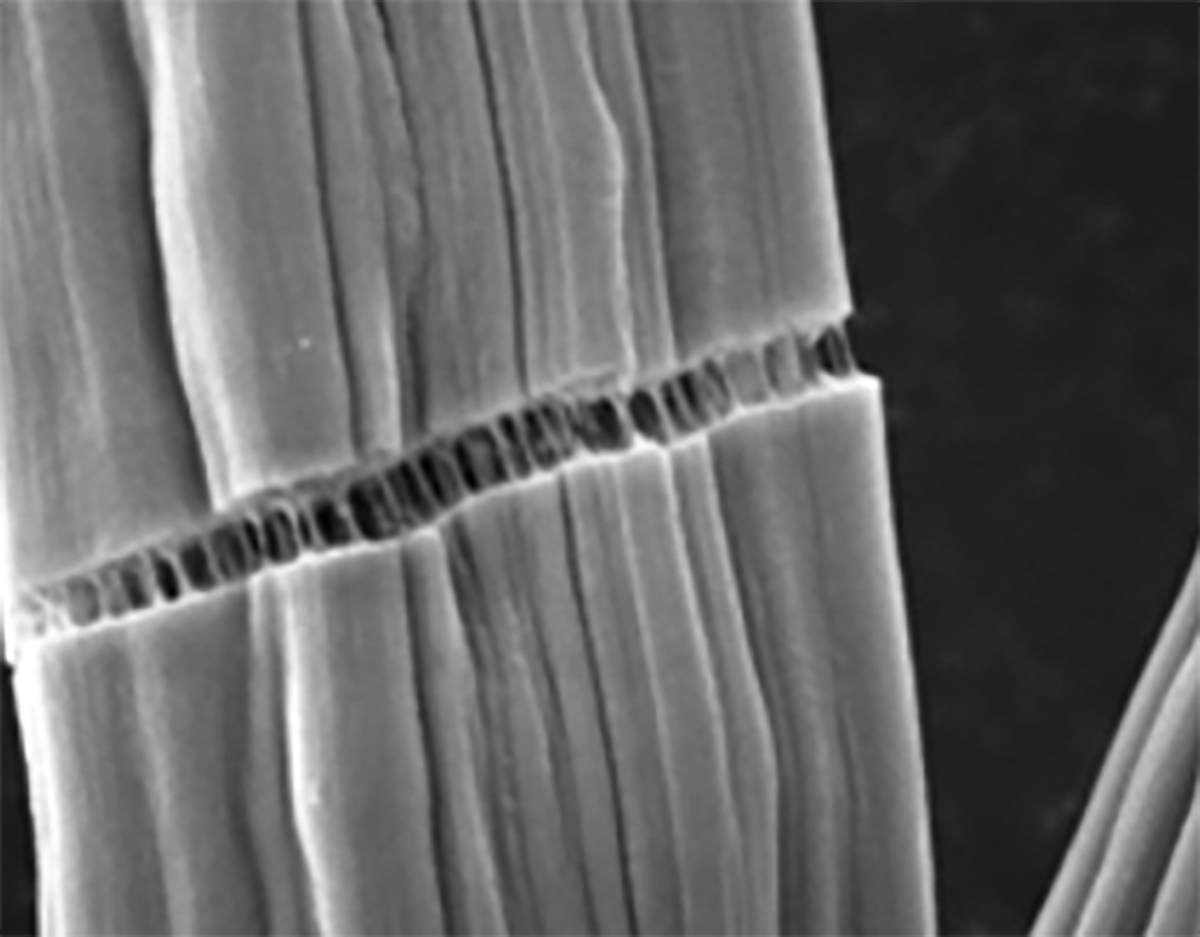
- They mixed in single-walled carbon nanotubes as a template to promote alignment, wet spun the solution into fibers, applied a tension-assisted heat treatment and finished with an optimized carbonization step.
- The team reports the process cuts production costs by 25 percent and substantially lowers carbon emissions against conventional PAN-based carbon fiber.
- The researchers say the resulting highly aligned fiber can meet quality requirements for automotive applications, and the work was published in the journal Matter.
Compiled by The Product DeskSomething wrong?How this is made
Why it matters
- constraint Any saving past a quarter of manufacturing cost has to come from somewhere other than the PAN swap, because that swap has no more room in it.
- decision An automaker weighing this has to decide whether to fund qualification lots off a lab-scale process, since the automotive-grade verdict is so far the research team's own.
- exposure Paper mills and biorefineries that burn lignin for energy would become feedstock suppliers to a structural materials line.
- capability If the cost figure holds outside the lab, carbon fiber becomes specifiable where price kept it out, and the team's list runs to wind turbines, aerospace components and energy infrastructure.
PAN is the expensive input, as much as half of what it costs to manufacture the fiber [4]. Replace half of that input and the largest saving available is a quarter of the total [15]. The 25 percent the team reports sits on that ceiling [1]. Reaching it requires lignin at no cost and no added cost anywhere else on the line [15].
The second ingredient is single-walled carbon nanotubes, mixed in first as a template that promotes crystallization and molecular alignment [3][8]. The nanotube loading is missing from the published account, as is the cost basis behind the 25 percent and any tensile or modulus figures for the finished fiber [16]. Loading per kilogram of precursor is what decides whether a saving on PAN survives a bill of materials.
Joshua Yuan, the Lucy & Stanley Lopata Professor and chair of energy, environmental and chemical engineering at WashU McKelvey Engineering, said "Crystallization alignment is critical for carbon fiber quality" [7]. On the finished material he said: "For the first time, this allows us to create renewable carbon fiber that reaches the high standard of quality used in automobile manufacturing" [11]. The nanotubes, in the team's description, work like nanoscale rebar inside the polymer mixture, guiding how crystals arrange themselves during conversion [9].
The feedstock side is less settled than the word waste suggests. Lignin is one of the most abundant natural polymers on Earth, and large quantities of it are burned for energy at the mills and biorefineries that produce it [5].
The paper's chemistry claim is that a precursor with half its PAN removed can still be crystallized into a highly aligned fiber, and the team's three-stage process is the evidence offered [10]. Its cost claim is a model, and the number it produces equals the theoretical maximum of the substitution it describes [15]. A sample lot settles the first. Only a quote from a fiber producer settles the second, and the researchers name automotive manufacturing as the initial target market [14].
What to watch
- A lab outside the WashU group reproducing the aligned crystalline structure at production spinning speeds.
- Whether a fiber producer or an automaker commits to qualification lots of the 50 percent lignin precursor.
- Whether paper mills and biorefineries start quoting spinning-grade lignin instead of burning it.