Science1 publisher2 min readPublished
Texas A&M survey finds nearly nine in ten bison operations deworming at least yearly
A questionnaire sent to bison producers across the southern and central United States found treatment set mostly by the calendar, and the veterinary parasitologists who ran it are worried about what that does to a short list of drugs.
The Scientist · Science desk
What happened
- Texas A&M veterinary researchers surveyed bison producers about herd demographics, pasture management, nutrition, animal sourcing and parasite control, and published the results in Veterinary Parasitology.
- Nearly 90% of the producers who responded said they deworm their bison at least once a year, and almost one-third said they deworm more than twice a year.
- Diagnostic tools that can show whether an animal actually needs treatment were rarely used by the operations surveyed.
- Only one product carries FDA approval for gastrointestinal nematodes in bison, so most treatments use products and practices developed for cattle or other ruminants.
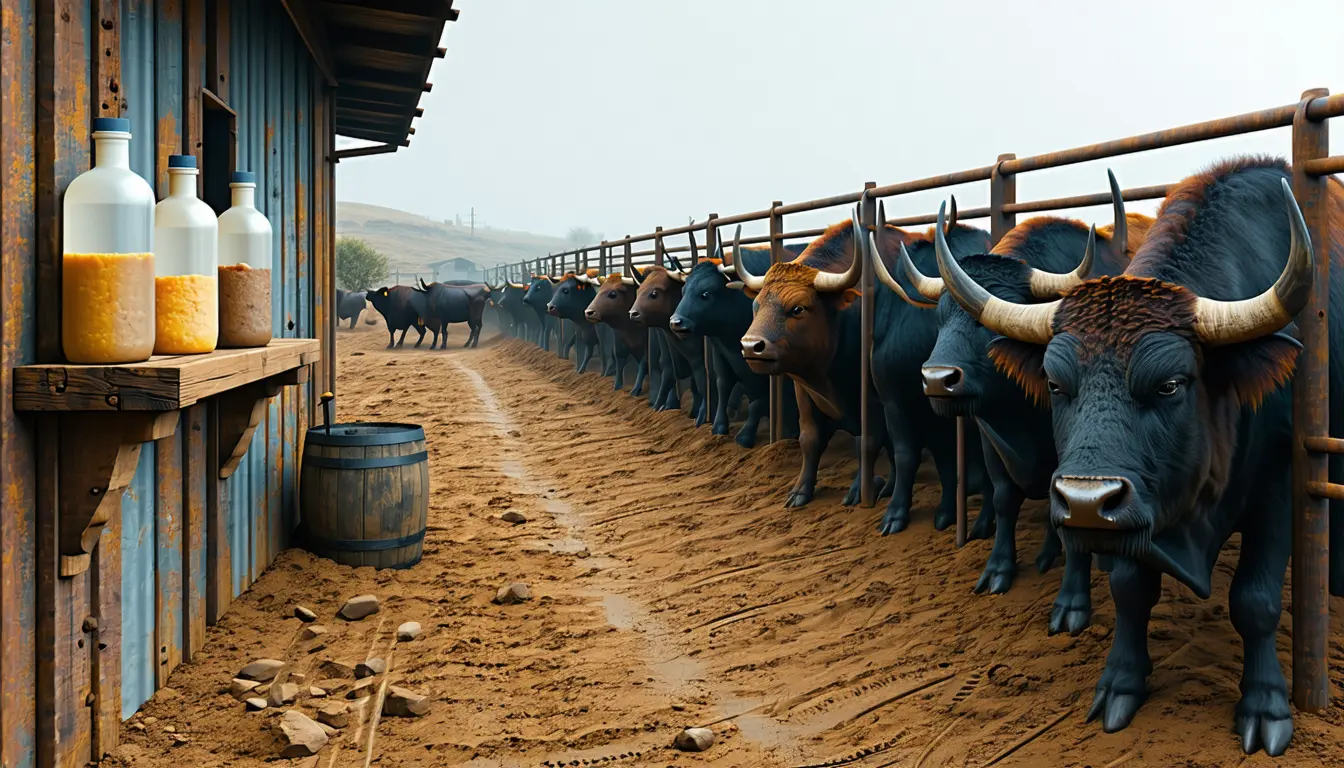
- Bison are harder and more dangerous to handle than cattle, so some producers give dewormer through medicated feed instead of running animals through handling facilities.
Compiled by The ScientistSomething wrong?How this is made
Why it matters
- constraint The available dewormers fall into few classes and few new ones are expected, so a calendar schedule that treats every animal draws down a supply that is not being restocked.
- decision Treating only the animals that need it requires a test result before the dose, and for these operations that step would be new: the reduction in drug use arrives after an added cost in diagnostics.
- exposure Because dose and interval are not established for the species, a producer whose treatment fails cannot tell whether the worms were resistant or the amount was wrong.
- capability Knowing that these herds run from about 30 animals to 500, and that some are dosed through feed, gives protocol designers the handling constraints to write against.
Selection happens in the worm population. Dose a herd and the susceptible parasites die, while the ones carrying traits that let them survive stay behind and reproduce, and repeated treatment gradually raises the resistant proportion [10]. Guilherme Verocai, who directs the Parasitology Diagnostic Laboratory at Texas A&M [20], described the endpoint that concerns him. "The concern is that over time, we could reach a point where the majority of those parasites are resistant," he said [11]. "That's why treatment needs to be one of several tools we use to manage and control parasites" [12].
Subtract the almost one-third of respondents who treat more than twice a year from the nearly 90% who treat at least annually, and roughly 57% of operations sit at one or two treatments a year [24]. The study's framing is that dewormers lose effectiveness both when they are given too often and when they are given without knowing which animals need them [22]. The survey documents both conditions in the same population [4][5].
The dose comes from work in other species. Researchers do not yet know the ideal doses or treatment strategies for bison, so producers may begin from cattle recommendations [9].
The questionnaire's first job was descriptive, since most earlier bison parasite research covered larger herds in northern states and Canada and left operations in Texas and neighboring states thinly described [17]. "We needed to understand the basics of these operations," Verocai said [18]. "Are we talking about a herd of 500 animals or 30? Those can be very different operations" [19]. The report of the study does not say how many producers responded; that number is the denominator under the 90% [23].
Kaylee Kipp, a recent Texas A&M veterinary doctoral graduate now teaching ranch management at Texas Christian University [20], said the comparison with cattle rests on two kinds of evidence. "We have both anecdotal and diagnostic evidence showing that bison seem to have more parasitic issues compared to beef cattle," she said [15]. That is clinical impression plus laboratory records, not a matched comparison of bison and cattle herds run the same way. Kipp also called gastrointestinal nematodes "one of the most economically important health concerns for bison" [14], and said severe infections can contribute to the deaths of adult bison [16].
What to watch
- Whether the Texas A&M group follows the survey with efficacy testing in the same herds, which would show whether resistance is already present.
- Whether a second product gains FDA approval for gastrointestinal nematodes in bison.
- Whether targeted-treatment protocols can be written for operations that dose through medicated feed rather than a chute.