Invest1 publisher2 min readPublished
MoneyGram launches stablecoin-backed dollar Visa card for eligible users in Colombia
MoneyGram's new card in Colombia runs on Circle's USDC, with Rain issuing and Stellar settling. The company says its own MGUSD token comes next, and the dollar balance behind the card would then be MoneyGram's.
The Investor · Invest desk
What happened
- MoneyGram said its MoneyGram Card is live for eligible users in Colombia, the first market for a Visa-branded card backed by stablecoins instead of a conventional bank deposit.
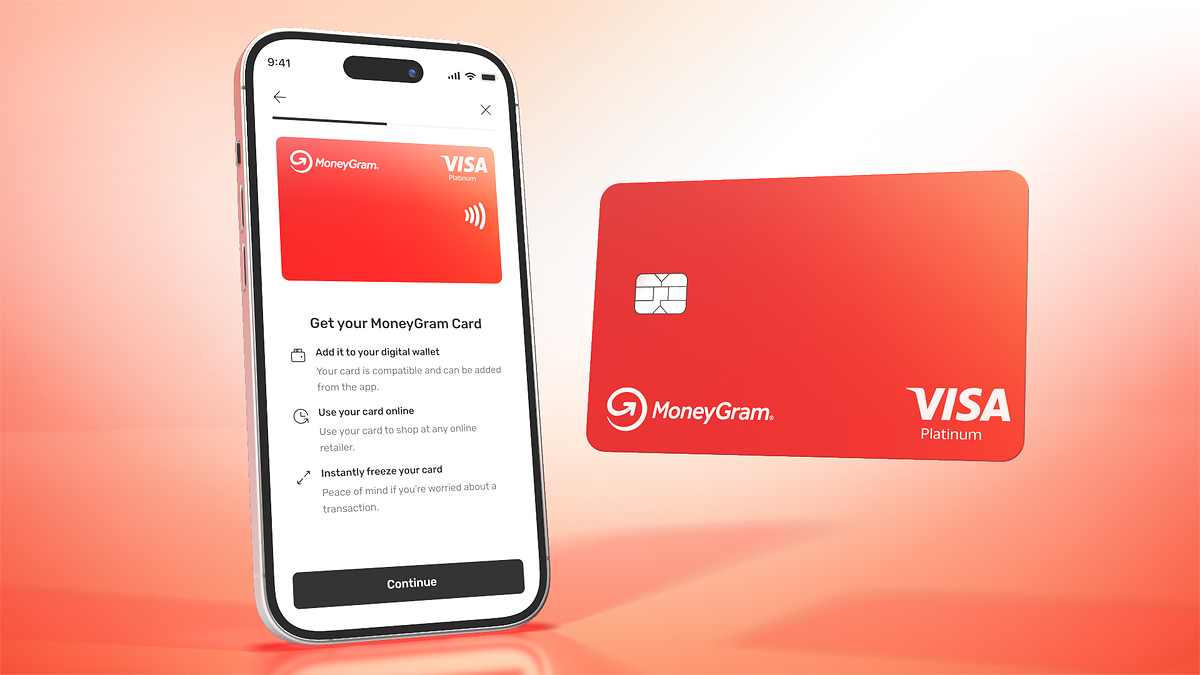
- The card sits inside the existing MoneyGram app, where qualifying customers can apply without opening a separate account, hold a dollar-denominated balance and spend at Visa merchants online and in stores.
- A physical card is planned for later in 2026 and is expected to add ATM withdrawals, on top of collecting local currency at MoneyGram retail locations.
Compiled by The InvestorSomething wrong?How this is made
Why it matters
- decision The recipient's choice at arrival changes: pesos at the counter, or a dollar balance that converts whenever they decide, with the agent network still available for cash.
- constraint The offering is digital-only in one country and ATM access waits on the physical card, so the agent network is the only route to physical currency for now.
- exposure MoneyGram controls the app and the cash network; acceptance, the token, issuing, the wallet and settlement all depend on outside parties it does not own.
A remittance collected in cash leaves MoneyGram's system at the counter. A dollar balance held in the app does not, and the customer decides later whether it becomes pesos or physical currency picked up at an agent location [8].
At launch the dollars behind that balance are Circle's USDC [5]. MoneyGram said it intends to add MGUSD, the dollar-pegged token it introduced earlier in 2026 on the Stellar network [6]. If MGUSD becomes the backing, the reserve behind customer balances moves from Circle's token to MoneyGram's own.
The rest of the path belongs to other companies. Visa provides acceptance [1], Rain the card-issuing rails, Crossmint the wallet, and Stellar the settlement and fund movement [7]. Counting Circle, five outside providers sit in the payment path against two things MoneyGram owns outright: the app and a cash network spanning hundreds of thousands of locations [15][13].
Read coldly, this is a prepaid card with a crypto funding leg. The holder adds the digital card to Apple Wallet or Google Wallet and taps at a Visa merchant [4], and nothing in that moment requires a stablecoin. MoneyGram officials stressed that the product is not a traditional debit card tied to a fiat bank account [3]. What a customer in Colombia can feel is the dollar denomination in a peso economy, in a country that receives large remittance inflows from the United States [11].
Chairman and CEO Anthony Soohoo has said the goal is to give customers more freedom and control in one place: hold a stable dollar balance, spend where Visa works, or tap the cash network when they need physical currency [12]. MoneyGram said eligibility, fees and local rules will determine how quickly the product scales, and it has not published country timelines for the expansion it expects across Latin America [14][10].
Balances could persist for weeks, in which case MoneyGram is operating something close to a dollar account for customers who do not have one, and the held float becomes the asset. They could instead turn over in a day, in which case the stablecoin is plumbing and the revenue is whatever the Visa spend generates. A third path is regulatory: eligibility screens and local rules keep the offering digital-only in one country, where it is today [14].
The measurable test comes with the physical card MoneyGram plans for later in 2026, which is expected to add ATM withdrawals [9]. If volume concentrates in ATM cash-outs, the everyday-spend framing is wrong and this is remittance delivery with a card attached. I would expect a mix weighted toward cash-out until MGUSD is actually the backing asset [6].
What to watch
- Whether MGUSD replaces USDC as the backing asset for card balances, and on what terms MoneyGram discloses the swap.
- Publication of fees and eligibility rules, plus the first named country in the Latin American expansion and its date.
- The physical card MoneyGram plans for later in 2026 and whether ATM withdrawals or Visa spend takes the volume.