Product1 publisher2 min readPublished
Microsoft caps Game Pass Ultimate cloud gaming at 15 hours a month from November
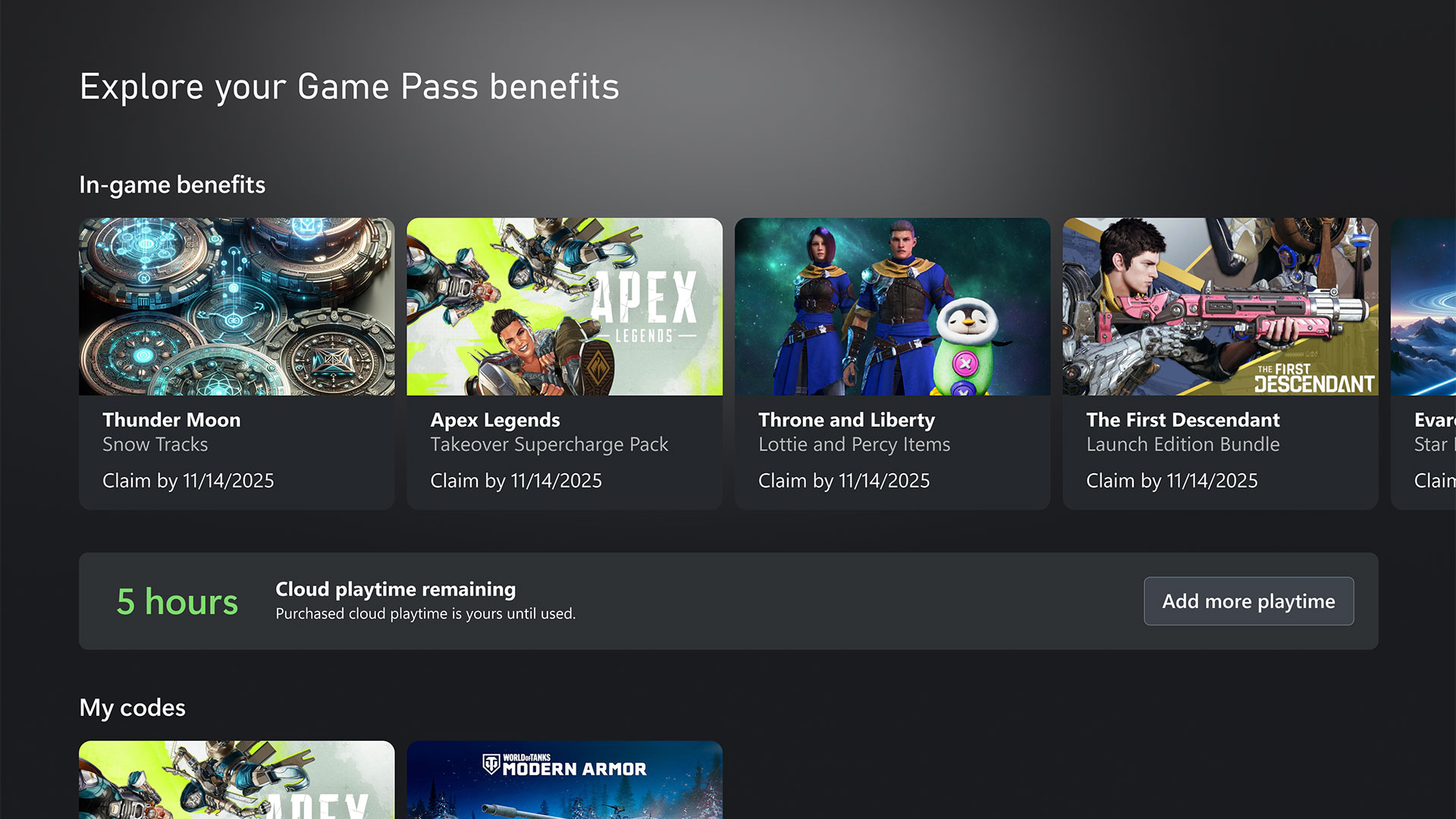
Game Pass tiers will include 5, 10 or 15 cloud gaming hours a month when the limits land in November, with extra hours for sale. Microsoft says rising costs drove the change and that 4% of subscribers are affected.
The Product Desk · Product desk
What happened
- Microsoft has announced that from November, Xbox Game Pass plans will include a set number of cloud gaming hours each month instead of unmetered streaming.
- Microsoft said in a blog post that the cost of providing cloud gaming has grown as more people use it and play longer, and that the limits let it invest in reliability and performance.
- Techdirt notes that two years ago, as subscriber adoption slowed, Microsoft retired the old Game Pass tiers, priced the new ones higher and dropped day-one first-party access at some of them.
Compiled by The Product DeskSomething wrong?How this is made
Why it matters
- cost The GPU bill moves onto the heaviest cloud users, whose choice in November is to buy hours on top of a tier that already costs more after the last restructure.
- constraint Half an hour a day is what Ultimate's allowance buys, which rules out cloud as the main route into the library for a household with no console.
- contradiction Techdirt reads Microsoft's growing-usage explanation and its 4% claim as incompatible; they hold together if play is concentrated in a small group, and the distribution that would settle it sits with Microsoft.
- precedent Metering a flat-rate subscription after already repricing it gives other teams a template for features whose per-user cost rises with machine time.
Five cloud hours a month on Essential is ten minutes of play a day across a 30-day month. Premium's ten hours is twenty minutes a day, and Ultimate's fifteen is half an hour [1]. One two-hour evening on Essential spends 40% of the month [3].
Microsoft said in a blog post that the cost of providing cloud gaming has grown as more people use it and play for longer, and that the monthly limits will mean it can invest in reliability and performance [5]. It also said the change impacts 4% of Game Pass subscribers [4]. Techdirt does not accept that figure, and wrote: "I think Microsoft is full of shit on that number" [7].
Both of Microsoft's statements can be true at once. Streaming a game is billed in machine time, not in subscribers, so a small group playing long sessions can account for most of the cost while the typical subscriber never reaches five hours. Techdirt attributes the underlying rise to the cost of the hardware needed to run the backend climbing with the adoption of AI platforms, and says those costs to Microsoft are very real [8].
The pitch and the change are two different things. The pitch is reliability and performance [5]. The change is that a flat subscription now has a meter and an overage, since anyone who exhausts their hours can buy more [3]. Techdirt's report does not say what the extra hours cost [9]. The caps also follow the price ladder, with Ultimate getting three times Essential's allowance [4], so the cheapest tier carries the tightest limit.
This is the second repricing of the same subscription in about two years [5]. According to Techdirt, the earlier round landed alongside a serious slowdown in subscriber adoption: old tiers retired, new ones introduced at higher prices, and day-one access to first-party titles removed at some of them [6].
For anyone metering a feature whose cost scales with machine time, two numbers decide whether a cap is a margin fix or a product change. The first is the share of your compute bill the heaviest few percent consume, because if that share is most of the bill, capping them protects the price for everyone else. The second is where the cap on your cheapest tier sits against one normal sitting. If it sits below one sitting, every prospect reads the cap as the spec. Essential's cap is five hours [2].
What to watch
- The price Microsoft sets for extra cloud hours, and whether it sells them per hour or in blocks.
- Whether Microsoft publishes any usage distribution behind the 4% figure once the caps are live.
- Whether the November caps arrive alongside another change to tier prices or first-party access.