Product1 distinct publisher3 min readUpdated
Non-users cannot opt out of being recorded, and that is the category of behavioural data a contextual agent most needs. Anyone building on Meta's stack inherits the provenance.
The Product Desk · Product desk

Compiled by The Product DeskSomething wrong?How this is made
Follow any of these and your For You feed starts watching them — no settings page required.
Start with what an opt-out can actually reach. Meta can honour a preference expressed inside an account, and privacy law caps some collection outright [4]. Neither instrument touches the person standing in the frame, and Fast Company is blunt that people who never use Meta products still become data points when others record, photograph or mention them [12]. That is not a gap in the consent flow. It is the category of material a contextual agent most needs, because the useful part of egocentric capture is other people.
The clearest sign that the hardware follows the model rather than the reverse is Project Aria. Presented at Connect 2020 as an AR research project, it is now also used for AI-focused behavioural research [8]. In the same keynote Zuckerberg put the route to an "ultra-low-friction contextualized AI interface" through EMG and egocentric data [7], and recounted a 2019 visit to EssilorLuxottica in Italy to work on glasses design [8].
Twelve years separate the first Facebook AI lab from the standalone Meta AI assistant [1], with Yann LeCun hired to run that lab in December 2013 [5] and the WhatsApp, Instagram and Messenger infrastructure merge announced in 2019 [6]. Ray-Ban Stories shipped in 2021, a month before the metaverse push [9]; Horizon Worlds is now shut while the glasses line continues [2]. Read as a portfolio, the piece Meta discarded was the destination, and the pieces it kept are the capture surfaces.
For anyone shipping on that stack, the reframe is about provenance rather than optics. LLaMA arrived in 2023, the assistant in 2025, and Muse this year as another step toward systems drawing on data from across the ecosystem [11]. Ecosystem is the operative word: unified infrastructure across the messaging and social apps [6] means the corpus is not partitioned the way a data-processing agreement tends to assume. If your product sits on a model whose behavioural inputs include third parties who were never asked, the lawful basis you are leaning on is Meta's, asserted about collection you cannot inspect. Meta's position, as the article describes it, is that laws limit what it can collect and users can sometimes opt out, while vast quantities of data remain available anyway [4].
The backlash tells you the shape of the objection you will inherit. Critics have renamed the glasses "pervert glasses" [1] because of what wearers do with them, and what wearers do with them is what produces the data the agent roadmap requires [3]. A public-relations problem gets quieter as novelty wears off. A supply problem does not, because here the objectionable capture is the supply, and the same devices also carry EMG Neural Band signals into the same pipeline [3].
Ranked by verification strength, evidence, and original report placement.
People who do not actively use Meta products can still become data points when others record, photograph, mention or communicate with them through these systems, and in that case opting out may be impossible.
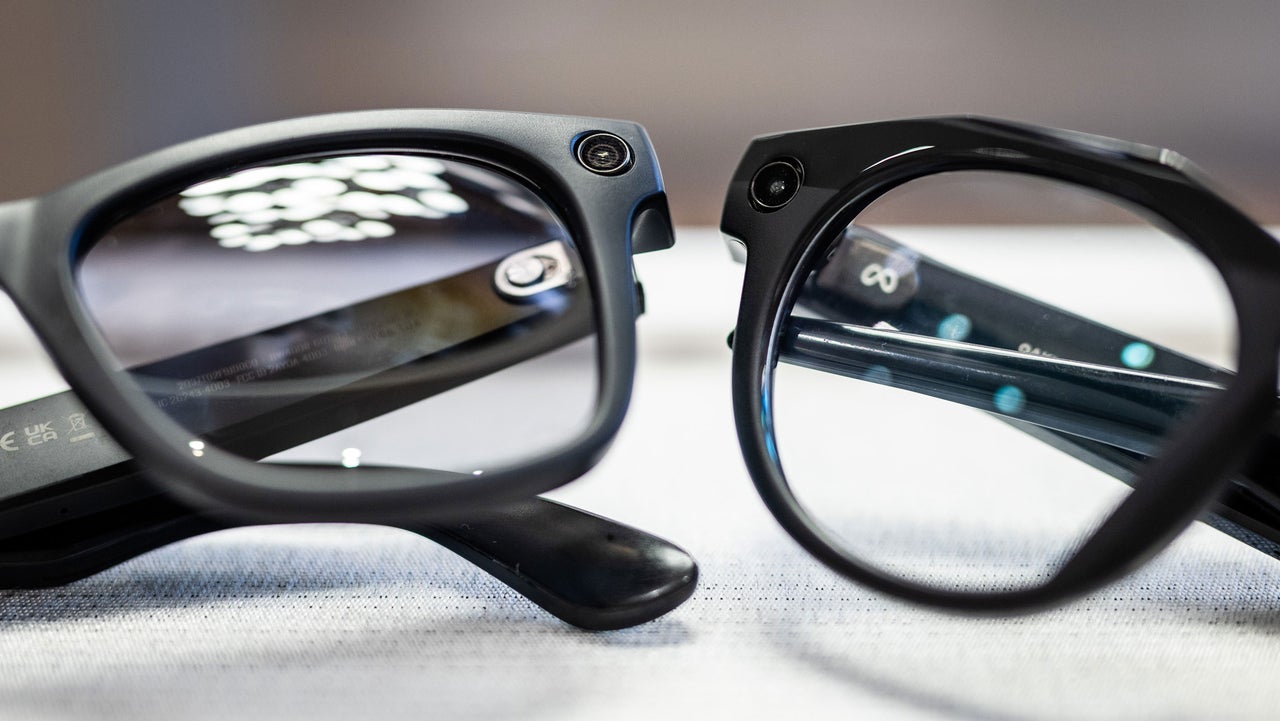
Meta's Ray-Ban smart glasses, made in partnership with EssilorLuxottica, have been renamed "pervert glasses" by some critics, as users photograph and record people without permission and share the results on social media and the wider internet.
Zuckerberg's 2026 manifesto describes a world where personal AI agents do the user's bidding.
Facebook announced its first AI research lab to explore deep learning in September 2013, and in December 2013 announced it had hired deep learning expert Yann LeCun, professor at NYU's Courant Institute of Mathematical Sciences, to lead it.
In 2019 Facebook announced plans to integrate the technical infrastructure underlying WhatsApp, Instagram and Facebook Messenger.
At the Facebook Connect 2020 keynote Zuckerberg said the road to the "ultra-low-friction contextualized AI interface" is long and challenging, and that between EMG, egocentric data and contextualized AI he had "not the slightest doubt" something like what he described would be how everyone works, plays and connects during the second wave of human-oriented computing.
Evidence-backed comparisons of source perspectives and observed adoption signals. Read the methodology
Which Builder, Operator, and Investor concerns the observed source mix emphasized—not a truth score.
Evidence, demonstrated adoption, hype gap, incentives, and confidence are assessed independently, each on its own current evidence. How these are measured.
Documented timeline, undocumented thesis
The historical spine is specific and checkable — dated 2013 lab and LeCun hire, 2019 infrastructure integration, a verbatim Connect 2020 keynote quotation, Project Aria, Ray-Ban Stories 2021, Horizon Worlds shutdown, LLaMA/Meta AI/Muse. The central argument, that agent systems require and consume bystander behavioural data, rests on one publisher's assertion with no Meta documentation, no data-handling disclosure, no regulator finding and no company response. One source, one publisher, no corroboration.
Products shipped, no usage disclosed
Adoption is visible only as a release cadence: consumer glasses shipping since 2021 and still in market, LLaMA in 2023, a standalone assistant in 2025 and Muse this year, plus one withdrawal (Horizon Worlds). The source discloses no unit sales, install base, active users, developer counts or enterprise deployments, and no measurement of how often bystander capture actually occurs — so the visible signal is shipping products and public backlash, not quantified uptake.
Thesis outruns its documentation
The framing — panopticon metaphor, 'algorithm chow', bystanders as the data the agents need — is considerably stronger than what the material establishes. Nonconsensual capture and the absence of a bystander opt-out are well-described, but the causal link from bystander imagery to agent training or capability is asserted, not shown, and no adoption or retention figures are offered. Overstatement is in interpretation and rhetoric rather than in the factual timeline, which is why the gap is moderate rather than severe.
Independent outlet, commercially interested subject
Claims come from a third-party publisher rather than from Meta or a competitor, and the piece explicitly names Meta's commercial interest in hardware sales, app usage and data capture — an incentive it discloses rather than hides. Offsetting that, the sole source is an opinion-inflected critique whose framing rewards alarm, and no Meta rebuttal or countervailing party is represented, so incentive balance is one-sided.
Low-moderate: single publisher, mixed claim quality
Confidence is capped by a one-source, one-publisher cluster with no cross-checking. Within it, historical and quotation claims are reliable and the bystander-consent mechanism is uncontested, but the strategic data-supply thesis, the legal framing and all adoption magnitude are unverified. Directionally usable; not sufficient for a decision that depends on how Meta actually handles incidental capture.
leadership
The recording light on Meta's glasses is now optional, and your policy assumed it wasn't1 distinct publisher
invest
When the marginal bidder is a billionaire, farmland stops being priced off what it grows1 distinct publisher
invest
Meta's Pay Structure, Not Its Policy Page, Is What the States Put on the Stand1 distinct publisher
product
Meta owns the models and the data centres, and still pays Microsoft to rent someone else's1 distinct publisher
Distinct publishers with included, body-backed reporting in this cluster.
1 article · August 24, 2026