Product1 publisher3 min readPublished
Meta gates its first display glasses behind a fitting appointment booked into December
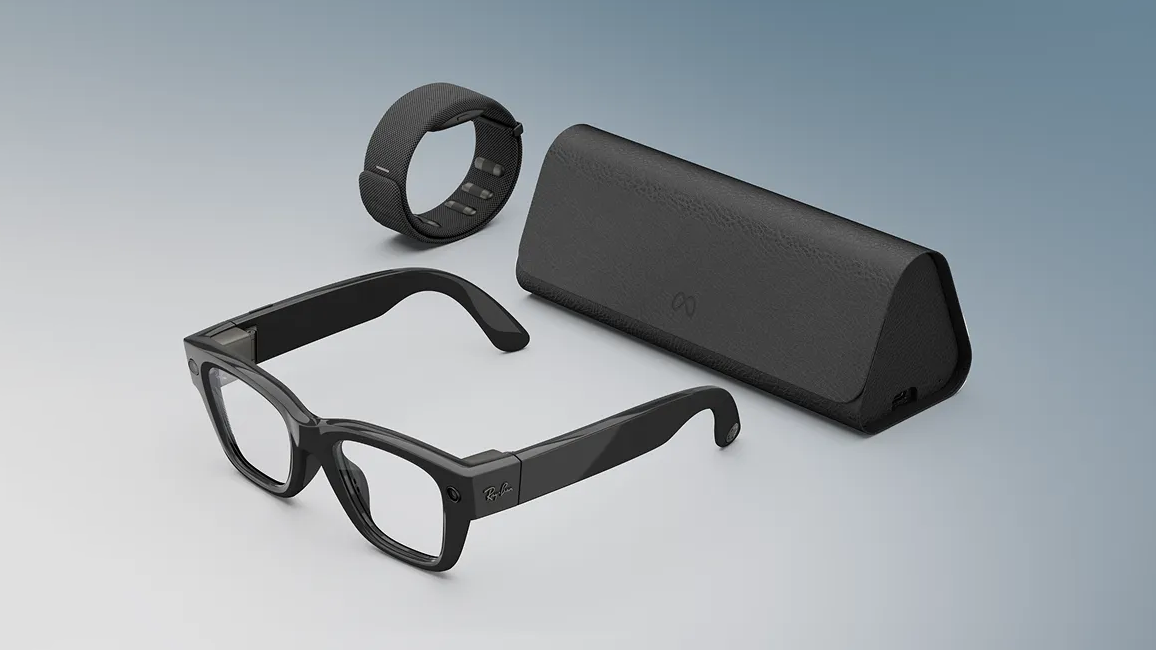
Meta's $800 Ray-Ban Display sold out in two days across the handful of US stores that carry it. Because Meta will not sell a pair without a fitting demo first, the sales ceiling is demo capacity, and it is doubling locations this month.
The Product Desk · Product desk
What happened
- Two days after launch, Meta Ray-Ban Display was sold out in almost every store that stocked it, according to UploadVR.
- Meta CTO Andrew Bosworth said restocks are coming and that the company will double the number of locations selling the glasses this month to add capacity.
- The glasses and their included sEMG wristband cost $800 and sell only in the US, through select Best Buy, LensCrafters, Sunglass Hut and Ray-Ban stores plus the Meta Lab.
- Many stores require an appointment, and slots that were booked out to mid-October on launch day are now filled into December at most locations.
Compiled by The Product DeskSomething wrong?How this is made
Why it matters
- constraint While a fitting demo is mandatory before purchase, the pairs a store can sell in a week are capped by appointment slots and staff hours.
- cost Meta has pushed the cost of teaching an unfamiliar input onto retail payroll at four chains it does not employ, plus its own Lab.
- decision Adding locations makes staffing and training the first decision of this rollout, ahead of any decision about building more units.
- capability The wristband gives Meta a control surface that does not need a bigger lens, and December's swipe-typing update extends it from gestures to text entry.
The appointment was only the first hurdle. UploadVR reports that some buyers who booked a slot got their demo and then learned the store had no retail stock to sell them [8]. Others walked in cold. UploadVR's Don Hopper and other hopeful buyers arrived at Best Buy, LensCrafters and Sunglass Hut locations to find empty shelves and managers unsure when stock would arrive [9]. UploadVR's Ian Hamilton got one of the last units in New York City on launch day [10].
Bosworth explained the appointment requirement on Threads. "For people asking why demos are required: between display glasses and the neural band, these are two pieces of tech that almost nobody has ever experienced before. As they first roll out we want to make sure people get the right fit and the best introduction before buying," he wrote [4].
So the sale is conditional on a fitting, and a fitting occupies a staff member for a block of time. Bosworth said demos are "almost fully booked out through November" [3]. UploadVR found most locations now booked until December [7]. Doubling locations, Meta's stated fix for the month, doubles fitting capacity as well as shelf space [2].
The part that needs fitting is the Meta Neural Band. It senses the activation of the muscles in the wrist that drive finger movements, a technique called surface electromyography, and Meta rates it at around 18 hours of battery with an IPX7 rating [12]. A software update set for December will let you enter text by swiping letters with your index finger on a physical surface [13].
The display it drives is small on purpose. The monocular HUD in the right lens covers around 20 degrees diagonal at 600x600, brightness up to 5,000 nits, with 2% light leakage so nobody nearby can see it [11]. That works out to 360,000 pixels [4]. UploadVR puts the result at 42 pixels per degree, higher than Apple Vision Pro [11]; a 600x600 panel has a diagonal of about 848 pixels, and 848 pixels spread over 20 degrees is 42 per degree [3].
What the display does today, per UploadVR: Meta AI with visuals including step-by-step directions, messaging and video calling through WhatsApp, Messenger and Instagram, camera preview and zoom, a pedestrian minimap in 28 cities, live captions and translation, and music playback [16]. Those are features for someone who wants glanceable text while their hands are busy.
Adding the display costs 19 grams: 69 grams against 50 for the regular Ray-Ban Meta glasses and 45 for the non-smart equivalents [14], which makes the display model 38% heavier than the camera-only pair [1]. Meta claims around six hours of glasses battery in normal use, and UploadVR says it needs a review unit to verify that [15]. The band lasts three times as long as the glasses it controls [2].
Selling out tells you demand beat supply. "We were already excited about the product but I'll be honest this response has been stronger than we expected so we are working to catch up!" Bosworth wrote [5]. Neither his statement nor UploadVR's report includes a unit count [5]. The channel is known: one country, four retail chains plus the Meta Lab, at $800 [6].
For anyone shipping hardware with an unfamiliar input, two things set the launch plan: whether the device needs a physical fit, and whether the buyer has to be taught the input before they will pay for it. One of the two, and you can sell off a shelf with a good demo video. Both, which is where Meta is, and weekly sales equal demo slots times conversion rate, with units in the back room as the second constraint.
What to watch
- Whether the doubled store count arrives with sellable inventory or only with more demo appointments.
- Whether the December Neural Band update ships swipe-typing on a surface as described, and whether reviewers confirm the six-hour glasses battery claim.
- Whether Meta sells outside the US or publishes a unit number for the first production run.