Product1 publisher3 min readPublished
Maven beat four rival robot makers by selling the pallet flow instead of the robot
Maven left stealth with $100M and a plan for 250 robots, though the duty cycle behind the pitch (eight machines running 16-hour days at 99% uptime) is reported by its CEO rather than checked by anyone else.
The Product Desk · Product desk
What happened
- Maven Robotics emerged from stealth with $100 million from RoboStrategy, LocalGlobe, Vine Ventures and XTX Markets Ventures.
- The money funds 250 units of Maven's third-generation robot plus the start of design work on a fourth-generation platform.
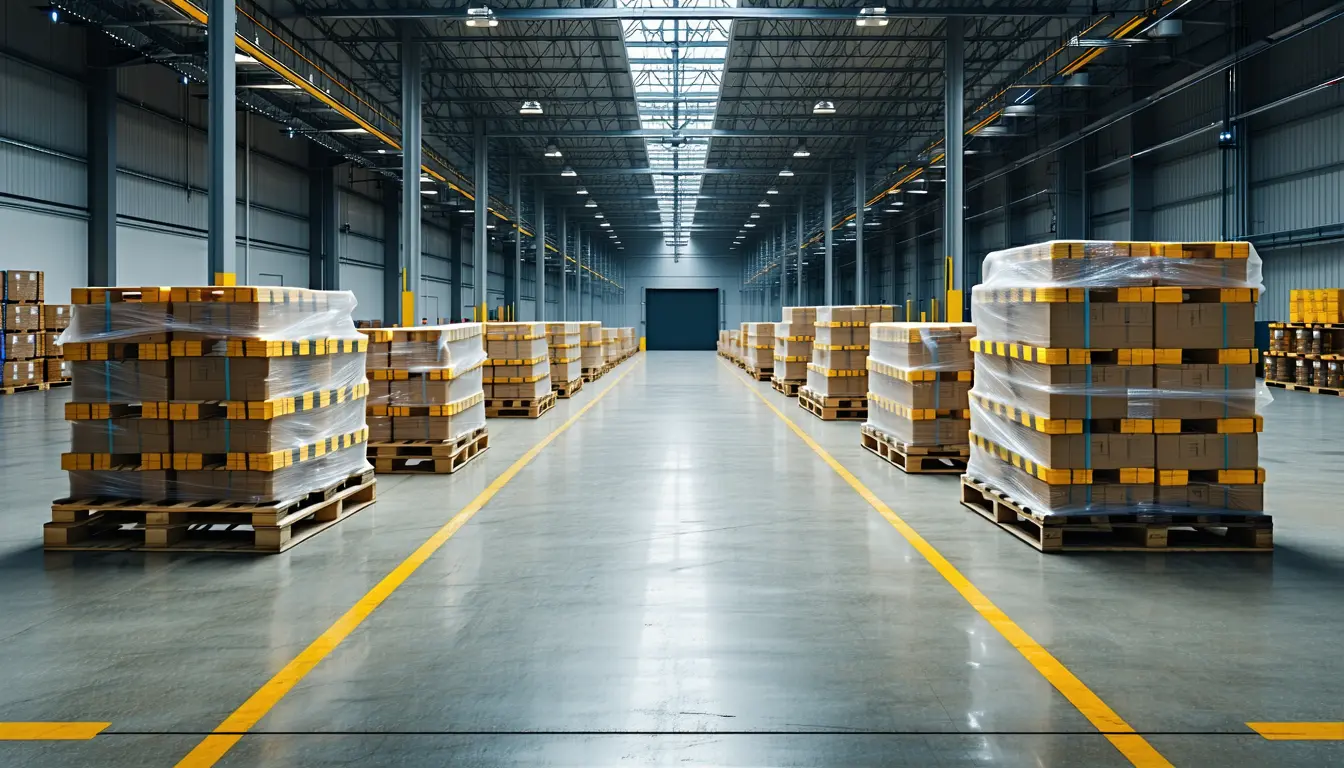
- The machines ride wheeled bases at up to 10 miles an hour and use two arms to lift up to 30 kilograms, building mixed pallets of boxed goods bound for individual retail stores.
- CEO Hamza Derbas says as many as eight robots now run 16 hours a day at 99% uptime or better, after two years with a consumer goods customer and a few other partners.
- Maven won that first customer in 2024 against four rival robot companies, after Derbas asked to walk the buyer's factories and warehouses rather than present a robot.
Compiled by The Product DeskSomething wrong?How this is made
Why it matters
- decision A buyer scoring vendors on lift capacity and travel speed is measuring the robot, but Maven sold the WMS handshake and the truck-loading end, so those now decide which vendors are even in the comparison set.
- exposure The duty-cycle numbers a procurement team would sign against are the founder's own, which pushes verification onto the buyer's pilot, floor, and month-three review.
- constraint Anything beyond palletizing waits on manipulation the company concedes does not exist yet, so signing for the roadmap means funding capability rather than buying it.
- contradiction Derbas calls two-legged robots unreliable and needlessly costly while Agility heads for public markets at a $2.5 billion valuation on exactly that design, so buyers now face two competing ROI arguments to choose between.
The supervisor this is built for gets a demand file and 48 hours to rebuild a store's pallet mix, which today means people walking the aisles collecting one of this and one of that [9]. What Maven sold into that job was a slice of the flow rather than a picking arm: it hooks into the warehouse management system at one end, and product goes onto trucks at the other, in CEO Hamza Derbas's description [7].
The operating claim is compact enough to check. Eight robots at 16 hours a day is 128 robot-hours of coverage per day [1], and 99% uptime across a 16-hour shift leaves roughly nine and a half minutes of stoppage per robot per day [2]. That figure counts robot hours rather than pallets the WMS accepted, and "as many as eight" is a ceiling phrase rather than a count [5]. It comes from Derbas; the TechCrunch account carries no third-party audit, no pricing, and no contract terms [17]. On this evidence, buying an outcome describes how the deal was pitched. How it was papered isn't part of the record.
On scale, 250 robots is about thirty-one times the fleet running now [3]. Divide the raise by the build plan and you get $400,000 per machine [4] - the ceiling on what this round can spend per robot if it spent nothing else, not a price and not a unit cost. Payroll, the fourth-generation design [2] and the data pipeline that pulls information off working robots within minutes or hours for retraining [16] all come out of the same $100 million [1].
The limit sits in the work itself. Palletizing may be an $80 billion market by TechCrunch's reckoning, and the tasks Maven wants next need manipulation capabilities that do not yet exist [11]. Jack Pearson of RoboStrategy says he backed the company for its industrial-systems background rather than a research culture [14]; by the same report, moving past today's workflows will require Maven to build one of those anyway [18].
If you are evaluating this class of vendor next quarter, sort their numbers on two axes: whether the metric describes the machine or the flow, and whether you measured it or they did. A machine number you measured is a useful spec. A flow number they measured is a sales asset. The one worth writing into a pilot is a flow number you measure, which for mixed palletizing means pallets the WMS accepted per shift, plus a written answer on what happens to a half-built pallet during those nine-odd minutes of stoppage. Do that and the eight hours of the day when nobody's robot is running [5] become a staffing line in the business case instead of a discovery in month three.
What to watch
- Whether Maven ever reports uptime as pallets the WMS accepted per shift rather than robot hours running.
- Whether the 250 third-generation units land at named customers or stay inside the Santa Clara training area.
- Whether Agility's SPAC pricing this fall moves buyers toward or away from Derbas's argument against legs.