Science1 distinct publisher3 min readPublished
metilene3 finds differentially methylated regions among unlabeled samples, which opens messy clinical cohorts to analysis and leaves someone else to test what comes out.
The Scientist · Science desk

Compiled by The ScientistSomething wrong?How this is made
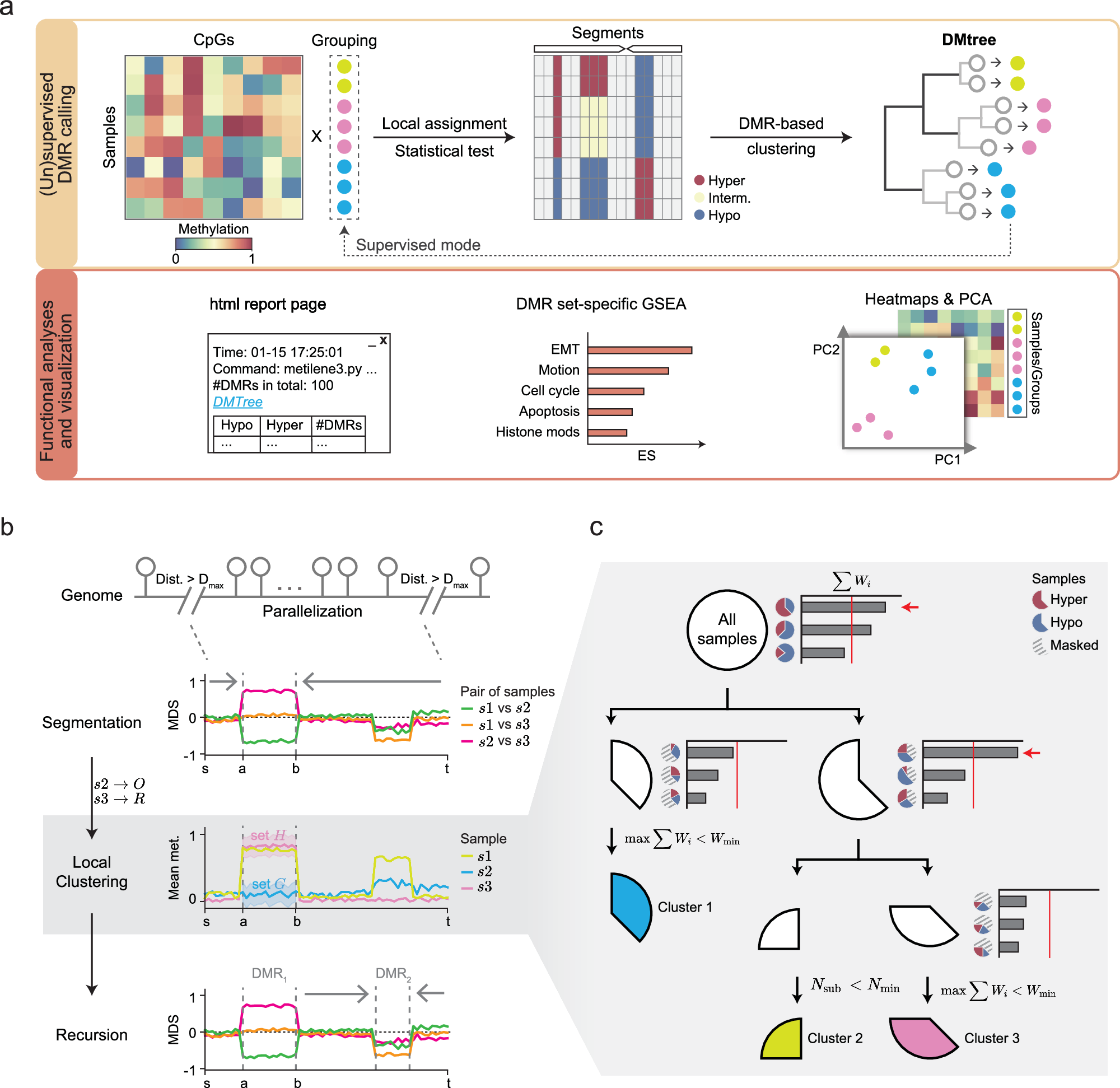
The label requirement in existing DMR tools is not administrative overhead. It decides in advance which differences the analysis is capable of finding: split a cohort into healthy and diseased, and the algorithm returns the regions that separate healthy from diseased, and nothing else [2]. For a cohort where the grouping is itself the open question, that is circular. The unsupervised mode in metilene3 reverses the order, segmenting the genome on the methylation signal first and assembling the sample groups out of whatever that segmentation produces [4].
What the inversion buys and what it costs are both visible in the test cases. In human blood cells the software recovered known developmental pathways among immune cell types from methylation alone [5], and picked out regulatory regions tied to the transcription factors that fix those cell identities [6]. On glioblastoma data it separated molecular subgroups and singled out individual samples with unusual biology [7]. Pancreatic tissue was the harder shape, and it traced the sequence from healthy tissue through precancerous lesions to tumour [8]. The blood result is graded against pathways the field already had [5], which is the right way to test a clustering method and also the reason the benchmark says little about the situation the tool exists for: where nobody knows the correct grouping, nobody can count the incorrect ones either.
The single result the authors present as new biology is a set of regions where NF-kappaB and NFAT binding sites occur together unusually often in pancreatic cancer, and they say plainly that the hypothesis still has to be verified experimentally [9][1]. That is the shape of most of what this method will emit. An unsupervised pipeline moves work from the front of a study, where someone had to label samples, to the back, where someone has to test the groups that came out. The labelling bottleneck was at least cheap to describe.
Helene Kretzmer of the Hasso Plattner Institute makes the point that medical questions impose particularly high requirements on the interpretability of predictions, and that the methylation changes the method finds support direct conclusions about disrupted transcription factors [10]. The design answer to that is traceability: every similarity and difference the software reports can be attributed back to specific methylation patterns [11]. A clustering that cannot name the regions driving it is hard to argue with and harder to act on, so this is the part of the paper that determines whether the unsupervised output reaches a clinical discussion at all.
Both modes ship in the same tool [3], which matters for adoption more than the novelty does: a lab can keep its predefined group comparisons and run the unlabeled pass on the same data. The claim to test is the one about heterogeneous tissue and clinical datasets where groups cannot be defined in advance [13], because that is where there is no ground truth to fall back on.
Ranked by verification strength, evidence, and original report placement.
Researchers from Berlin, Potsdam and Jena published a study in Nature Communications presenting a machine-learning method that identifies differentially methylated DNA regions without sample labels, a prerequisite for many existing algorithms.
Existing methods for finding differentially methylated regions usually require the samples under investigation to be assigned to known groups, such as healthy or diseased tissue; with complex clinical datasets this information is often unknown.
The software tool metilene3 can compare DNA methylation patterns both between predefined groups (supervised mode) and among unlabeled samples (unsupervised mode).
In unsupervised mode the software autonomously segments the genome based on methylation signals and groups the samples automatically, allowing epigenetic similarities and developmental relationships between samples to be visualised.
Using human blood cells, metilene3 reconstructed the known developmental pathways of various immune cell types based on DNA methylation alone.
The software also identified regulatory DNA regions linked to transcription factors that control the identity of those immune cell types.
Follow any of these and your For You feed starts watching them — no settings page required.
Evidence-backed comparisons of source perspectives and observed adoption signals. Read the methodology
Which Builder, Operator, and Investor concerns the observed source mix emphasized—not a truth score.
Evidence, demonstrated adoption, hype gap, incentives, and confidence are assessed independently, each on its own current evidence. How these are measured.
Peer-reviewed paper, author-reported results, single-publisher account
Capability claims trace to a named Nature Communications paper with DOI, and the reported results include recovery of independently documented biology (immune cell developmental pathways, known glioblastoma subgroups, pancreatic progression stages), which is a meaningful sanity check. But the supplied material is one press-style article summarising the authors' own work, with no method comparison, no dataset scale or error-control detail, and no independent replication.
Published tool, no use beyond the authoring groups reported
Adoption signal is limited to the publication itself plus the authors' own runs on three dataset families. The supplied source reports no external users, no licence or distribution terms, no download or deployment figures, and only a future intention to extend the tool to other sequencing technologies and single-cell analyses.
Promotional framing runs ahead of what was demonstrated
The article uses superlative framing ('extremely powerful', 'opens up new possibilities for discovering previously hidden biological relationships and therapeutic approaches') while the demonstrated results are predominantly re-derivations of already known structure. The single novel biological finding, NF-kappaB/NFAT co-occurrence in pancreatic cancer, is explicitly unverified, so the method's headline promise - surfacing genuinely hidden biology - remains untested and the validation burden is left to others.
Institutional promotion of the authors' own tool
The account is built from the authoring institutions' communication: the only voices are two co-authors (Hasso Plattner Institute, Leibniz Institute on Aging - FLI), both of whom benefit from visibility for their own software, and the closing section pitches future extensions. No funding sources, competing interests or independent commentary are disclosed in the supplied source. The explicit 'must now be experimentally verified' caveat partially offsets the promotional slant.
Single publisher, single source chain, no corroboration
Every claim in the cluster derives from one article by one publisher relaying one paper. The underlying publication is identifiable and peer-reviewed, which supports the factual capability claims, but there is no second publisher, no independent user account and no visibility into the software's availability or comparative performance, so assessment of impact and adoption is weakly grounded.
science
Narwhal tusks hide two spirals twisting against each other, and the mismatch is the point3 distinct publishers
science
Mount Sinai puts a youth protein on aging microglia, and the mice answer1 distinct publisher
science
Half the resistance genes in livestock manure also show up in 875 wild farm mice1 distinct publisher
science
Transcription caught mid-act in fly embryos, and it does not match the test tube1 distinct publisher
Distinct publishers with included, body-backed reporting in this cluster.
phys.org
1 article · August 25, 2026