Loading today’s stories
Product1 distinct publisher3 min readUpdated
Withholding a safety default from 15 million users is now a discovery problem
Blackburn and Blumenthal want a list of every TikTok experiment that held back a safety feature. That request, not the letter's adjectives, is the part product teams should read.
The Product Desk · Product desk
What happened
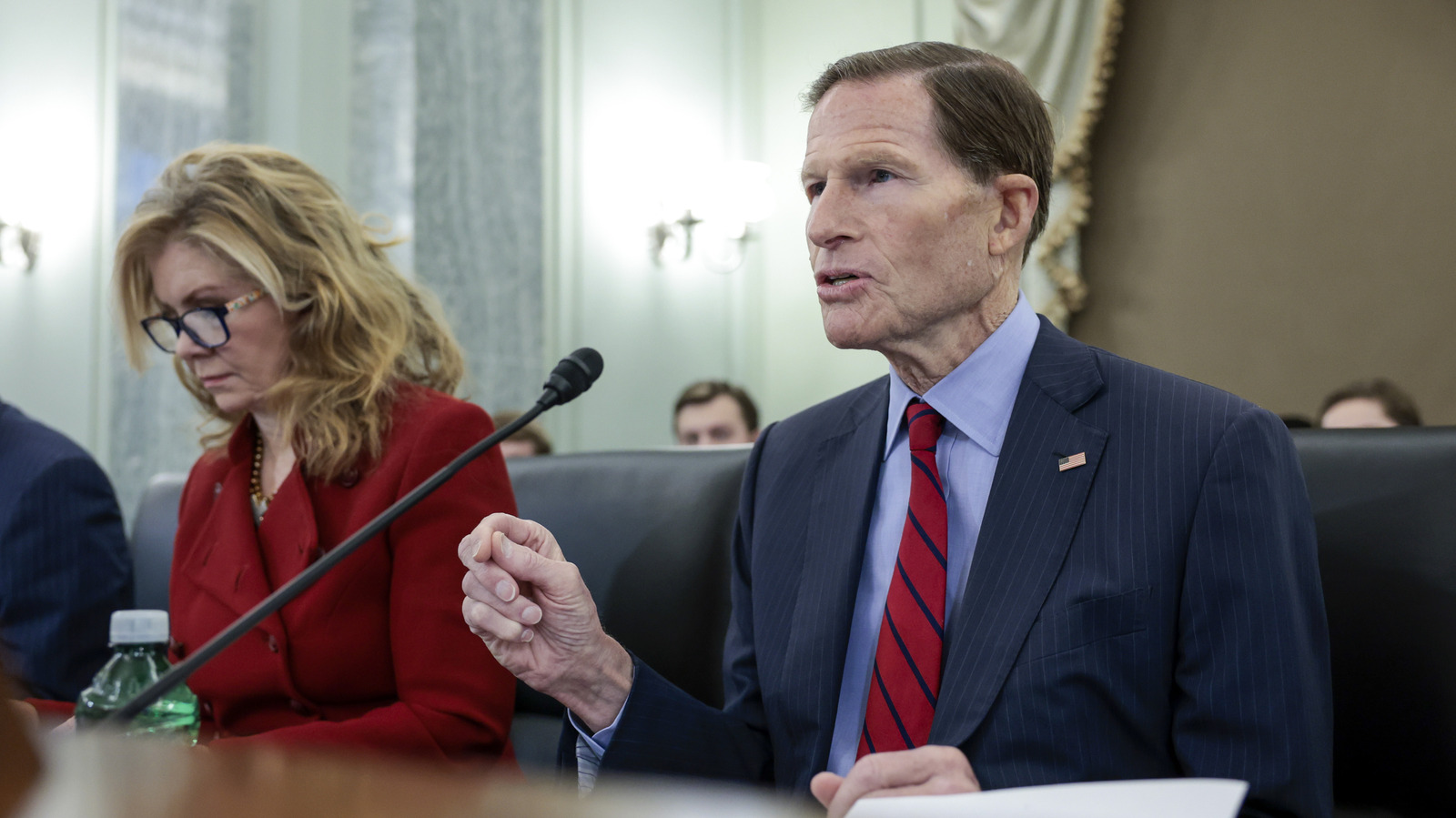
- Sens. Marsha Blackburn (R-Tenn.) and Richard Blumenthal (D-Conn.) sent a four-page letter Wednesday to TikTok Inc. CEO Shou Chew and Adam Presser, CEO of the company's Culver City-based U.S. spinoff, demanding answers about the experiment.
- The senators, co-sponsors of an online child safety bill, called TikTok's decision to conduct the test "depraved," and wrote that the company "knowingly withheld a critical safety measure for millions of American users" to determine whether protecting users would affect its bottom line.
- The experiment was discussed in detail in a confidential 2023 company document, whose existence was reported by Bloomberg Businessweek this month.
- The document was handed over in litigation against the world's biggest social media companies and placed under a court-ordered seal.
- The document shows TikTok intentionally switched off an algorithmic safeguard for 10% of U.S. users, turning them into a control group; the safeguard was designed to break up online echo chambers of harmful content.
Compiled by The Product DeskSomething wrong?How this is made
Why it matters
Divide 15 million by 10 percent and you get the denominator the test was run against: roughly 150 million US accounts sorted into treatment and control [1]. The feature being held back was the one meant to break up echo chambers of harmful content [5], which means the question the company set itself was whether interrupting those chambers cost it usage. The document says so in the company's own vocabulary. The choice was "a delicate balance across safety and the ability to measure impact on DAU (daily active users) and core metrics" [9].
That line is the load-bearing exhibit, and it is worse for TikTok than the 10 percent figure. A holdout can be defended as methodology. A written record that the tradeoff was safety against the ability to measure a core metric describes a decision with an owner. For one account the document goes further, saying filter bubble prevention "did not take effect on this user by design" [8]. That phrasing attaches a deliberate configuration to a named 16-year-old [7].
The dates compound it. The senators note that Congress had been raising concerns about TikTok's recommendation algorithm pushing young users toward harmful content since October 2021, before the experiment rolled out, and argue the company was therefore on notice [13]. That is about three months before Chase Nasca was randomly assigned to the control group [2]. The document describing the experiment is dated 2023 [3], roughly a year after he died [3], so the write-up was produced with the outcome already known, then handed over in litigation and sealed by a court [4].
The hardest request in the letter is not about intent. The senators want, for every US experiment where a safety feature was withheld, disabled, delayed or reduced, the number of users involved and how many of them were minors [11]. Assignment logs are built to answer the first half of that. Age is rarely a dimension carried alongside bucket membership, and if TikTok's records do not carry it, producing the count means reconstructing who was a minor at the time of assignment, per experiment, years later. The senators also ask why the company permitted minors to be included at all [10], a question that presumes exclusion was an available option in the assignment logic.
TikTok did not respond to a request for comment about the letter [14]. Its statement for the Businessweek story described a deep commitment to user safety and continued investment in Trust and Safety, detection systems and enforcement teams [15]. Neither of those addresses the sentence about DAU measurement that a court already holds a copy of. Blackburn, in an interview after the story ran, put the read more plainly: children on these platforms are the products [16].
The durable change here is not the letter's language. It is that an experiment inventory, including the holdouts that were never shipped to, is now a document Senate offices ask for by name and plaintiffs' lawyers already have in part.
Loading topic controls
Loading related stories