Invest1 publisher3 min readPublished
Korea's sentencing panel sets the base term for a worker's death at 18 months
The Supreme Court's Sentencing Commission recommends up to 15 years for an owner or chief executive when a worker dies, and reaching that figure takes the aggravated bracket, multiple aggravating factors and a 50% uplift.
The Investor · Invest desk
What happened
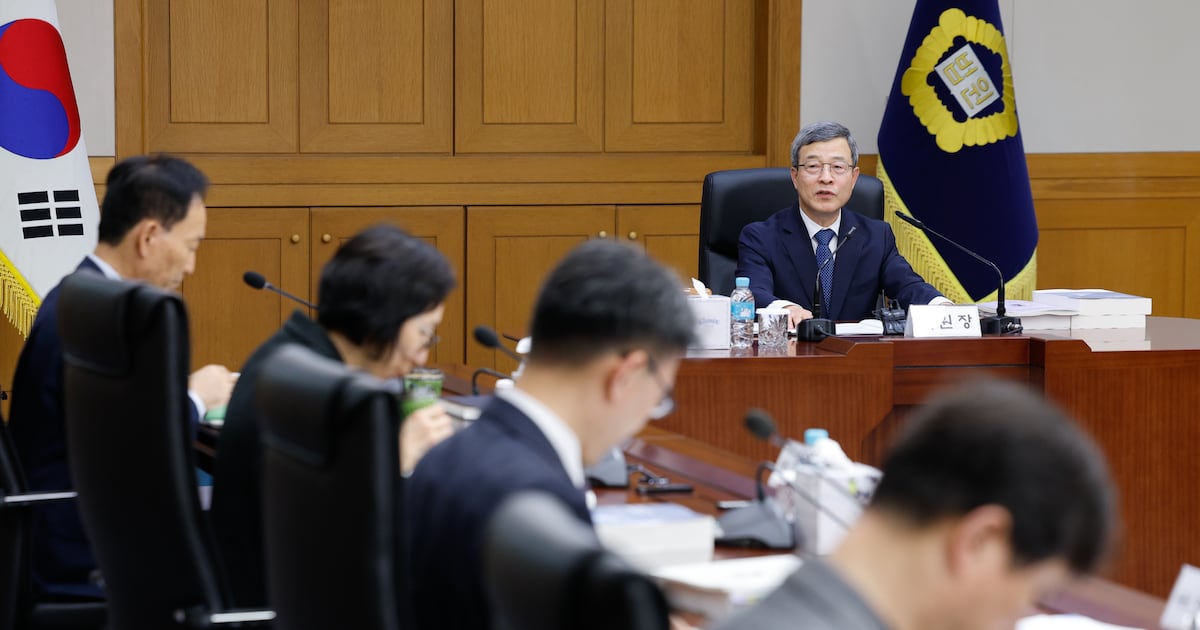
- Korea's Supreme Court Sentencing Commission, chaired by Lee Dong-won, reviewed guidelines for serious accident, industrial safety and negligent homicide crimes at its 148th plenary on the 21st and published them on the 22nd.
- In fatal cases the top of the aggravated range can be lifted by as much as 50% when multiple special aggravating factors apply, which is the route to the 15-year figure for owners and chief executives.
- An offender convicted again within five years of a finalised sentence for a serious accident crime faces recommended limits raised by 1.5 times at both ends of the range.
- The ranges are recommendations that judges use as a reference, and the commission will finalise the text after public hearings and other consultation.
Compiled by The InvestorSomething wrong?How this is made
Why it matters
- exposure The records that decide which bracket a death falls into are held at head office: the subcontract price, the programme dates, the transfer out of the safety budget. A prosecutor can assemble the aggravated case from a contract file.
- decision Spending after an accident now carries sentencing value, since the victim's wish not to see the offender punished and substantive recovery of damages both sit in the special mitigating column.
- constraint Setting the base floor at 1.5 times the statutory minimum leaves a judge who wants to go lighter than 18 months needing a mitigating finding to get there.
Getting from four years to fifteen takes three separate findings by a court. The case has to sit in the aggravated bracket for a death, where the ceiling is 10 years against the four-year top of the base range, two and a half times it [1]. Multiple special aggravating factors then have to apply. Only at that point does the uplift run the ceiling up by half, turning 10 years into 15 [6][2]. The ranges do not bind a judge; they are a reference, with the force of a recommendation [8].
What decides the bracket is paperwork. The commission's worked examples of a serious breach of the safety and health duty include a subcontract signed at a markedly low price that did not reflect the minimum cost needed to keep workers safe, a construction period set so short that safety measures were difficult to carry out, and safety budgets cut or diverted to other purposes [10]. Two further examples cover a hazard that had been reported, where the need for improvement was clear and the report was ignored, and repeated failure to comply with corrective orders from central government agencies [9]. Tender prices, programme dates, budget transfers and the record of who received the report all sit above site level.
The mitigating list points at the worker and at the settlement. A victim who knowingly entered a dangerous area, or switched off an essential safety device because it was inconvenient, counts as a special mitigating factor [11], as does a co-worker's negligence that was difficult to anticipate [12], as does the victim's wish not to see the offender punished or substantive recovery of damages [13]. Effective measures to prevent a recurrence are only a general mitigating factor, but the Seoul Economic Daily reported that they will weigh heavily in deciding whether to suspend a sentence [14].
"We set the lower end of the mitigated range in order to serve the purpose of the legislation and allow for severe punishment, while also reflecting the wide spectrum of violations," the commission said [15]. It set a wide range deliberately, noting that gravity varies with the scale of harm, the degree of the breach and the circumstances of the accident [17]. The spectrum is 10 months at the mitigated floor to 180 months at the special maximum, a factor of 18 [6]. One oddity in the same table: the aggravated ceiling for an injury case, five years, sits above the four-year top of the base range for a death [7].
For a second conviction within five years, both ends move by half again, so the base range for a death becomes 27 months to six years and the aggravated range 4.5 to 15 years [7][3][4]. The same plenary set guidelines for obstructing a sobriety test with a base of eight months to two years in prison or a fine of 7 million to 15 million won [18]. The commission will finalise the text after public hearings [19].
In my view the figure to plan against is the base range of 18 months to four years, because the 15 needs the aggravated bracket, multiple aggravating factors and the uplift stacked in sequence [3][6]. The counter-thesis: the aggravating factors are written in procurement language, and a prosecutor can lift them from a contract file without reconstructing the accident at all [10]. What would show the base range is the wrong anchor is a first fatal case in which a court cites a subcontract price or a compressed schedule and lands above four years.
What to watch
- Whether the 18-month base floor for a death survives consultation or is pulled back toward the one-year statutory minimum in the final text.
- Whether the 50% uplift on the aggravated ceiling, the clause that produces the 15-year number, stays in the version the commission finalises.
- The first fatal case in which a court cites a subcontract price or a compressed schedule as a special aggravating factor.