Product1 publisher3 min readPublished
Ebonix ships a Blender plug-in that cuts textured hair from weeks to under an hour
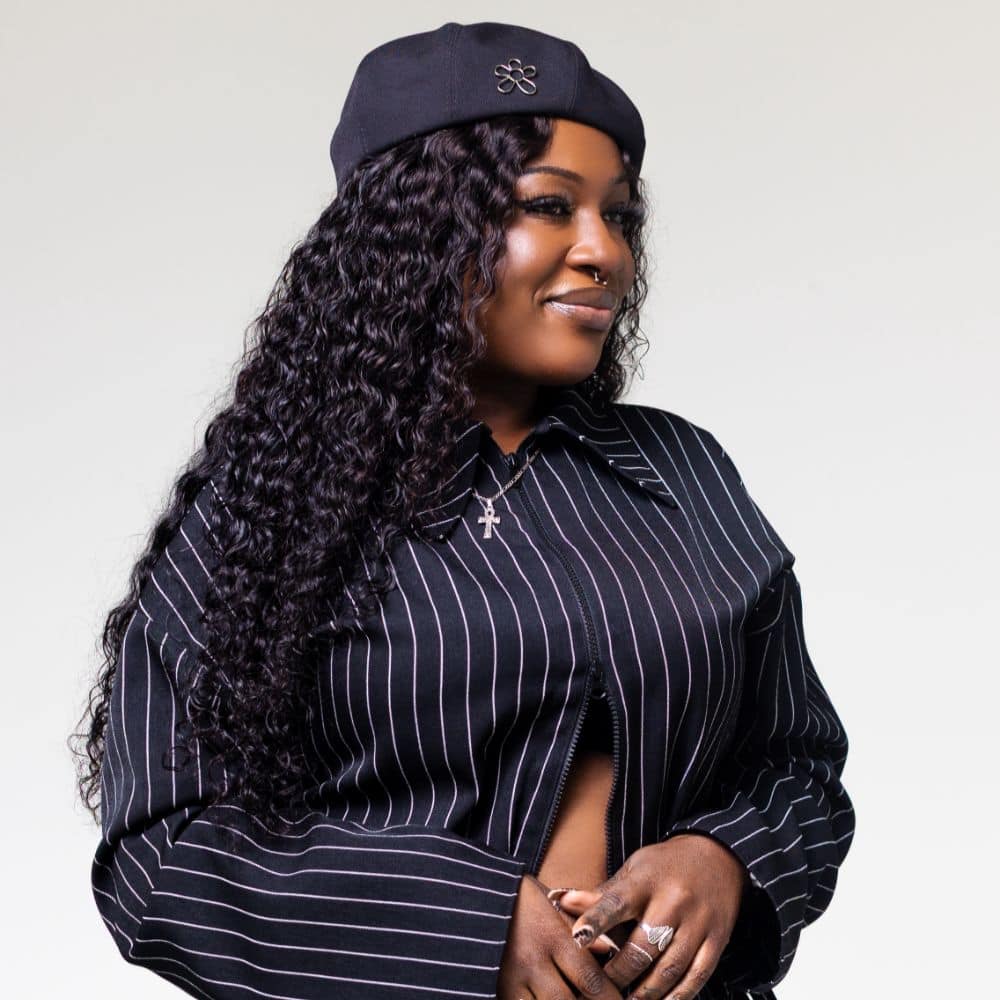
Danielle Udogaranya spent more than a decade hand-crafting Black hairstyles for life-sim games because the authoring tools assume straight strands, so she took a 2024 geometry paper and coded the generator herself.
The Product Desk · Product desk
What happened
- Danielle Udogaranya, who creates as Ebonix, has spent more than a decade making custom Black hairstyles for life-simming games, working as a technical artist with a degree in psychology.
- She told WIRED that textured hairstyles in games have been reliant on code that was not made for them, which is why a handful of stiff cylindrical locs became the industry default.
- After reading the 2024 paper Curly-Cue: Geometric Methods for Highly Coiled Hair, she coded a plug-in for Blender, the free open-source app she already used for custom content.
- Her Loc & Kinky Strand Generator Tool lets other custom content creators build textured styles that normally took weeks in under an hour.
Compiled by The Product DeskSomething wrong?How this is made
Why it matters
- constraint When the cheapest shape a hair tool can produce is a cylinder, the roster of natural styles a character creator offers is set by authoring cost rather than by art direction, and unrelated studios converge on the same silhouette.
- cost With most Sims 4 natural styles sitting inside $10 to $40 packs, the cheapest route to a hairstyle a player recognises runs through a volunteer's download page instead of the storefront.
- capability An hour-scale generator turns textured hair from specialist commission work into something a single creator can attempt, revise and discard without losing a week.
- precedent The usable fix came from an academic paper implemented by one artist outside the studios, which sets the expectation that the next missing asset class gets solved by whoever needs it rather than by whoever ships the game.
Udogaranya's account of the mechanism is short: a straight strand tapers at the end and reads as hair, while the same geometry with a Black texture applied to it "looks like a hot dog" [5]. The cylinder survives because it is the cheap shape to author, which is how the stiff, short-dreaded style worn by Michael B. Jordan's character in Black Panther ended up recurring in Tekken 8, Spider-Man 2, Apex Legends and Horizon Zero Dawn [6]. Her conclusion after surveying what exists is that Black hair has been accommodated inside tools built primarily for straight hair [16].
Studios count hair in swatches. EA's latest free download adds one new natural hairstyle alongside a pack of six outfits [11], and Udogaranya's summary of the current crop is "God forbid we get more than three options" [7]. What people do with a three-option creator is go elsewhere: fans of games like The Sims download packs of styles the game does not carry, and her Patreon holds more than 115,000 members [2]. That number functions as a defect list rather than a fan base: it enumerates the features character creators declined to build.
The speed claim is worth converting into artist hours. Weeks down to under an hour, taking a 40-hour week as the floor, is a 40x reduction; two weeks makes it 80x [18]. That is her own figure for her own tool [9], and the size of it is the difference between textured hair as a commission and textured hair as something a creator revises the same afternoon.
The tooling-only reading of this does not quite hold, and WIRED's account says so: it attributes the demand for custom content both to historic underrepresentation and to technology that has been slow to improve [12]. The casting problem here precedes the geometry problem. SEGA's Heavyweight Champ in 1976 drew Black hairstyles to emphasise minstrel-like stereotypes [13], Street Fighter offered one Black character out of twelve, 8.3 percent of the roster [14][17], and The Sims in 2000 tied hair swatches to face options with three skin tones and virtually no natural styles [15]. The roster shortage came first; the tools then hardened it into a default. That is also why the distinction between guidance and executables matters here. Dove and the Open Source Afro Hair Library published Code My Crown in 2023 as a free guide to coding textured hair and protective styles [10], which asks a studio for engineering time it did not budget, while a generator hands back the finished asset directly [9].
Anyone running a product with an asset library can apply two checks that follow from this. The first is the cheapest-asset test: whatever shape your authoring tool produces most cheaply is the shape that ships, so when the cheapest output and the shipped default are the same silhouette, the tool made the editorial decision and the art direction ratified it. The second is where the unmet demand is being served and who pays for it. When the answer is a third party's download page with six figures of members, the backlog is being written by users and staffed by a volunteer, and the durable response is a generator inside the pipeline rather than one more style bundled with six outfits. Her plug-in runs in Blender for custom content creators [8], so it changes the cost of covering for shipping games rather than the games themselves.
What to watch
- Whether the Loc & Kinky Strand Generator Tool gets picked up inside a studio character pipeline rather than only by Blender custom content creators.
- Whether EA's free hairstyle DLC moves past one natural style per pack.
- Whether Paralives ships more than a handful of textured styles as it leaves early access.