Invest1 publisher3 min readPublished
Apple unveils its first foldable as Siri AI launch remains undated in Europe and China
Siri AI reaches US iPhones on the 15th, six days after the Duo was unveiled. Apple has published no date for Europe, where the EU wants rival assistants reading the same emails Siri does, or for China, where an Alibaba-and-Baidu build awaits approval.
The Investor · Invest desk
What happened
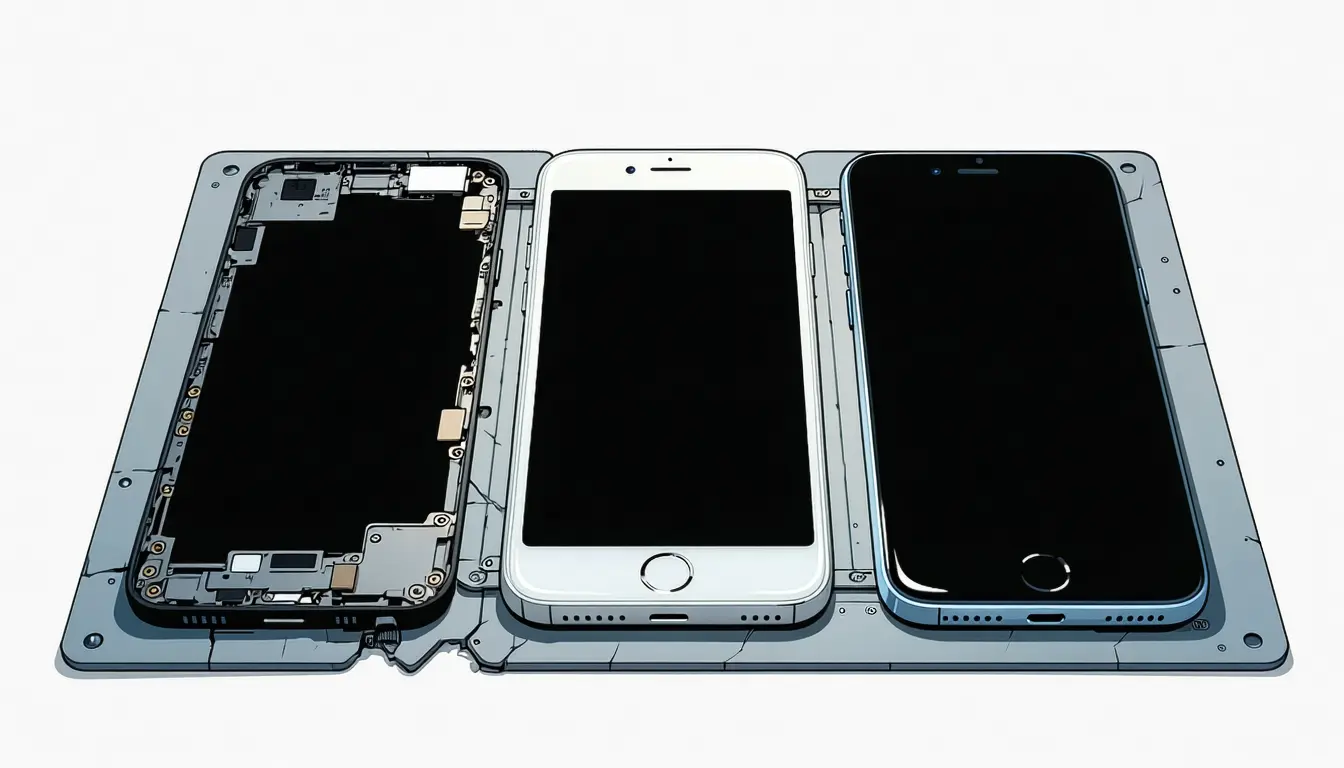
- Apple unveiled the iPhone Duo, the first foldable in the iPhone line, on the 9th, and will begin rolling out Siri AI in the United States on the 15th, with South Korea and other markets following.
- Apple has published no Siri AI date for Europe, where Seoul Economic Daily reports the rollout is delayed indefinitely over unresolved Digital Markets Act questions about gatekeepers favoring their own services.
- Apple has no history of assembling foldables, and yields are said to be falling during the assembly of some components including display panels.
Compiled by The InvestorSomething wrong?How this is made
Why it matters
- constraint The EU's objection is to how Siri AI reaches messages and email rather than to a pending filing, so Apple cannot clear Europe by waiting; the remedy is a change to the integration it sells.
- precedent By accepting Alibaba's and Baidu's models inside its own assistant to satisfy Chinese approval, Apple has set a reference point for what a European settlement would cost it.
- cost A memory bill running 400% above last year, against a rival that held its top foldable's increase to 8.3%, makes the Duo's premium a pass-through Apple cannot easily reverse mid-cycle.
- exposure At the top of each range the Duo is 18.5% above the Z Fold 8 Ultra in dollars and 47.5% above it in won, so which market a buyer stands in decides how expensive the phone looks.
China and Europe are withholding the same feature for different reasons, and only one of those reasons has a queue to stand in. For China, Apple has already built the thing: a separate version of the assistant combining local models from Alibaba and Baidu, sitting with authorities awaiting approval, according to Seoul Economic Daily [7]. That decision has an eventual date. Europe is not a queue. The EU's reading of the Digital Markets Act, per the same report, is that if Siri AI draws on personal data such as a user's text messages and emails, competing systems such as GPT must be granted similar access so they can compete on equal terms [5], which is a request to change what the product is rather than when it ships, and the paper describes the European rollout as delayed indefinitely with both sides still at odds [4][6].
In China, Apple's concession was to put someone else's models inside its own assistant [7]. In Europe, the ask is to let someone else's assistant reach the data Siri reaches [5]. The first is procurement; the second is the in-house integration of hardware and software that Apple has built the company around [6]. On this evidence, the engineering behind the China-specific stack does not clear the DMA.
Price reads differently depending on the currency. At base spec the Duo is $1,999 against the Galaxy Z Fold 8's $1,899, a gap of $100 or 5.3% [10][11][7]; in Korea the same pair is 3.29 million won and 2.27 million, a gap of 1.02 million won, or 44.9% [7]. Apple's Korean base price implies about 1,646 won for every dollar of its US list, Samsung's about 1,196, so a Korean buyer of the iPhone pays roughly 38% more per dollar of American sticker than a Korean buyer of the Galaxy does [3]. A good part of the 1 million to 2 million won gap Seoul Economic Daily reports is Samsung pricing cheaply at home [19].
What the material does not contain is any unit forecast, any split of Apple's revenue between the markets where Siri AI arrives on the 15th and the ones with no date [2][3], or anything establishing that a buyer at $1,999 weighs an assistant against 53 grams and a reported 12 gigabytes [10][5][18]. What the evidence does carry, more narrowly, is this: where Siri AI works, the objection to the Duo is its price, and where a price argument might be winnable, the feature is missing. Samsung's four-way arrangement of Gauss, Bixby, Gemini and Perplexity answers the DMA question structurally [8], and Gemini 4 is scheduled onto Galaxy phones early next year [9], which puts a shipping assistant in European hands on a calendar Apple cannot yet match [3].
What to watch
- A published European date for Siri AI, or an Apple concession giving outside assistants access to messages and email, would end the indefinite delay.
- Approval by Chinese authorities of the Alibaba-and-Baidu build, which would leave Europe as the only large market without the feature.
- Whether Gemini 4 actually reaches Galaxy phones early next year on the schedule Samsung has set out.