Science1 publisher3 min readPublished
Pantheon Regeneration bets credit buyers will fund rewetting 23 square miles of Carolina peat
Ditches dug decades ago for a farming venture that was abandoned leave the tract emitting 130,000 tons of carbon dioxide a year. The plan to plug them rests on credit buyers whose price nobody has published.
The Scientist · Science desk
What happened
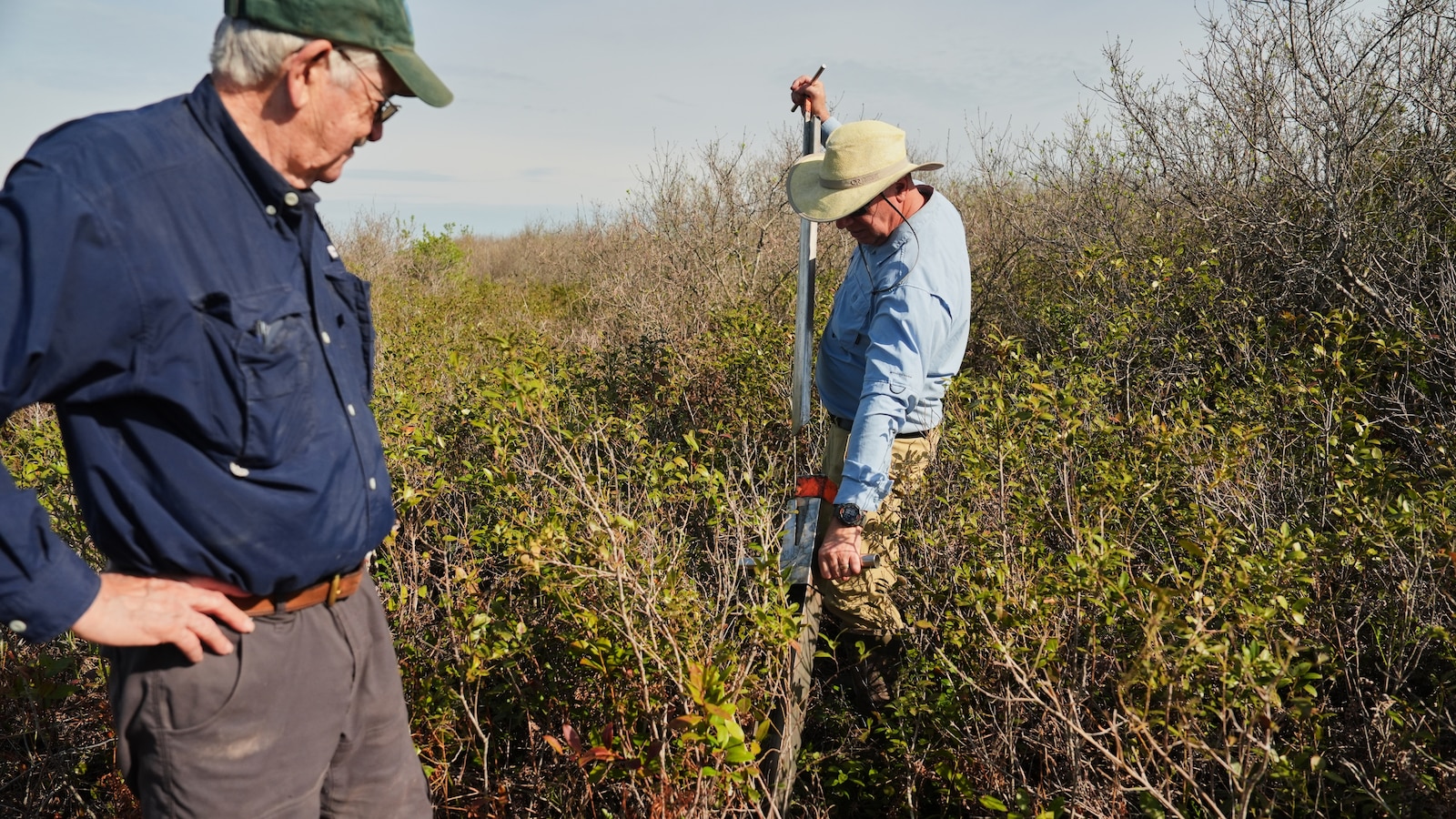
- Scientists and investors are working a 23-square-mile tract of North Carolina's Inner Banks where the peat runs up to 15 feet deep.
- Fifty miles of ditches, dug decades ago for a farming venture that was abandoned, pulled the water out of peat that took thousands of years to accumulate.
- The drained ground now emits 130,000 tons of carbon dioxide a year and sits exposed to drought and wildfire, with its native habitats altered.
- Pantheon Regeneration intends to block the ditches to control the water table, then cull invasive species and replant native grasses and flowers.
Compiled by The ScientistSomething wrong?How this is made
Why it matters
- capability Rewetting acts directly on the mechanism that made the carbon stay put, which is a shorter causal chain than most land-based credits can claim: raise the water, exclude the oxygen, slow the decomposition.
- exposure Anyone buying these tons inherits a baseline whose measurement method has not been published; if the 130,000-ton estimate moves, the credited volume moves with it.
- constraint A conservation promise made in perpetuity binds the buyer to hydrology, not just to a planting: the carbon only stays down for as long as somebody keeps the ditches plugged.
- precedent The ecological playbook is borrowed from federal and nonprofit refuges next door, so what is being tested on this tract is the financing rather than the restoration.
The arithmetic on the first tract can be done on the back of a soil core. Twenty-three square miles is 14,720 acres [1], and 130,000 tons of carbon dioxide a year across that ground is about 8.8 tons per acre [2][3]. That is the figure a buyer would be paying to avoid. It is also the figure with the least method attached: the account gives the annual emissions without saying how they were measured or modeled [16].
The physical case underneath is sturdier. Intact peat works because standing water excludes oxygen, so gases from decomposing plants stay trapped below the water table while surface vegetation keeps drawing carbon dioxide down [10]. Neal Flanagan's meter-long core shows what happens when that arrangement fails: dry, fibrous plant remains near the top; a crumbly, moist middle carrying charcoal from old fires; and a saturated base, half carbon by weight, with the consistency of axle grease [11]. Curtis Richardson, the Duke ecologist working alongside him, calls that bottom layer the black gold [12]. Blocking the 50 miles of ditches is an attempt to put water back over the part still worth saving [2][5].
Restoration engineering of this kind already has a local template. The adjacent Pocosin Lakes National Wildlife Refuge covers 175 square miles, roughly 7.6 times the Pantheon tract, and is one of the largest peatland restoration projects in the country [7][4]. What Pantheon adds is the balance sheet: sell credits to tech companies and other corporations, then roll the proceeds into a million acres of peatland from Virginia to northern Florida, about 68 times the acreage of the first site [6][3].
That multiplier should not be turned into a tonnage. Applying 8.8 tons per acre to a million acres assumes the rest of the target is drained as badly as this one, and the only relevant number in the source is that two-thirds of temperate peatlands, mostly in Europe and the United States, have been dewatered [13]. That two-thirds figure describes global peatland drainage in general, not the specific stretch of the Eastern Seaboard Pantheon is targeting.
The thing the emissions figure does not tell you is the credit. A credited ton here is the difference between the drained baseline and whatever the rewetted site emits once the water is back, and only the first of those two numbers is on offer [16]. Whether restoration money can outbid phosphate mining or oil and gas leasing for the same acres is the stated goal of Pantheon chief executive Tripp Wall, who wants the land conserved in perpetuity so it cannot become an oil and gas field, a phosphorus mine, or a shopping center [4]. It is not yet a demonstrated result: no price per ton, no named buyer, no registry methodology appears [16]. Perpetuity is also the expensive word in that sentence, because it turns the water table into a maintenance obligation that outlives the sale of the tons [4][5].
What to watch
- A registry listing or published methodology for the first tract, with a price per ton and a named buyer.
- Whether post-rewetting emissions get measured on site with flux and water-table instrumentation rather than modeled from the baseline.
- Whether any acreage between Virginia and northern Florida goes under contract, and at what cost per acre.