Product1 publisher2 min readPublished
Claude Code's new auto-memory works alongside CLAUDE.md, easing the need for hand-typed notes
Claude Code now writes its own record of a developer's corrections and preferences. Anthropic's documentation keeps CLAUDE.md alongside it, and the one practitioner account available says the file's remaining job is narrower.
The Product Desk · Product desk
What happened
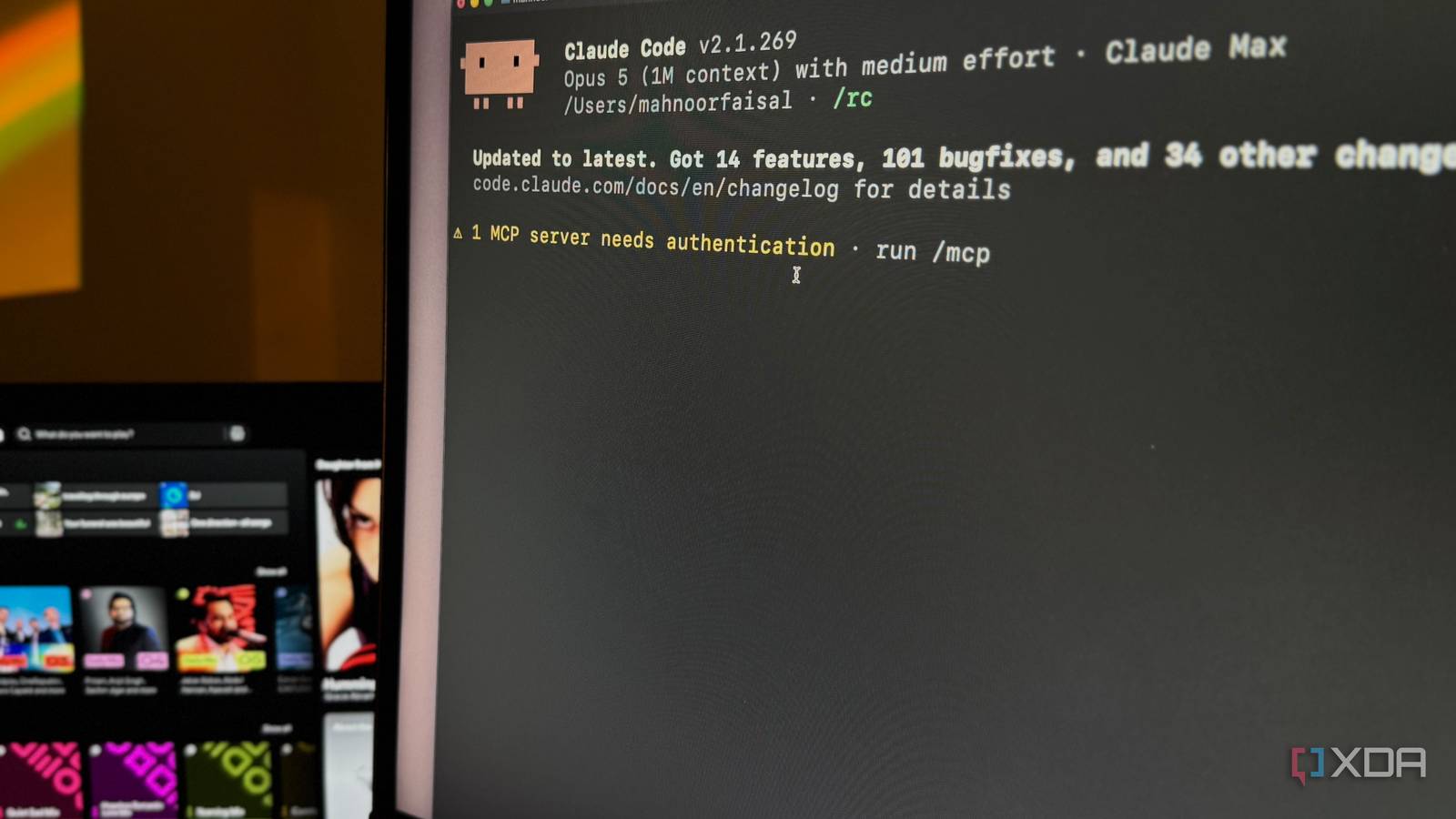
- Claude Code v2.1.32 introduced auto-memory in February, letting Claude record and recall useful information as work proceeds instead of depending on whatever the developer remembered to write down.
- Before that release, the only native way to carry context across Claude Code sessions was a file the developer maintained, usually CLAUDE.md, which Claude read at the start of every session.
- Auto Memory is maintained by Claude alone, and records repeatedly expressed preferences, corrections the developer makes, and project context the model cannot infer from the code itself.
- The XDA writer says he previously stored all of that in CLAUDE.md by hand, and that he had been putting a lot into the file that Claude can now handle on its own.
Compiled by The Product DeskSomething wrong?How this is made
Why it matters
- constraint Anything that must hold for every person in a repo still belongs in the file, because the store Claude writes is not something a teammate can open in a pull request and argue with.
- decision Every team with a long CLAUDE.md now has a triage job: separate the lines that are project rules from the lines that were only there to stop the model repeating a personal mistake.
- contradiction The account that argues the file was overloaded also insists the file still has a job, so treating CLAUDE.md as obsolete goes further than the evidence supports.
- precedent Memory work across ChatGPT, Gemini and Claude makes it reasonable to expect more of the context plumbing developers wired by hand in 2025 to arrive as a default in a point release.
The file grows because the fixes go into it. The XDA writer says his CLAUDE.md files kept getting longer as he added instructions, corrections and small bits of context he did not want to repeat in a new session [6]. With that file, he decided what Claude should know and typed it in himself [5].
Anthropic's support documentation for Claude Code calls the two systems "complementary memory systems" and says both are loaded at the beginning of every conversation [3]. A session therefore opens with two stores of context where before February it opened with one [1], and only one of the two was written by the person running the session.
The source argues the other way: the writer says CLAUDE.md still has its place, that auto-memory has made its purpose clearer, and that he now keeps it for the rules that really matter [7]. This is one developer describing his own setup, and the account does not measure whether the agent's output improved or how often auto-memory recalls the wrong thing [10].
XDA places the feature inside a wider pattern at the labs: OpenAI has continued expanding ChatGPT's memory, Google has leaned into personalization and memory with Gemini, and Anthropic has been doing the same across Claude [9].
For a team deciding what to strip out on Monday, each line of the file faces two tests: whether it has to hold for everyone who works in the repo or is only one person's habit, and whether anyone would notice inside a session if it stopped applying. Lines that are shared and would break a build or a review process stay in the file, where a colleague can read them. A formatting preference the model will relearn the next time it gets corrected is the candidate for deletion.
What to watch
- Whether Anthropic exposes auto-memory as an artifact a team can read, edit and diff, rather than a store Claude alone maintains.
- Whether the support documentation moves from calling the two systems complementary to defining precedence when a memory and a CLAUDE.md rule conflict.
- Any measured evidence on how much of a session's context window auto-memory consumes as it accumulates.