Build1 publisher3 min readPublished
A /usage readout traced 79 percent of one developer's Claude Code usage to sessions past 150k context
The same breakdown also points at subagent-heavy sessions and at the Playwright MCP server, and the shares overlap enough that one line on its own cannot size a saving. The overage that started his audit came from a different tool.
The Engineer · Build desk
What happened
- A developer using Claude Code at work hit the limit on the additional usage credits he had configured while his plan's included usage still had room, then went through /usage to find out why.
- The /usage breakdown returned three lines: 79 percent of usage at over 150k context, 61 percent from subagent-heavy sessions, and 36 percent from the MCP server named playwright.
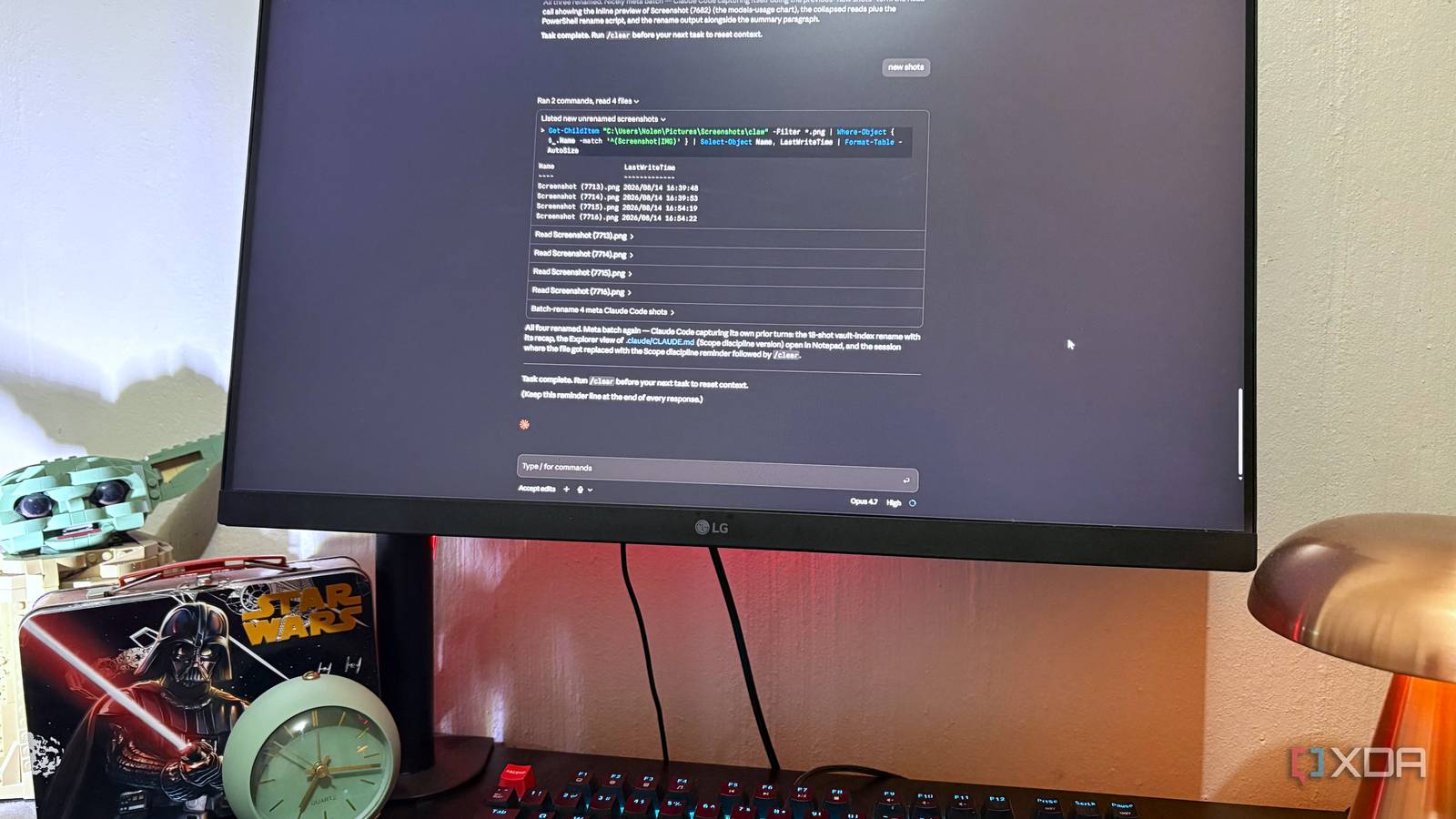
- The habit he changed is running /clear once a Playwright MCP test is finished and the browser context is not needed for the next task.
Compiled by The EngineerSomething wrong?How this is made
Why it matters
- contradiction Anyone reaching for this post as proof that MCP tool results emptied a budget should read further: the author puts the overage on Fable usage and explicitly rules out Playwright MCP as the cause.
- constraint Because the three shares count the same sessions, an operator cannot subtract the playwright line to size what a clearing habit would save; nothing in the readout isolates it.
- decision Each /clear becomes a judgement call about the task that has not started yet, and a wrong call pays for the same file reads a second time.
- capability Attribution by MCP server name gives a team a per-server line item to argue over.
The readout is bucketed by context size, and it pays to read that literally. /usage reported that 79 percent of his usage occurred at over 150k context [2]. The unit there is context, not prompts. A meter that can slice usage that way is sensitive to how much context each request carries. The post describes Claude Code working from previous conversation history, files it has read and tool results, as well as the latest sentence typed [5].
During an end-to-end check, the post lists the same loop repeated: open a page, inspect elements, click a button, fill in a form, check the state after navigation, then fix something and try again [8]. Relatively large tool results land in context at those steps, which the author treats as a necessary cost of testing [8]. His complaint is about afterwards, when continuing in the same session makes subsequent processing heavier [13].
The three lines overlap. Add them and you get 176 percent [11]. A single browser session can sit above 150k context, spawn subagents and be attributed to the playwright server at the same time, so at least 76 points of that total is the same usage counted more than once [11]. He read the three lines as three separate problems at first, then decided they were connected [15]. An operator cannot assume that clearing after a browser test recovers 36 percent.
The overage itself has a different cause in his own telling. He wrote that "Fable usage was what had caused me to go beyond the included usage and consume additional credits" [3], and, on the browser server, "That did not mean Playwright MCP itself was the reason I had exceeded my usage limit" [4]. What confused him first was that his plan usage still had plenty of room while the additional credits he had configured were exhausted [1]. The post calls itself "a short learning log about how I got there" [10].
/clear resets the session, so whatever the next task genuinely needs gets read again [14]. So the rule he settled on is conditional. "I do not clear the session mechanically after every test," he wrote [7]. The test he applies is "Will I need this context for the next task?" [6].
For his percentages to mean anything elsewhere, several things have to match: browser loops long enough to push a session past 150k context [2], subagents carrying part of the work [2], and a plan that meters included usage separately from top-up credits [1]. The 150k figure is his tool's bucket boundary. The gap he names, between context he has stopped needing and context the session is still carrying, travels without any of those conditions [9].
What to watch
- Whether Anthropic documents how /usage assigns a session to the >150k context bucket and to a named MCP server, since the two lines currently count the same work.
- Whether the author's next /usage readout shows a lower share above 150k context after the /clear habit; that comparison is missing from the post.
- Whether MCP servers gain a way to trim or summarise a browser snapshot in place, so it stops riding along in every later turn of the session.