Product1 publisher2 min readPublished
Orion's $2,195 sleep pad wins its skeptical reviewer over with cooling alone
A TechCrunch reviewer who took the test unit expecting comedy material now sleeps through the night on Orion's cooling mattress pad, and says the AI features behind the $2,195 price look of doubtful necessity.
The Product Desk · Product desk
What happened
- Orion sent TechCrunch its $2,195 AI-enabled mattress pad, a phone-controlled cooling system that adjusts bed temperature through the night to cut how often the sleeper wakes up.
- By default the pad starts cooling around the bedtime the user types in, cools further as they fall asleep, then warms back to room temperature at wake-up time.
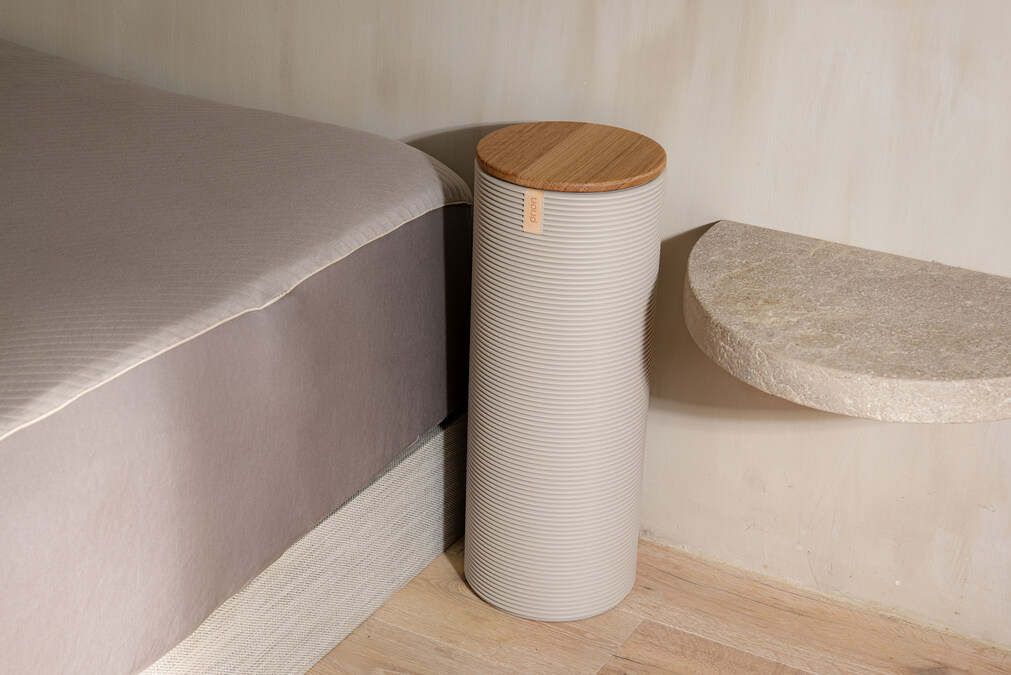
- Setup involves pouring water into a tower beside the bed, and the reviewer has not had to refill it after months of use.
- TechCrunch notes that this kind of detailed sleep data is usually processed over the cloud, and founder Harry Gestetner says Orion invests heavily in security.
Compiled by The Product DeskSomething wrong?How this is made
Why it matters
- cost The $2,195 covers a thermal appliance and a learning claim at the same time, and the buyer can verify only the first of them at home.
- exposure Once nightly sleep timing leaves the bedroom for cloud processing, a breach at any party in that connection reveals when and how a household sleeps, and the buyer's assurance is the vendor's own account of its security spending.
- precedent An AI label that survives a skeptical review because the physical product works tells other appliance makers they can price hardware whose benefit is mechanical the same way.
TechCrunch's reviewer agreed to test the pad purely because the idea of an AI-enabled thing you sleep on seemed funny to write about [2]. A few months in, the review reports sleeping like a baby [3]. The review likens lying on it to flipping your pillow over to the cool side, except that the whole bed is now the cool side [4].
The price argument is software. Orion says the pad learns from your sleep data to modulate temperature and maximize sleep quality [6]. The default program described in the review does not need that: each of its three temperature changes is keyed to a point in the night, not to the sleep data the app collects [19].
The app will show light sleep, deep sleep, REM, how often you wake and how much you toss and turn [12]. Those are the numbers that could settle whether adaptive control beats a timer. The review does not run that comparison, and says instead that it is skeptical of how much the AI features contribute to the price [7].
Orion's founder, Harry Gestetner, is 26, and sold his last company, the creator monetization platform Fanfix, for an estimated $65 million when he was 22 [15]. He traces the new venture to what building the old one did to him. "I was in the office seven days a week, totally neglecting every other area of my life, neglecting my health, sleeping terribly, eating terribly, not working out, and I started to get health problems," Gestetner told TechCrunch [16]. He also said "I think sleep is the cornerstone of longevity" [17]. He told the reviewer we are five years away from "longevity escape velocity," which he described as the point where "for every additional year you're alive, AI science is able to add an additional year to your life" [18].
For anyone weighing the spend, the split worth making is between the appliance and the schedule. The water loop shows up the first night [9]. The learning shows up only against a control, and the vendor's own app is the instrument [12]. So two questions to put to Orion: which set points move on their own after two weeks of data, and what the same hardware would cost with the feature switched off. If there is no answer to the second, the $2,195 is the price of a cooling appliance and the learning comes along with it [1].
The buyer this suits is someone who wakes up hot, or sleeps beside someone who does, and can run two zones off one tower [11]. That is a plumbing purchase with an app on top.
What to watch
- Whether Orion publishes a wake-up comparison between its adaptive control and a fixed cooling schedule.
- A cooling-only tier at a lower price would show what Orion charges for the learning.
- Which third parties handle Orion's sleep data, and whether the company names them.