Product1 publisher2 min readPublished
HTC lands the Vive Eagle in the US at $499 on last year's Taiwan hardware
Engadget's review credits the Eagle's physical controls and 49-gram frame, then calls the device inessential at $499 and up. The internals are the ones HTC shipped in Taiwan a year ago, and video tops out at 1,512 x 2,016.
The Product Desk · Product desk
What happened
- HTC has brought the Vive Eagle to the West a year after launching the camera glasses in Taiwan.
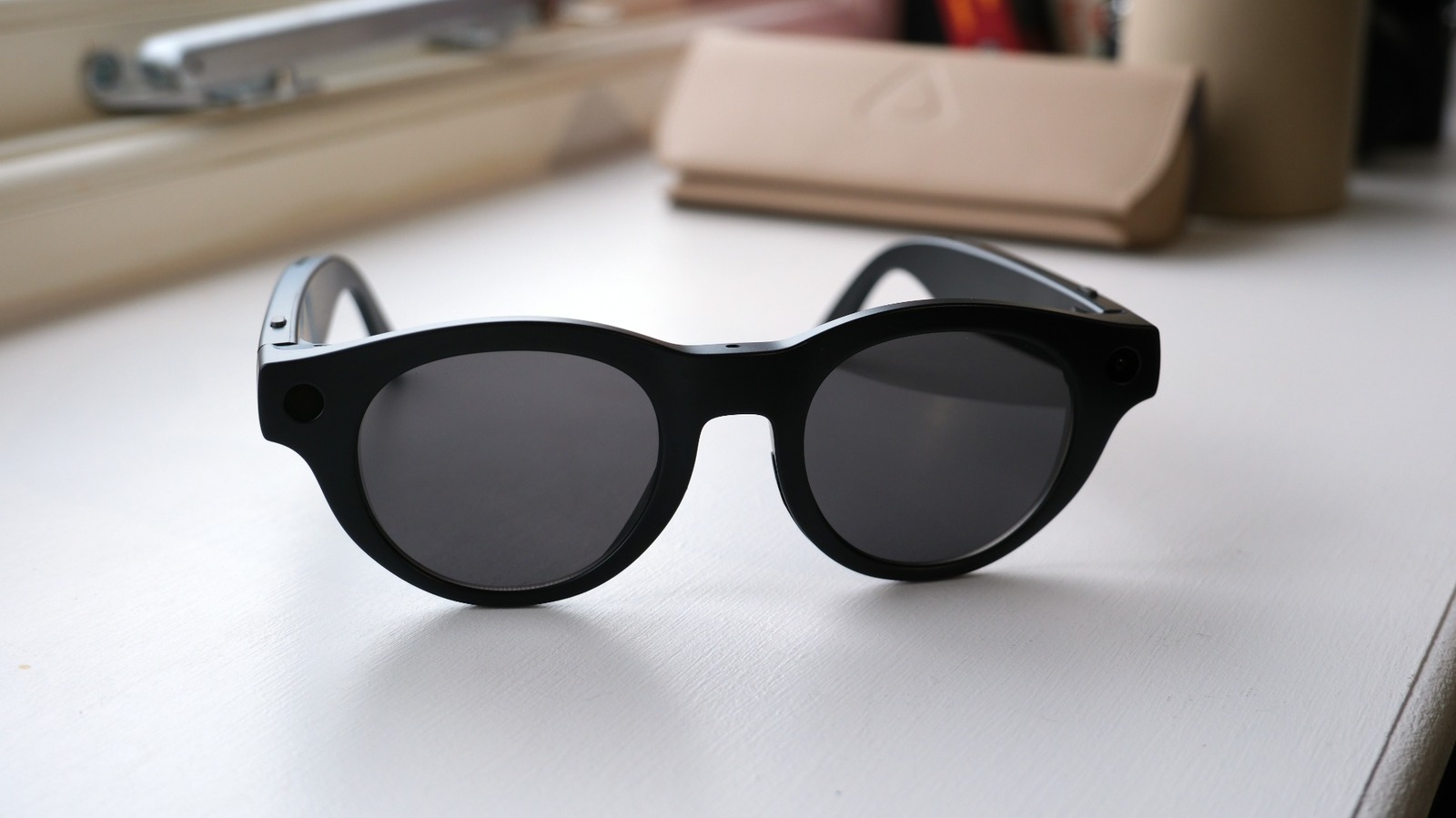
- The basic Panto model with non-prescription sunglass lenses sells for $499 in the US, weighs about 49 grams, and uses a Wayfarer-style frame following the template Ray-Ban set in 2021.
- The Western unit is internally the same as last year's Taiwan product: Snapdragon AR1 Gen 1, 4GB of RAM, 32GB of storage and a 235mAh battery rated at 4.5 hours of music playback.
- The 12-megapixel ultra-wide camera shoots 3,024 x 4,032 stills and 1,512 x 2,016 vertical video, caps every clip at ten minutes, and by HTC's count fills the 32GB with 3,000 photos or 50 videos.
- Engadget's review credits useful controls, light weight and a privacy focus, then calls the glasses inessential and expensive at $499 and up, with imaging that needs to improve.
Compiled by The Product DeskSomething wrong?How this is made
Why it matters
- constraint Footage still has to be moved off the glasses over Wi-Fi 6E, so the phone stays in the workflow and the buyer carries two devices to do one job.
- cost At $499 the buyer funds a second capture device that Engadget's reviewer says a phone beats for speed and quality, plus a warning LED whose beneficiary is the person in front of the lens.
- decision Any second mover shipping a reference-design wearable without a subsidy budget now has to pick which of Engadget's two tests its differentiator answers, because a privacy story alone does not clear both.
- capability The buttons and touchpad let the wearer take a call, run playback and cycle AI answers without reaching for a handset. That is the one part of the product that genuinely removes a step.
Record to the ten-minute cap and the clip stops [7]. The file then has to move, and it moves over Wi-Fi 6E to a phone [8]. Divide HTC's own storage figure, up to 50 videos on 32GB, and each clip gets about 0.64GB, or roughly 64MB for every minute of footage at that cap [20].
This pair fills 32GB and hands the result to the phone [7][8]. Engadget's reviewer made the wider case plainly, writing that "There's almost nothing camera glasses can do you can't do faster and better with a phone" [16].
The review sets HTC two tests: make the argument for why anyone needs these at all, and deliver hardware and software good enough to beat Meta's. The review says it has to do both [17]. On the hardware half, the Western unit is the Taiwan unit, with a Snapdragon AR1 Gen 1, 4GB of RAM and 32GB of storage [4]. On the other half, Engadget wrote that "HTC can't win on price, and can't win on the arguments" [14], and argued that Meta bought its position by spending and "still can't explain why anyone needs a pair" [15].
Engadget's headline also credits the Eagle as focused on privacy [13]. The privacy hardware the review describes is a white LED beside the camera, there to warn the people around you that you are recording [10]. That LED is the privacy hardware, and the glasses cost $499 [2][10].
The controls are the part that works without a handset. Two buttons and a touchpad cover power, the AI trigger, the shutter, scrolling, answering calls, media playback and cycling through AI responses, and the review calls that variety worthy of praise [9]. The internal battery is 235mAh, rated at 4.5 hours of music [5]. HTC's clip-on Power Boost holds 120mAh, about 51 percent of the internal cell [12][21]. That is roughly two and a quarter more hours of playback [22].
For anyone pricing a second-mover accessory against a subsidised incumbent, the first question is whether the device removes a step the buyer performs today. The second is whether the buyer feels the differentiator or a bystander does. The Eagle's controls remove a step. The camera does not, because the footage still lands on the phone [8][9], and the LED sits on the bystander's side of the lens [10]. Engadget's review is one reviewer's account and does not include usage or retention numbers; on that account the imaging needs to improve and $499 and up is too much to ask [13].
What to watch
- Whether HTC publishes a price for the Power Boost clip-on battery in Western markets.
- Whether the imaging improves in software, given the sensor is the same 12MP ultra-wide that shipped in Taiwan.
- Whether HTC moves the Eagle off $499 once it is sitting on a shelf next to Meta's glasses.