Invest1 distinct publisher3 min readPublished
Acceptance letters at Wang Fuk Court run at 97.7 per cent and signed agreements at 77.7, and the twenty-point gap between the two is where a government-set rate meets what owners think their flats were worth.
The Investor · Invest desk

Compiled by The InvestorSomething wrong?How this is made
An acceptance letter costs an owner nothing except optionality, and a sale and purchase agreement costs him the flat, which is the entire content of the twenty-point gap. Run it out: 77.7 per cent of 1,984 flats is about 1,542 signed agreements [2] against 1,939 acceptance letters lodged by noon Sunday [1], leaving roughly 397 households that have said yes without yet saying it in the instrument that moves title [3]. Either that is solicitors queueing, in which case it closes quietly over the following weeks, or it is several hundred people holding a free option on a fixed price while they work out what the alternative pays. The first costs the government nothing, while the second is the number worth watching.
The price is two prices: HK$8,000 a square foot, or HK$10,500 where the land premium has been paid [3], a spread of HK$2,500 and 31.25 per cent [4]. At the exchange rate implied by the government's own US$1,020 gloss on the lower figure, the upper one is about US$1,339 [6]; on a 500 square foot flat, and the 500 is mine rather than the Housing Bureau's, that is a cheque of HK$4 million or HK$5.25 million [7]. A single rate applied across 1,984 flats [1] is an administrative number, not an appraisal of 1,984 different flats, and that is precisely what makes it portable: the next Hong Kong estate that burns, floods, or is condemned starts its negotiation from HK$8,000, because a government that has paid HK$10,500 once has to explain in public why it is paying less the second time. Or rather, the more interesting version of the floor claim is that the floor binds the buyer harder than the sellers.
The clock arithmetic is less kind. Twenty-five acceptance forms came in between Friday's update and noon Sunday [5], about 12.5 a day [5], and clearing the remaining 45 [2] by 5pm Monday [6] requires roughly triple that daily pace over the twenty-nine hours left [5]. So the scheme probably closes with holdouts, and the source does not say what happens to them, which is a gap I am not going to fill with an assumption about compulsory resumption.
This is probably wrong, but I would treat 77.7 as the real figure and 97.7 as the press figure, and I would treat the two published rates as durable. It breaks if the deadline moves, if the last 45 are bought at something above HK$10,500, or if signatures converge on acceptances within a month and the gap turns out to have been paperwork. Any of those and the floor is an opening bid instead. Note also what the government has committed beyond cash, since sellers may instead take a new subsidised flat through a special sales programme [4], and nobody has yet said how many units that programme will absorb.
Ranked by verification strength, evidence, and original report placement.
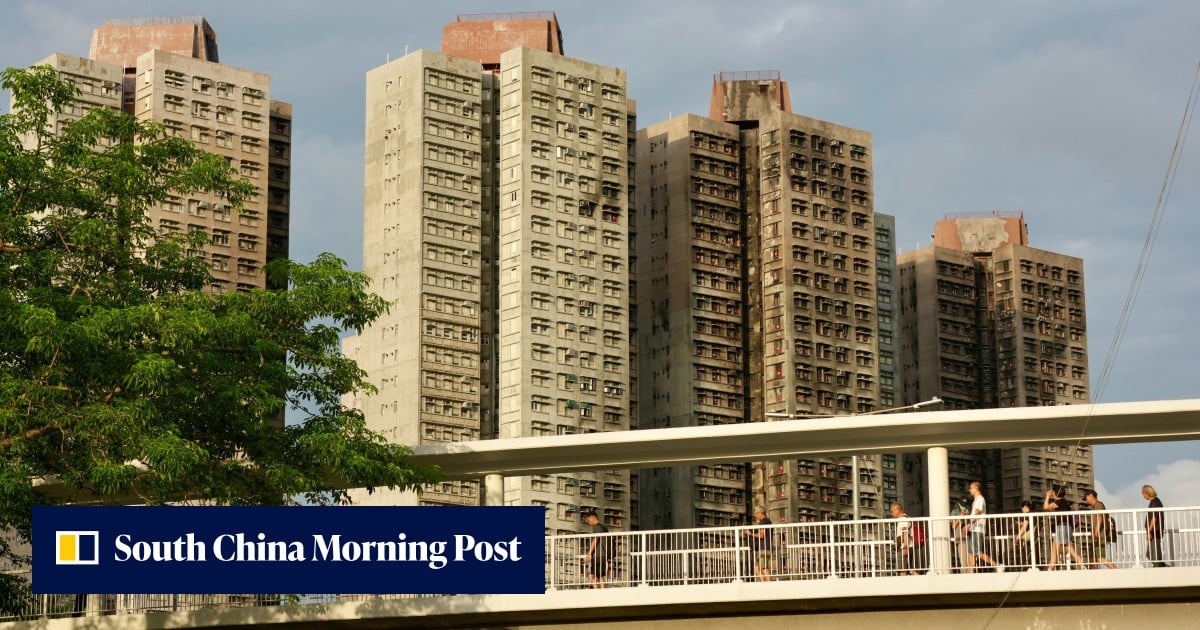
As of noon on Sunday, 1,939 of Wang Fuk Court's 1,984 flat owners, or 97.7 per cent, had submitted acceptance letters for the government buyout scheme.
77.7 per cent of Wang Fuk Court owners had signed formal sale and purchase agreements as of noon Sunday, leaving about 45 owners, or 2.3 per cent, who had not accepted the buy-back offer ahead of the August 31 deadline.
Under the acquisition scheme the government will buy flats at HK$8,000 (US$1,020) or HK$10,500 per square foot, depending on whether the land premium has been paid.
After selling their homes and receiving compensation, flat owners can either buy a property on the open market or join a special sales programme to acquire a new subsidised flat.
The Sunday figure represented an increase of 25 completed acceptance forms compared with Friday's official government update.
A Housing Bureau spokesman urged owners refusing to sell not to miss the last opportunity and to return the signed Letter of Acceptance by 5pm on Monday.
Distinct publishers with included, body-backed reporting in this cluster.
scmp.com
1 article · August 30, 2026
Follow any of these and your For You feed starts watching them — no settings page required.
Evidence-backed comparisons of source perspectives and observed adoption signals. Read the methodology
Which Builder, Operator, and Investor concerns the observed source mix emphasized—not a truth score.
Evidence, demonstrated adoption, hype gap, incentives, and confidence are assessed independently, each on its own current evidence. How these are measured.
Official figures, single relay
The 1,939 letters, the 77.7 per cent, both per-square-foot rates and the 5pm cut-off all come from the government and reach readers through one South China Morning Post dispatch. Nobody has checked them against a land registry, a valuer or an owner. They score above the middle only because they are specific, dated to noon Sunday, and internally consistent — 1,939 plus 45 does equal 1,984.
Near-universal on paper, four-fifths under contract
Uptake is not a proxy here, it is the subject. We score the binding measure — 77.7 per cent with signed sale and purchase agreements — rather than the friendlier 97.7 per cent who have merely returned a letter of intent. Nearly four in five flats are contracted with a day to run, which is high; it is not the finished number the tally implies.
The tidier number leads
97.7 per cent is what gets said first; 77.7 per cent is what transfers title. The spread is about 397 flats, and the Housing Bureau's "last opportunity" language treats the scheme as all but complete while a fifth of the estate has signed nothing binding. The overstatement is one of emphasis rather than invention — both figures were published together — which keeps this in mildly-inflated territory rather than far out.
The scorekeeper set the price
The body releasing the progress count is the body that fixed HK$8,000 a foot and the Monday deadline, and it needs the count to read as done. Facing it are 45 owners whose only remaining leverage is refusal — every hour they hold, they are testing whether "final" is final. Neither incentive is concealed, but they explain which of the two percentages became the headline.
Firm on price, provisional on outcome
Two things hold this down: one publisher, and a clock. Everything stated is true as of noon Sunday, and the question the story exists to ask — who signs by 5pm Monday — is unanswered on the page. The rate structure and the 20-point gap we can state plainly; the ending we cannot.