Loading today’s stories
Science1 distinct publisher3 min readUpdated
Ottawa buyers picked homes with four times the carbon of the greener listings they were shown
A choice experiment with 317 residents put chosen homes at a median 6.93 tonnes a year against 1.6 for the lowest-emission options on offer. Most said efficiency never entered into it.
The Scientist · Science desk
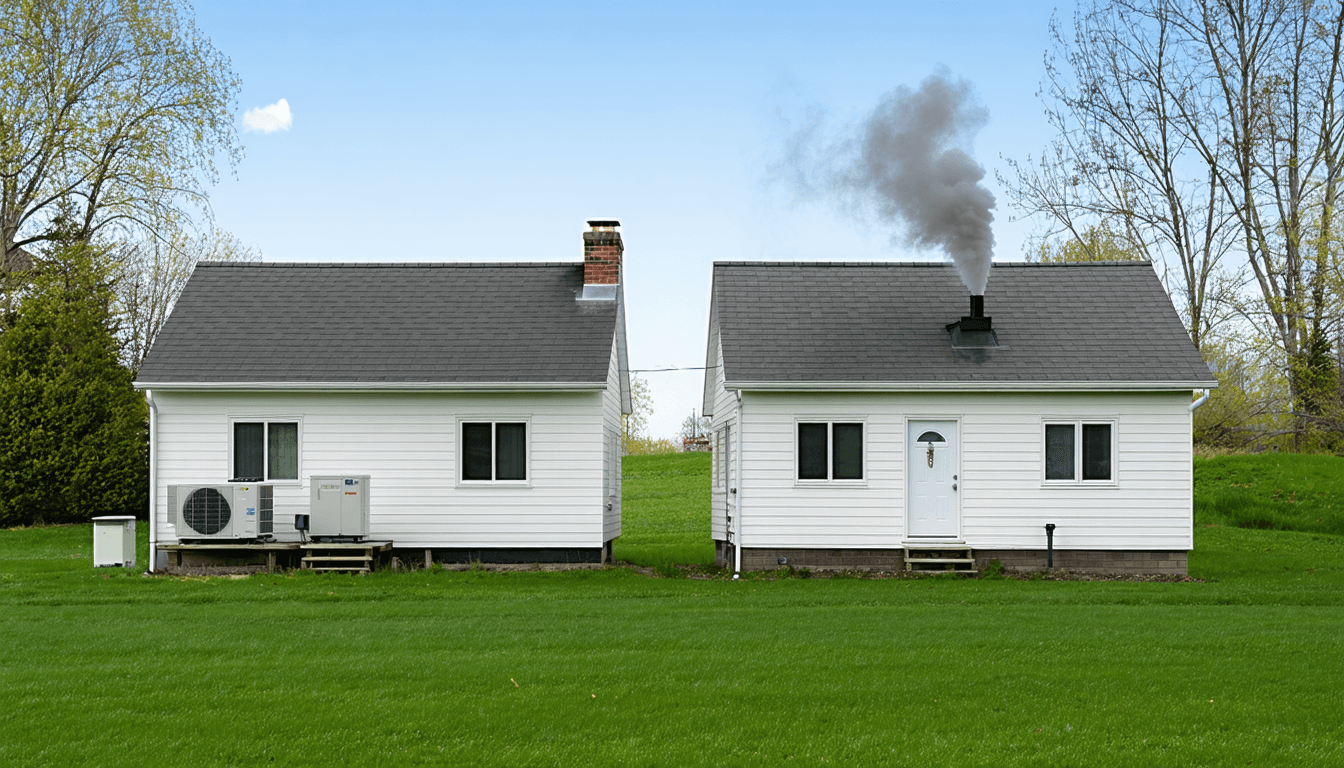
What happened
- Researchers asked 317 Ottawa residents to take part in an online home-choice experiment in fall 2024.
- Participants were divided into three income groups and shown 10 real Ottawa-area listings within a price range suited to their income.
- Participants were not told the study was about sustainability; they were simply asked which home they would be most likely to buy.
- The listings resembled those on a real estate website, with photographs, price, location, approximate size, bedrooms, bathrooms and the age of the home, and did not provide an energy rating, estimated carbon footprint or comparable energy-performance information.
- Across the full sample, the homes participants selected had median annual carbon emissions of 6.93 tonnes, including home energy use and commuting.
Compiled by The ScientistSomething wrong?How this is made
Why it matters
Researchers ran an online home-choice experiment with 317 Ottawa residents in fall 2024 and found the homes participants said they would buy carried median annual emissions of 6.93 tonnes from household energy and commuting, against 1.6 tonnes for the lowest-emission options in the same choice sets [1][5][6]. The authors read this as a disclosure problem rather than a preference problem, since the listings they used carried no energy rating and no emissions estimate, which is how listings normally arrive [4][11].
The design is worth reading closely before the headline number. Participants were split into three income groups and shown 10 real Ottawa-area listings priced for their bracket, with photographs, price, location, approximate size, bedrooms, bathrooms and age of the home [2][4]. They were not told the study was about sustainability, only asked which home they would be most likely to buy [3]. Each group's set contained one home with lower-emission features such as a cold-climate heat pump, better attic insulation or energy-efficient windows, none of it flagged as "green" [7]. Emissions were modelled after the fact for every home, and commuting was added using participants' workplace locations, commute frequency, mode and vehicle type [8][9].
That total is a combined figure, so the 5.33 tonne gap reflects where a home sits as much as what is inside it [6][13]. The authors note explicitly that a low-energy home is not necessarily the lowest-carbon one if living there means long daily drives [9].
The behavioural findings are the substance. Ratio of chosen to best available is about 4.3 to 1 [12]. The lower-emission homes were not chosen more often than chance would predict, and with one such home in a set of ten, chance is roughly 10% [10][14]. Afterwards, 54% of participants said energy efficiency had not influenced their decision at all [15]. Asked what drew them to their pick, they named neighbourhood, price and space, and some named property taxes and condo fees [16]. That last detail is the one that carries the argument: recurring costs did register when the listing printed them, and the recurring costs the listing omitted did not.
The stakes are not trivial in Canada, where buildings account for about 18% of emissions including electricity-related emissions, the third-largest source after oil and gas and transportation [17]. The proposed fix is a standardised label on residential listings showing expected annual energy use, greenhouse gas emissions and energy costs, alongside the age and condition of major building systems [18]. The authors argue the same label would help renters compare utility costs and give landlords a reason to upgrade weak stock [19]. They also argue the raw material already exists in property assessment rolls, which hold building size, age, type and location and could feed models of energy use, emissions and long-term cost [20]. Other jurisdictions already require energy-performance information [21].
Two limits sit on top of all this. These were stated selections in an online exercise, not closed transactions, and the greener home was planted in each set by the researchers rather than found in the wild [3][7]. One city, one season, one sample of 317 [1].
Topics and entities
Follow any of these and your For You feed starts watching them — no settings page required.
Topics
Loading related stories