Science1 publisher2 min readPublished
Moisture control plus AKD surface treatment let a plain oven dry hemp cellulose without collapsing the microfibrils
Korean chemists at KRICT milled hemp-hurd cellulose before it dried past its fiber saturation point, treated the surface with a low-cost agent, and loaded 10 wt% of the result into a starch-PBAT film.
The Scientist · Science desk
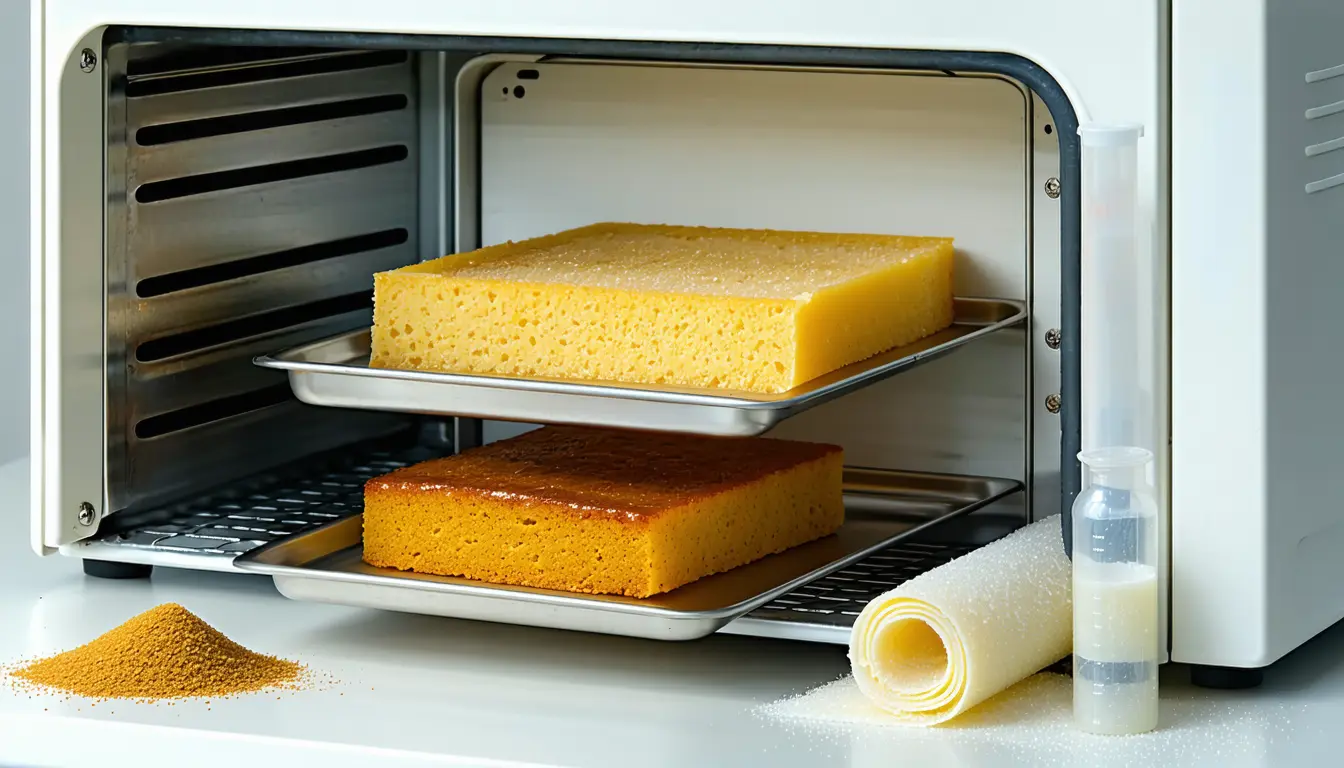
What happened
- A KRICT team led by Hoyong Kim extracted cellulose from discarded industrial hemp stalks and dried it without losing the microfibrillar structure, reporting the work in the Chemical Engineering Journal.
- Freeze-drying and spray-drying can suppress the clumping that ruins such fibers, but their energy consumption and equipment costs make them poorly suited to large-scale production.
- The two-step route keeps conventional oven drying in place, controlling the cellulose's moisture content and treating its surface with alkyl ketene dimer, a low-cost chemical agent.
- The hemp-hurd cellulose was incorporated at 10 wt% into a thermoplastic starch and PBAT film, and that film's tensile strength was evaluated.
- The researchers expect the method to apply to other large-volume agricultural residues, and they name soybean stalks and rice straw as candidates.
Compiled by The ScientistSomething wrong?How this is made
Why it matters
- cost A filler that tolerates oven drying puts the spending on feedstock and a cheap surface agent. A converter would not need to buy freeze-drying or spray-drying capacity to use it.
- decision A film maker shopping for reinforcing cellulose can compare suppliers on how many processing steps sit in the price, since wood-pulp and cotton microfibrils carry their own microfibrillation cost.
- constraint Hurd volume available in Korea is bounded by where the crop is currently allowed to grow, which is a set of designated special zones rather than open acreage.
- precedent If the fiber saturation point is the variable being controlled, then any residue whose saturation point can be measured becomes a candidate feedstock for the same milling window.
Hornification happens in the dryer, before the cellulose ever meets the polymer. Microfibrils dried by conventional methods form strong hydrogen bonds with one another, and the fine fibrillar structure collapses [8]. Aggregates of that kind cannot bear or transfer stress, so a film reinforced with them tears [9].
The interesting part of the KRICT work is a threshold. Plant fibers have a fiber saturation point, the moisture level at which free water has left the pores while bound water still sits inside the cell walls, and for plant fibers it generally falls near 30% moisture content [12]. Below that point the bound water desorbs, drawing adjacent microfibrils together into irreversible aggregates [13]. The team prepared microfibrillated cellulose from hemp hurd, identified its fiber saturation point, and milled the fibers while the moisture stayed above it [14]. It then treated the surfaces with alkyl ketene dimer, whose hydrophobic alkyl chains hold neighbouring microfibrils apart by steric hindrance [15].
Both steps exist so that conventional oven drying can be kept [16]. The cost comparison behind that choice is against commercial pulp. Cotton and wood-pulp cellulose can be microfibrillated as well, and phys.org reports that the additional microfibrillation and processing steps make such materials costly [5]. Substituting discarded hurd for commercial pulp could reduce both agricultural waste and raw material costs [19].
Two figures follow from what is reported. Hurd is roughly 70% of the hemp stalk by weight [6], so a tonne of stalk carries about 700 kg of it [20]. A tonne of film at 10 wt% loading needs 100 kg of cellulose [21]. Connecting the two requires the extraction yield from hurd, and the phys.org text breaks off mid-sentence in the paragraph reporting the film result, so neither the yield nor the measured tensile strength appears in it [23].
TPS/PBAT films draw interest for eco-friendly packaging and agricultural mulch because they biodegrade in soil, and phys.org names two weaknesses: they tear easily, and their resistance to moisture is limited [4]. Those are different failure modes. A tensile test speaks to the first one.
Supply is a separate question from chemistry. Korean industrial hemp is currently grown in designated Regulation-Free Special Zones, including Andong in Gyeongsangbuk-do [7]. The outer bast fiber used for textiles accounts for the other 30% of stalk weight [22], and the woody core has had relatively limited applications [6]. The scale argument rests on the team's expectation that the same route will transfer to soybean stalks and rice straw, which phys.org describes as large-volume agricultural residues [18].
What to watch
- The tensile strength numbers in the Chemical Engineering Journal paper, and whether the gain holds at loadings above 10 wt%.
- Whether the AKD coating that kept the fibers apart in the dryer does anything measurable for the filled film's wet performance.
- A fiber saturation point measured for soybean stalk or rice straw, which would show whether the milling window transfers to grain-crop residues.