Product1 publisher2 min readPublished
Google enters the laptop market as the Googlebook's software vendor
Google is replacing ChromeOS with a laptop brand that other companies build, and the part it supplies is the Gemini software layer. That makes the app surface the thing product teams have to judge.
The Product Desk · Product desk
What happened
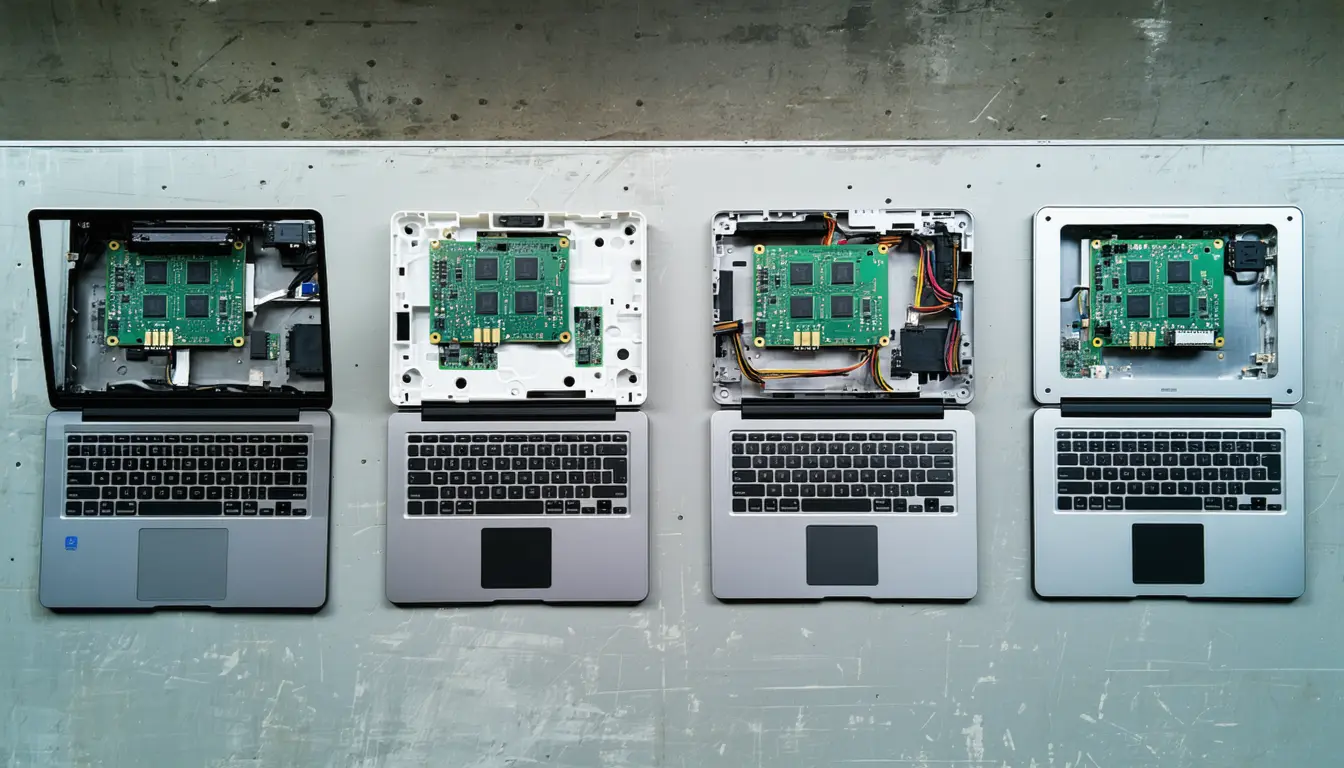
- Google is replacing ChromeOS with a new laptop platform called Googlebook, unveiled this week, according to Daniel Bader's Inbox column for 9to5Google.
- Lenovo, Dell, Acer and ASUS will build the machines, with internals from Intel, Qualcomm and soon AMD, and the first Googlebooks reach the market early next month.
- Google is courting developers and vibe-coders with a native Antigravity app and 12 months of Google AI Pro, which Bader says includes a substantial amount of coding credit.
- Google is positioning the Googlebook as the best place to interact with Gemini, whose agentic features now reach across its product lineup.
Compiled by The Product DeskSomething wrong?How this is made
Why it matters
- decision With no Google-built machine in the launch, a team weighing a Googlebook build is deciding about access to Gemini and its app surface.
- cost The ecosystem unity being sold costs a laptop replacement, and the Android owner whose current machine still works is the one paying for it.
- constraint The premium pricing has to be won back from the school-laptop reputation Bader says ChromeOS never shed, and it has to be won with largely the same partners that built the cheap ones.
- exposure Bader names Google's record of killing seemingly healthy products as a reason buyers may stay away; a team that ships a Googlebook-only feature takes on that same risk in its own roadmap.
The person Google has to convince already owns a laptop that works and a phone that handles most of the day. Daniel Bader, who writes 9to5Google's Inbox newsletter [19], put the pitch to that person in plain terms: "Hey premium Android users, we see you. Here's a product that can bring you Apple users' ecosystem benefits while retaining the openness and diversity of Android." [9]
Bader wrote that the partner lineup is "another reminder that Google is playing a very particular role here, that of software and AI vendor" [5]. Four laptop brands and three chip suppliers are named, seven hardware partners in all, and none of them is Google [16]. So the compatibility matrix belongs to other companies, and the layer Google controls is the software one: Gemini Intelligence, which Bader calls a differentiator not only from macOS and Windows but also from Chromebooks [6]. He gets through the column without discussing keyboards, trackpads or touch.
Bader asks whether that unity is additive the way Apple has proven with iOS and macOS, or closer to the way Microsoft has tried to harmonize Android and iOS devices with Windows [11]. Launch-quarter shipment counts answer neither version. Retention does, and so does usage depth: whether the laptop takes work off the phone, and whether the phone-linked features are still in use when the bundled subscription year ends about twelve months after launch [17].
Name the task that moves onto this machine, then name the device that loses it; if nothing loses a task, the feature is a demo. Then check whether the same feature would be worth shipping to a Chromebook or a Windows laptop with Gemini running in a browser. If it would, you can reach those users without betting on a new platform.
Bader has covered Google hardware for nearly 20 years, from the Nexus phones through this week's Googlebook unveiling [14]. He puts up three candidate buyers and leaves the choice open: Android users who want to code, ChromeOS fans who want more integration with their phones, and the Android faithful [15].
What to watch
- Whether Google adds a first-party Googlebook to a lineup it currently leaves to Lenovo, Dell, Acer and ASUS.
- Renewal behaviour when the bundled 12 months of Google AI Pro expire about a year after launch.
- Whether the promised AMD internals arrive and widen the compatibility matrix developers have to support.