Product1 publisher3 min readPublished
Google's first Suncatcher satellite checks whether its TPUs can survive launch and radiation
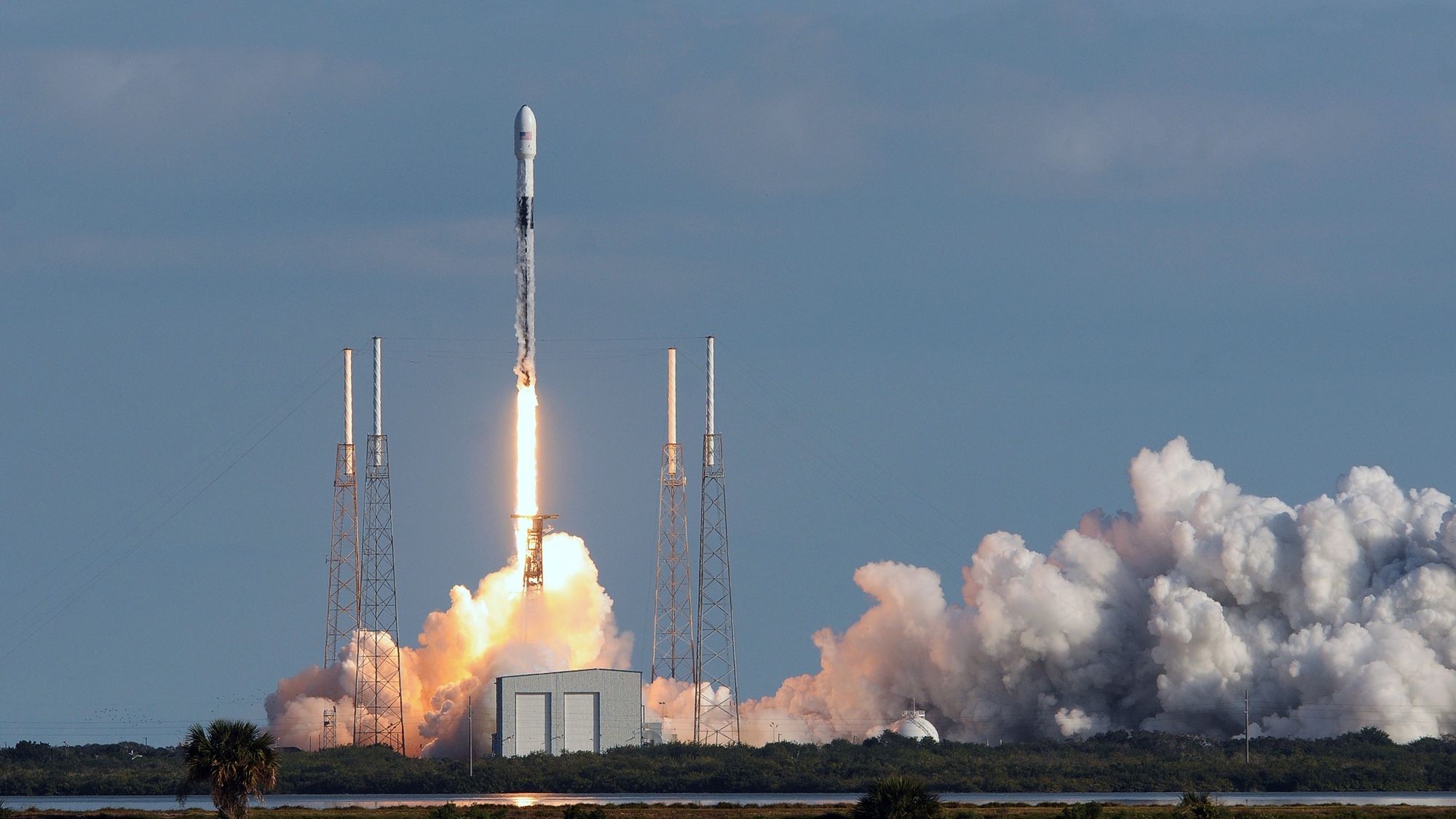
Google will fly its first TPUs on SpaceX's Transporter-18 to find out whether chips that go through up to 10 g at launch keep working in radiation and heat. Passing clears only the first step toward its solar-powered satellite clusters, and their cost and networking are still untested.
The Product Desk · Product desk
What happened
- Google plans to put its first TPUs into low Earth orbit on SpaceX's Transporter-18 rideshare, aboard a prototype satellite built with Planet.
- The mission is designed to answer whether Google's AI chips survive a rocket launch and keep working amid space radiation and extreme temperatures.
- Google's long-term Project Suncatcher plan is clusters of solar-powered satellites packed with AI chips and connected by high-speed optical links.
- Google expects to spend roughly $180 billion to $190 billion on capital expenditures this year to meet AI demand.
Compiled by The Product DeskSomething wrong?How this is made
Why it matters
- decision A clean pass adds no compute anyone can buy, so teams short on electricity still have to plan this year's capacity around ground data centers.
- capability If the radiators hold chip temperatures in orbit, Google gets its first flight data on a cooling design that has so far been tested only in vacuum chambers.
- precedent If the chips survive, Google has grounds to build the larger follow-on projects that Tom's Guide says a working experiment would lead to.
Suppose an infrastructure lead is forwarded the Suncatcher story and asked whether orbit belongs in next year's power plan. The satellite's test list answers that. Every item on it asks whether the hardware survives.
Launch is the first item. According to Google, individual components on the satellite can take forces of 50 to 100 g on the way up [7]. Radiation is the second. Outside the atmosphere, cosmic rays and solar activity can interfere with running electronics and cause errors such as flipped bits [8]. Google has already hit Trillium TPUs with protons at UC Davis's Crocker Nuclear Laboratory while the chips ran AI workloads [9]. The company says they survived a total ionizing dose greater than it expects them to receive over a five-year mission [9].
The heat test is the one that bears most directly on the energy case. Google says a solar panel in the right orbit can generate up to eight times the power of the same panel on Earth [5]. Some orbits also keep a satellite in sunlight almost continuously, which cuts its reliance on batteries [6]. That power is only useful if the chips can be kept cool. In a vacuum there is no air to carry heat away from a hot TPU, so Google has to move the heat into radiators that release it into space [10]. Its heat pipes and radiators have so far been tested only in thermal vacuum chambers on Earth. This flight is the first look at them in orbit [10].
Google's reason for looking up is its own usage. At I/O the company said its systems now process more than 3.2 quadrillion AI tokens a month, seven times the level of a year earlier [12]. That puts the year-earlier rate at roughly 460 trillion tokens a month [14]. Tom's Guide describes the AI boom as a race to find enough computing power and electricity [15].
Tom's Guide lists getting dozens or hundreds of satellites to behave like one giant computer among the engineering problems still unresolved [11]. A single prototype cannot test that [2]. The report does not include launch costs or a price for a unit of orbital compute.
I think orbital compute should be counted at zero in any capacity plan written this year. The cost of that choice is timing. A planner who waits will hear about any payoff after Google does. In return, nothing goes into the plan on the strength of a solar-panel figure alone. A 2x2 lets the reader make the same call again as results come in. One axis asks whether a claim has been tested on the ground or in orbit. The other asks whether one satellite can prove it or whether it needs a cluster. Chip survival and cooling are single-satellite claims, and this launch is meant to move them from the ground column to the orbit column [3][10]. Satellites working together as one computer is a cluster claim with no orbit result yet [11]. Cost cannot go on the grid at all until someone publishes a figure. A Suncatcher claim belongs in a power plan once it has an orbit result at cluster scale.
What to watch
- Whether Google publishes in-orbit TPU error rates, including bit flips, that can be set against its UC Davis proton results.
- Radiator and heat-pipe temperatures from orbit compared with the thermal vacuum chamber tests on Earth.
- Any announcement of a multi-satellite mission that tests optical links between satellites.