Science1 publisher3 min readPublished
Ichthyosaurs evolved a fish-shaped body like whales, but with unexpectedly dense, heavy ribs
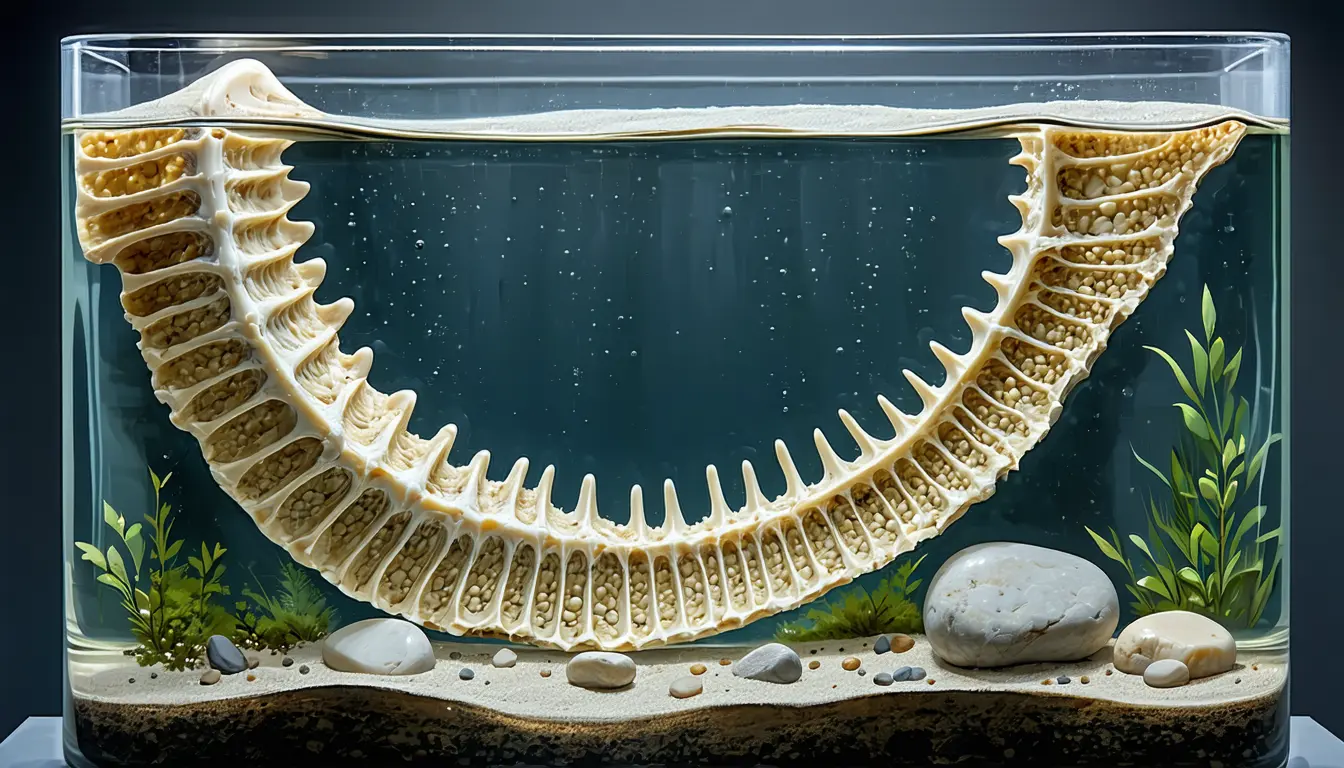
Thin sections from two ichthyosaur fossils and two toothed whales in Oslo found the extinct reptiles' ribs nonporous where a porpoise's and a beluga's are hollowed out, which points to two routes to one shape.
The Scientist · Science desk
What happened
- Jorgen Kroglid's master's project, published in PeerJ, cut ultra-thin rib slices from two ichthyosaur fossils and from porpoise and beluga skeletons, then read them with CT scans and microscopes.
- Several of the ichthyosaur ribs turned out nonporous and therefore heavy, while the whale ribs were lighter and carried larger internal cavities.
- The ichthyosaurs also had more ribs than the whales, so the per-bone difference compounded into a rib cage that was heavier overall.
- Lene Liebe Delsett, who leads the Oslo project comparing whales with ichthyosaurs, says compact bone of that kind is typical of slow-moving animals such as manatees.
Compiled by The ScientistSomething wrong?How this is made
Why it matters
- constraint Four animals cannot separate an ichthyosaur trait from a property of the two fossils that happened to be sectioned, so the group-level version of the claim stays open.
- cost This evidence is bought by cutting specimens that cannot be reassembled, which puts a practical ceiling on how many taxa the method will ever cover.
- capability Because the old cell cavities survive in fossil bone, growth history can be argued from tissue rather than silhouette when comparing an extinct reptile with a living whale.
- precedent If a fish shape can be built over either a heavy or a light rib cage, matching outlines stop counting as evidence about how an extinct swimmer handled depth.
Lungs are the problem both animals had to solve. After a breath at the surface, an air-breathing diver is buoyant in the wrong direction and has to work against itself on the way down [15]. Whales get help from their ancestry: a mammalian spine that flexes up and down, plus a horizontal tail, which makes tipping the front of the body down and driving for depth fairly easy [16]. Ichthyosaurs inherited the reptile arrangement, a spine that moves sideways like a lizard's and a vertical tail closer to a shark's, and Jorgen Kroglid says the same maneuver is not that simple for them [17]. Dense ribs are what the team points to on the other side of that ledger, having gone back to the two groups' separate origins to look for an explanation [20], origins that are genuinely separate: whales from artiodactyls, ichthyosaurs from reptiles still not identified [8].
The thing the thin sections do not tell you is whether that weight was working as ballast. The study read bone, not diving, and the buoyancy account is an interpretation the anatomy permits rather than a measured result [20].
The denominator is four animals: two ichthyosaur fossils and two toothed whales, a porpoise and a beluga [9][19]. Several of the ichthyosaur ribs came out nonporous [12], and what is reported is the direction of the difference, without compactness values or rib counts [21]. Ichthyosaurs were in the oceans for something on the order of 150 million years [1], which leaves room for one lineage to differ from another, and two specimens do not close that.
What makes the comparison worth the damage is resolution. In the fossils the cavities where bone cells once sat are still there, so growth from the inside can be read in a rib 150 million years old much as it can in a whale skeleton [10][11]. Lene Liebe Delsett is direct about the price: sectioned material cannot be glued back together, and permission to cut it requires showing that a lot of new physiology comes out the other side [18].
For the question the Oslo project was built around, whether there is more than one way to arrive at a fish-shaped body [6], the ribs point where Delsett says the comparison with living toothed whales points, which is yes [7]. Ichthyosaur skeletons are generally light and the ribs are the exception [3], the opposite of what a fast swimmer is expected to carry [2] and closer to what shows up in slow movers such as manatees [5]. My read: the direction of the difference in these four animals looks solid, the ballast explanation is a hypothesis with a testable shape rather than a finding, and anyone reading ichthyosaur swimming style off body outline now has a heavier rib cage to account for [13][14].
What to watch
- Sections from more ichthyosaur taxa across the clade's span, which would show whether compact ribs are general or local to these two individuals.
- Published compactness values for both lineages, turning the reported direction of the difference into a magnitude that can be fed into a buoyancy model.
- A hydrostatic test of whether the extra rib mass actually offsets lung buoyancy in a swimmer with lateral spinal flexion and a vertical tail.