Science1 publisher3 min readPublished
A cetacean biologist counts zero sea sanctuaries meeting the standard urged for Marineland's belugas
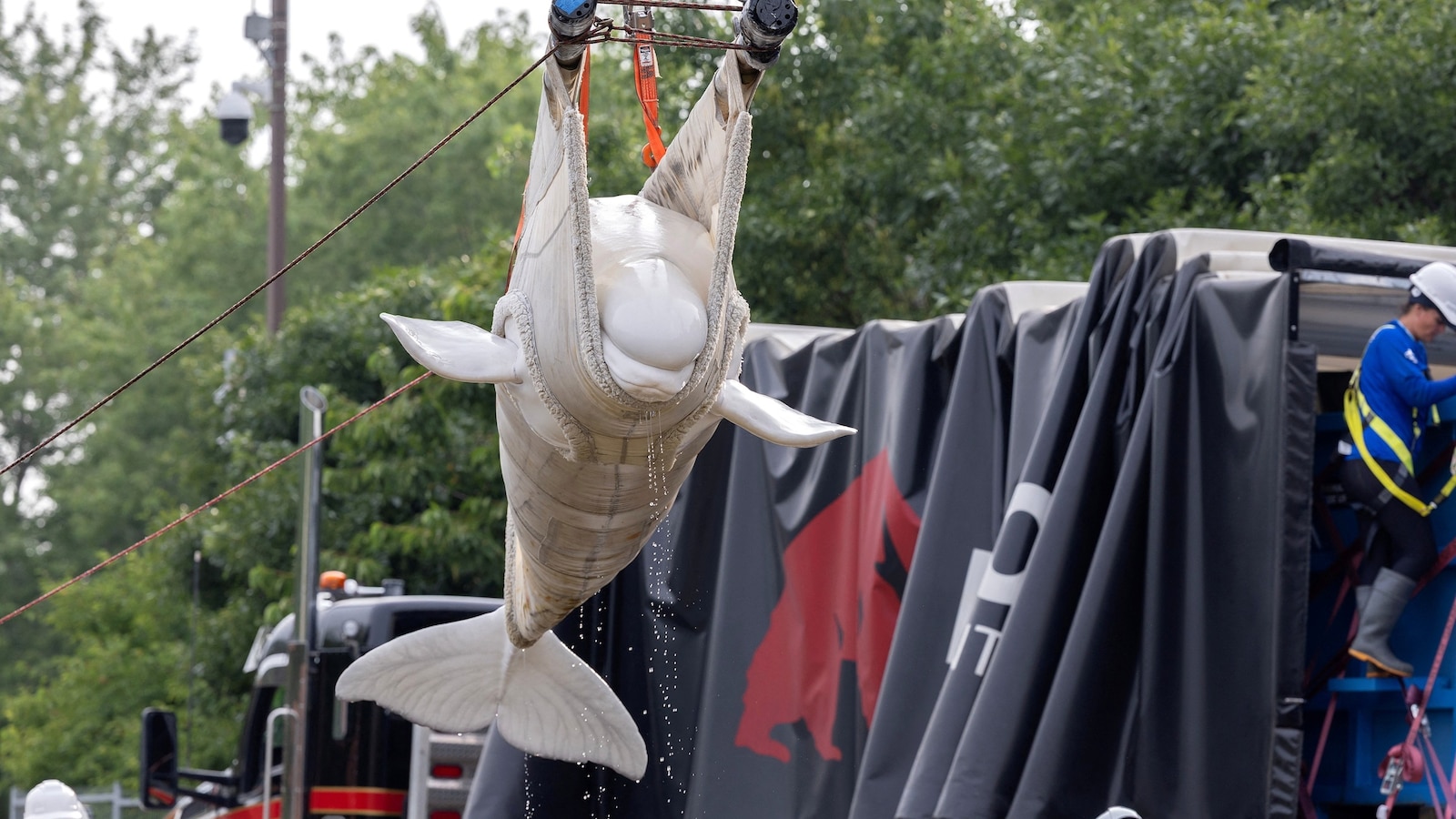
Marineland Canada closed with 30 belugas, four dolphins and no income to care for them. The netted ocean pens campaigners want for such animals are defined by commitments that no facility now meets.
The Scientist · Science desk
What happened
- Marineland Canada in Niagara Falls closed in September 2024 holding 30 belugas and four dolphins, with no regular income left to pay for their care.
- The Association of Zoos and Aquariums led an international effort that moved the animals to facilities in the United States and Spain.
- Three of the transplanted belugas and one beluga already living at the U.S. facility died after the relocation.
- Sanctuary proponents responded by calling for the Canadian belugas to be placed in netted ocean pens, which they argued better suit the animals.
- No active cetacean sanctuary anywhere in the world currently operates with animals under the no-breeding, reduced-contact, nonprofit standard, the biologist writes.
Compiled by The ScientistSomething wrong?How this is made
Why it matters
- decision Any move of a surviving Marineland beluga into a pen is weighed against a facility that does not yet exist, so the comparison is a working tank against a plan on paper.
- constraint A half-square-kilometre enclosure makes daily hands-on veterinary attention hard to deliver. The animals that need that care most are the hardest ones to move.
- exposure Porous netting puts animals with no wild history in contact with pathogens, parasites and species they have never met, and the receiving facility owns that risk.
- precedent Two pledges roughly a decade old have yet to produce a built pen. That is a ten-year delivery record to measure the next promise of sanctuary capacity against.
For a beluga that has never been in the ocean, a net pen changes water chemistry, ambient sound, currents and weather all at once [12]. The netting is porous, so pathogens, parasites and unfamiliar species can pass through it [11]. An animal can become entangled acres from the nearest person, with no way to reach it [10]. Daily individualized veterinary care, straightforward in a pool, becomes a logistics problem in a 100-acre enclosure, about half a square kilometre of water [9].
A pen is also confinement. Release would be illegal for almost all animals currently under human care. Animals in a sanctuary stay behind nets and depend on people for food and medical care, and managers set the social groups and answer environmental hazards [8][21].
The zero in this count comes from a definition. A sanctuary, in the biologist's account, is an ocean net enclosure plus three commitments: no breeding, reduced human interaction and nonprofit funding, and the model is not defined by its environment alone [6].
The attempts on record are mostly unfinished. The Whale Sanctuary Project in Nova Scotia has spent 10 years trying to raise funding and has not built its 100-acre sea pen [13]. The National Aquarium in Baltimore pledged about a decade ago to place its animals in a sanctuary and has not yet done so [14]. Ric O'Barry's Dolphin Project sanctuary in Bali took in four animals from the Melka Excelsior Hotel in Lovina, where one died soon after arriving and another died after a release attempt [15]. O'Barry's earlier Florida project, the now defunct Sugarloaf Sanctuary, ended in the 1990s with the rescue of two former Navy dolphins, Buck and Luther, one in critical condition [16]. O'Barry was convicted of violating the Marine Mammal Protection Act and fined [17].
The deaths that followed the Marineland move drive the campaign for pens, and they cannot settle the question. Five belugas died at the receiving facilities, one of them in Spain [22][4]. Three of those five had been transported from Marineland, 10 per cent of the 30 belugas the park housed. If the beluga that died in Spain was also a Marineland animal, the figure is four of 30, about 13 per cent [23]. The article does not state causes of death, or how many of the 30 went to each country [26]. A death count after transport does not measure what a pen would have done, because there is no comparison group here: no Marineland belugas that stayed, and none placed in a sea pen.
The author writes as a cetacean biologist with more than 20 years working with animals in the wild and in professional care [19], and the piece is published under a headline saying sea sanctuaries are not the answer [25]. The zero is a standard its author chose to apply. In my view the defensible position from this record is that a sea pen for a pool-born beluga is an untested intervention, neither ruled out nor demonstrated. The essay's own framing says the same thing: "Whether a zoo-born cetacean benefits from a sanctuary is a hypothesis to test, not a fact to assume," the biologist wrote [18]. The same essay allows that in specific circumstances a sanctuary could house animals vulnerable in the wild while preserving some of their autonomy [24]. Testing that hypothesis would mean measuring what welfare depends on, among them health, social relationships, nutrition, the animal's ability to choose how it spends its time, cognitive stimulation and appropriate environmental predictability [20].
What to watch
- Whether The Whale Sanctuary Project reports funding sufficient to break ground on its 100-acre Nova Scotia pen, which would give the standard a first operating site.
- Any published causes of death for the five belugas that died at the U.S. and Spanish facilities.
- Whether the Association of Zoos and Aquariums publishes outcomes for the rest of the relocated Marineland belugas and dolphins.