Invest1 publisher3 min readPublished
Gajaeul's last district clears approval, closing a nine-district build-out at 12,000 homes
District 7 sat idle for more than a decade on association disputes. Its June implementation approval puts 1,435 units on a 2028 groundbreaking and 2031 completion schedule.
The Investor · Invest desk
Drafted by a language model from the sources cited here and checked against its claim ledger before publication. How we use AISend a correction
What happened
- District 7, the last of the nine districts in the Gajaeul New Town project to advance, received its project implementation approval in June, according to the redevelopment industry.
- The Gajaeul New Town's history dates back to 2003, when the Seoul city government designated the area as a new town in line with the opening of the Gyeongui Line, after the area around Moraenae Market had fallen into disrepair and raised safety concerns.
- Once District 7 is complete, Gajaeul New Town will be finished as a town of some 12,000 homes, located in Seoul's Seodaemun-gu.
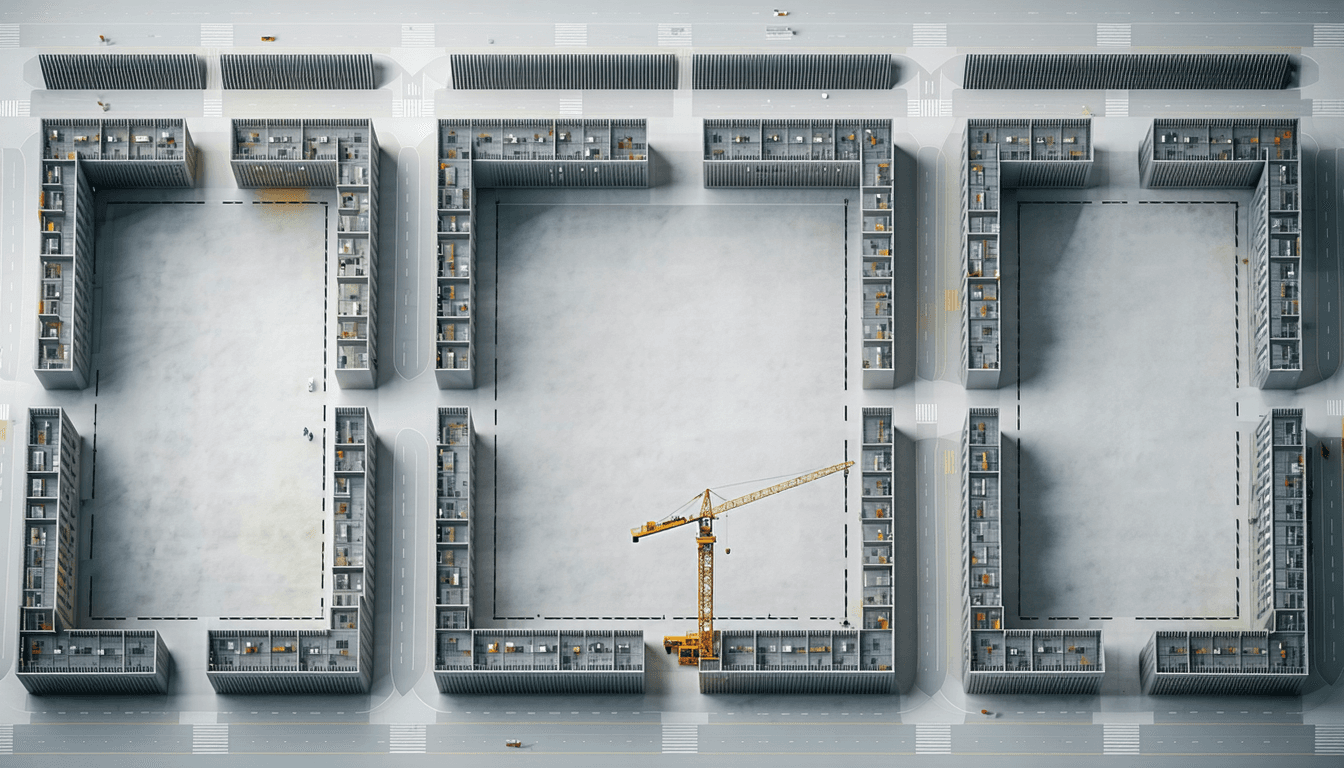
- District 7 will be built on a roughly 79,000-square-meter site around 80 Bukgajwa-dong in Seodaemun-gu, with a maximum height of 40 stories across 13 buildings and 1,435 units, including 199 public housing units.
- The district was designated as a redevelopment promotion zone in 2012 but sat idle for more than a decade amid internal disputes within the redevelopment association.
Compiled by The InvestorSomething wrong?How this is made
Why it matters
District 7, the last of the nine districts in Seoul's Gajaeul New Town to advance, received its project implementation approval in June, according to the redevelopment industry [1]. That completes the approval set for a project first designated a new town in 2003, and once District 7 is built the town will hold roughly 12,000 homes in Seodaemun-gu, in northwest Seoul [2][3].
The unit is small relative to the noise it generated. District 7 covers about 79,000 square meters around 80 Bukgajwa-dong, with 13 buildings up to 40 stories and 1,435 units, of which 199 are public housing [4]. That is roughly 12 percent of the finished town [1], and public housing is about 14 percent of the district itself [2].
The delay is the story worth reading. The site was designated a redevelopment promotion zone in 2012 and then sat idle for more than ten years amid internal disputes within the redevelopment association [5]. Association approval in 2022 did not unstick it, and officials at one point had to consider extending the zone designation, which is the administrative equivalent of a project running out of clock [6]. Momentum returned only when a revised redevelopment plan passed last September, followed by conditional clearance of Seoul's integrated review in December and the implementation approval in June [7]. On the current schedule, 19 years will separate zone designation from completion [3].
What remains is dated but not short. The management and disposal plan approval is set for 2027, groundbreaking for 2028 and completion for 2031 [8]. For anyone underwriting supply in the northwest, that means no keys from this district for five years after the approval that just landed [4], and the next real test is the 2027 plan approval, the step where individual owner contributions get fixed.
The rest of the town is already delivered, which is why the marginal 1,435 units matter less than the aggregate they join. Work picked up from 2005 and the first residents moved in by 2009 [9]. The 4,300-home DMC Park View Xi followed in 2015, then DMC Raemian e-Pyeonhan Sesang and DMC Eco Xi [10]. That single 2015 complex is about 36 percent of the town's eventual 12,000 homes [5].
The demand case rests on commuting and schools rather than on the new district. Gajwa Station on the Gyeongui-Jungang Line has had express stops eight times a day during weekday rush hours since 2022, and by 2015 its boarding and alighting numbers had overtaken Seoul Station on the Gyeongui Line [11][12]. Downtown is reachable in around 30 minutes via a transfer toward Gongdeok or Sinchon, with downtown-bound buses from the median lane at Gajwa Station [13]. Gajaeul High School opened in 2013, and the elementary and middle schools sit inside the complexes, with the middle school scoring above the Seoul average [14][15]. There are no private elementary schools in the new town; all four in Seodaemun-gu are in the Sinchon, Chungjeongno and Hongeun-dong areas, far enough that families assume a shuttle-bus commute [16][17]. At the center of District 7, a neighborhood park will hold the Hwasan-gun Yi Yeon memorial stele, a cultural heritage site, plus a water play area [18].
Watch the 2027 management and disposal plan approval, and watch whether the same association that lost a decade can agree on cost allocation once contractor pricing is in front of it.