Science1 distinct publisher3 min readPublished
The team behind this Nature Communications paper spends less effort proving the model works than pricing what it costs. That price comes to about fifteen days a year of warnings with no eruption behind them.
The Scientist · Science desk
Compiled by The ScientistSomething wrong?How this is made
Four of five is a ratio resting on a denominator of five. The Whakaari test ran against five eruptions the model had not seen during training [6], so one differently timed event would have made it three of five or five of five, with no change to the method itself. The sturdier number sits on the other side of the ledger, because the false-alarm count was measured against years of continuous seismic data rather than a handful of events [5].
Fifteen standing-warning days in a 365-day year is 4.1 percent of the year at elevated alert [1]. If each alarm ran the full 48-hour forecast window, that is at most seven or eight separate episodes annually, roughly one every seven weeks [2]. That is the tempo an observatory would be signing up for, and it is a tempo a duty roster and a tour schedule can be built around.
Why the method can act on that timescale is a matter of what it listens to. It tracks subtle changes in the continuous vibration around a volcano, which the researchers say can flag an impending eruption hours ahead [4]. Conventional practice asks experts to interpret unrest signals and assess risk before an alarm goes out, and the authors argue that sequence cannot keep up when escalation takes minutes to hours instead of days to weeks [10].
The 30 to 90 percent reduction in preventable losses is model output rather than observed outcome [7]. Its width is the honest part: how much of a site's exposure you can actually remove in a few hours differs between a walking track and a ski field in season [8][14].
Whether anyone complies is a separate question this study does not answer. The authors point to tsunami sirens, which sound far more often than damaging waves arrive and are still obeyed where trust and communication hold [9]. That is an argument by analogy; it does not measure how a tour operator behaves at the eighth alarm of a bad year. A retrospective reanalysis also leaves the harder condition untested: a live network with degraded stations, and a volcano behaving a little unlike its own training data. Observatories' own stated objections cover that class of problem, along with alarms triggered by signals no one can yet explain [13].
The authors are explicit that automation would not replace volcanologists, and that its role is the first warning while experts work out what is happening [11]; the whole scheme rests on monitoring networks such as GeoNet [12]. Whakaari killed or severely injured 47 people in a single event [3], and Japan's Mount Ontake killed 63 in 2014 with little warning, many of them hiking near the summit [3]. Those are the quantities a false-alarm budget is weighed against, which is why the cost-loss framing is the part of this paper an operator should read first.
Ranked by verification strength, evidence, and original report placement.
The authors' new research, published in Nature Communications, suggests machine-learning techniques detecting subtle changes in the continuous vibrations around a volcano can potentially identify signs of an impending eruption hours beforehand.
The authors used a cost-loss model comparing the economic disruption caused by precautionary action with the losses potentially avoided when an eruption was successfully forecast; results suggest precautionary action could reduce preventable losses by 30-90%, with the balance differing between volcanoes.
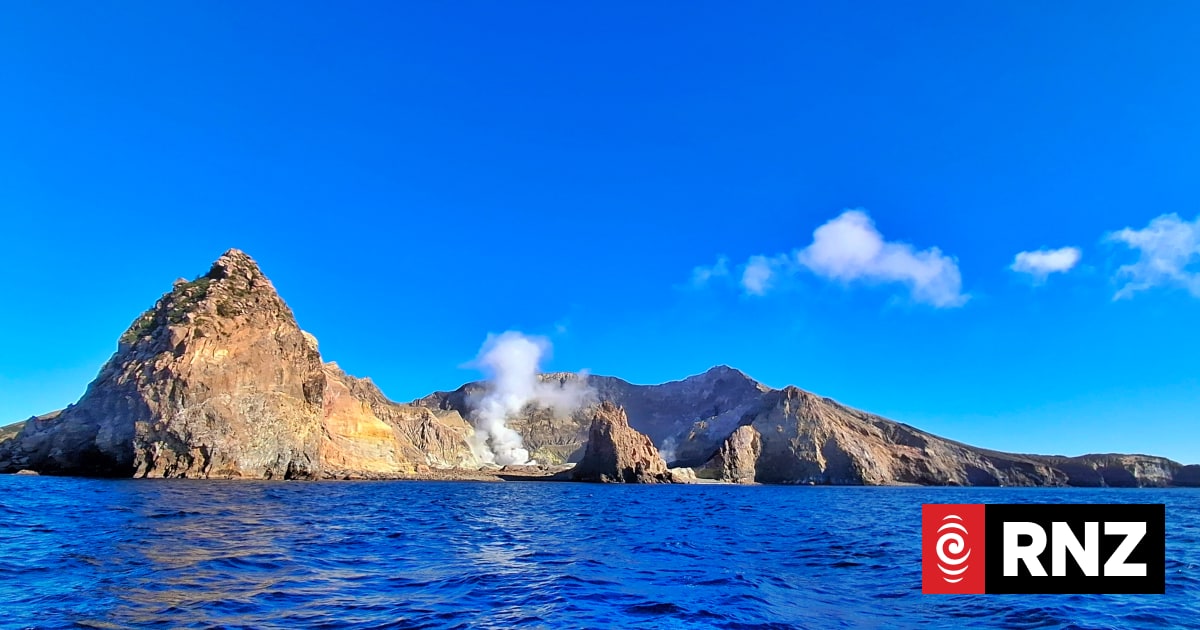
Whakaari/White Island's sudden eruption in December 2019 killed 22 people and severely injured 25 others, New Zealand's deadliest volcanic disaster in recent history.
Over the past 20 years New Zealand experienced another half-dozen sudden volcanic explosions with the potential to kill or injure people nearby; many were near misses occurring at night or when few tourists or workers were present, and none was successfully forecast early enough to warn or evacuate people.
In 2014 Japan's Mount Ontake erupted with little warning, killing 63 people, many of whom had been hiking near the summit.
The team reanalysed the performance of a machine-learning eruption forecaster at five volcanoes in New Zealand, Japan, Chile and Russia, using years of seismic data to estimate the probability of an eruption within a rolling 48-hour window.
Distinct publishers with included, body-backed reporting in this cluster.
phys.org
1 article · August 31, 2026
Follow any of these and your For You feed starts watching them — no settings page required.
invest
Alaska's disappearing lakes make permafrost thaw an asset-level observable1 distinct publisher
science
Narwhal tusks hide two spirals twisting against each other, and the mismatch is the point3 distinct publishers
science
HIPAA Covers Less Than You Think, And "Anonymized" Is Not A Legal Shield1 distinct publisher
science
Scientists reconstruct Nepal's Aug. 26 flood as a chain of three linked failures1 distinct publisher
Evidence-backed comparisons of source perspectives and observed adoption signals. Read the methodology
Which Builder, Operator, and Investor concerns the observed source mix emphasized—not a truth score.
Evidence, demonstrated adoption, hype gap, incentives, and confidence are assessed independently, each on its own current evidence. How these are measured.
Precise, peer-reviewed, and entirely self-reported
The load here rests on a Nature Communications paper with a DOI, summarised by the people who wrote it. In its favour: the key result is stated in falsifiable numbers, on data held back from training, with the error cost published next to the hit rate — more than most model write-ups volunteer. Against it: Japan, Chile and Russia are named as test sites and their results never appear, the missed eruption is not discussed, and no one outside the team has examined either the seismic analysis or the cost model.
Nothing is running yet
This is a replay of archived records, not a system on watch. The authors write in the conditional throughout — what such warnings would depend on, whom they would not replace — and they helpfully catalogue the reasons observatories decline to wire an algorithm to a siren: unexplained triggers, missing corroboration, alarms nobody can act on. The only operating asset in the picture is GeoNet's monitoring network, and it appears as a data feed, not as an adopter.
Leads with the bill, not the breakthrough
Most model publicity buries the failure rate; this one opens the books — one eruption missed in five, fifteen alarm days a year, and an explicit disclaimer that the modelling is not a cost-benefit analysis of real monitoring. A pitch that starts by pricing itself sits slightly behind what its paper supports rather than ahead of it. The single place the rhetoric outruns the arithmetic is the 30–90% loss reduction: a span that wide can flatter almost any position, and it is carrying much of the persuasive weight.
The advocates are also the assessors
The people appraising the forecaster are the people who built it, and the proposition they are advancing — that warning systems should tolerate more false alarms — happens to be the precise concession their method needs to reach operational use. The nod to the United Nations' 2027 Early Warnings for All target places the work inside a funded policy agenda. None of this makes the figures wrong, but the definition of an acceptable alarm rate is being written by the interested party, and nobody who would have to answer the phone at 3am gets a word.
Solid paper, single channel
Two things cap this: one publisher, and that publisher is relaying the researchers' own telling. What lifts it off the floor is that the underlying study is peer-reviewed and citable and the central trade-off is stated in checkable numbers. What we cannot see is any GeoNet or observatory reaction, the four unreported volcanoes, and whether the cost-loss assumptions survive contact with someone who does not need them to hold.