Science1 distinct publisher2 min readPublished
At Capel in Western Australia, plants swathed on Dec. 1 gave seed that germinated at 98.0%, matching a February suction harvest of the same crop. The windrow pickup stage was never tested.
The Scientist · Science desk

Compiled by The ScientistSomething wrong?How this is made
Those two extraction percentages do not sit on the same footing. Seed came out of the Capel windrows by hand, because the second stage of the proposed system, mechanical pickup and threshing, was never run [7]. So 84.2% describes seed that a digger placed in a windrow and people then collected, while 61.3% describes what a suction machine actually delivered into a hopper [11][12]. The 22.9-point difference [2] is the ceiling available to the swathing route, not a yield, and every loss a pickup head and thresher would add comes off it.
The yield finding is the durable part. Potential seed yield did not separate the two November and December cuts from the February harvest, which says the crop had largely finished making seed well before it finished drying [9]. Standing through summer was not adding to the total. Germination on the Dec. 1 seed came in at 98.0% against 97.5% for the February seed [14], so at that date earliness cost nothing measurable in quality. At the earlier date it did: the Nov. 25 seed was lighter, with lower and more variable germination [13], although the seedlings it produced were of broadly similar vigour [15].
Then there is the schedule. Losing 15.8 points of extraction efficiency across six days works out at roughly 2.6 points a day [3], on a crop whose conventional harvest came at least 62 days later [4]. A grower would have to read that window, and the most obvious instrument for reading it is not yet dependable: burr attachment strength predicted loss only in some of the greener, less mature plants [18], and soil moisture, crop biomass, burr burial, soil conditions and seasonal weather are all likely to move the timing as well [19]. The authors call the practical window relatively narrow and variable between cultivars, paddocks and seasons [24]. Because the design leaves cut plants drying in windrows before collection [4], whatever weather falls between the cut and the pickup is a risk the untested second stage would have to absorb [7].
My read: as a stage-one result this deserves the next round of funding, since it retires the assumption that the crop must be bone dry before its seed is worth taking [22]. As a harvest system it is one site, one season and two cutting dates, with the threshing end still hypothetical [5]. The paper's own verdict, technically possible and worthy of further development [23], is at the right altitude.
Ranked by verification strength, evidence, and original report placement.
Subterranean clover's ability to bury its seed supports pasture persistence but makes commercial seed harvesting difficult.
The subterranean clover seed industry relies on aging Horwood-Bagshaw suction harvesters, which collect seed from fully dry crops after repeated tillage and raking.
Two experimental studies investigated cutting and lifting plants with modified peanut-harvesting equipment while they are still green, then drying them in windrows for later collection and threshing.
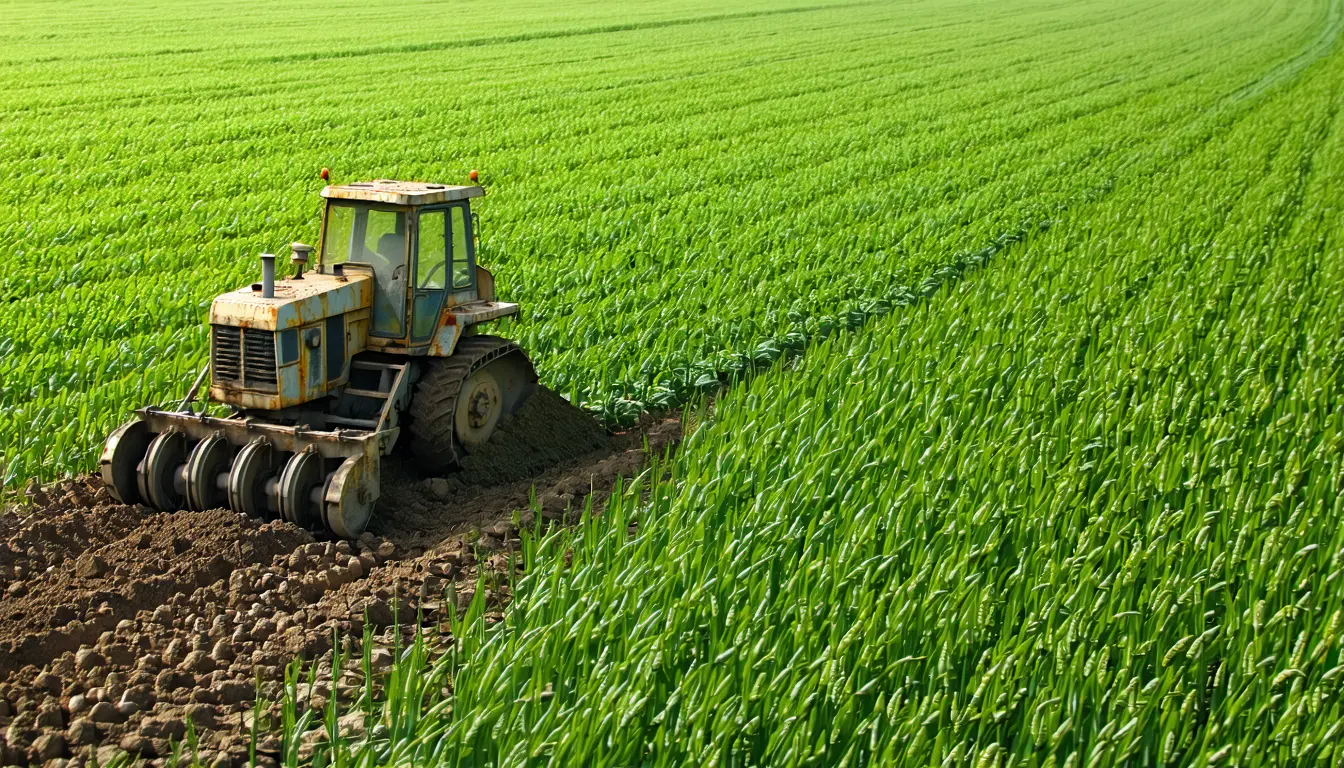
A commercial-scale trial at Capel, Western Australia, compared swathing a subterranean clover seed crop on Nov. 25 and Dec. 1, 2022, with conventional Horwood-Bagshaw harvesting in February 2023.
A modified peanut digger cut the roots below ground, lifted the plants and placed them in windrows with the burrs attached, representing the first stage of a proposed two-stage system.
Distinct publishers with included, body-backed reporting in this cluster.
phys.org
1 article · August 28, 2026
Follow any of these and your For You feed starts watching them — no settings page required.
Evidence-backed comparisons of source perspectives and observed adoption signals. Read the methodology
Which Builder, Operator, and Investor concerns the observed source mix emphasized—not a truth score.
Evidence, demonstrated adoption, hype gap, incentives, and confidence are assessed independently, each on its own current evidence. How these are measured.
Precise numbers, one interested source
Every figure in this story — 84.2% into the windrow, 61.3% from the suction pass, 98.0% germination — comes from a single phys.org item supplied by AgriFutures Australia, with no journal citation, no named researcher and no second outlet that has examined the trial. The arithmetic at least holds together: the 'almost 16 percentage point' decline is exactly the gap between the two swathing recoveries. And the account volunteers what went wrong, which raises rather than lowers our trust in it. But a commercial-scale result at one site in one season, with the seed picked up by hand, is a demonstration, not a body of evidence.
One paddock, one season, half a system
Nobody is harvesting clover this way. What exists is a single commercial-scale cut at Capel in late 2022, benchmarked against a February 2023 suction harvest of the same crop, with the windrows emptied by hand. No grower, contractor or seed company appears in the reporting as using or trialling the method, and no manufacturer is named for the two-stage system the concept requires. The one genuine market signal is on the other side of the ledger: the incumbent harvester is out of production.
Overreach lives in the framing, not the figures
The numbers are stated carefully and the caveats are real, but the language runs a step ahead of them. A 'new pathway' and germination that 'matches' February are true of seed lifted by machine and gathered by hand; call the same result a first stage that fouls on soil and weeds and it sounds like what it is. 'Future-proofing' is doing similar work for a concept that has not yet picked up its own windrow. Modest gap, and mostly rhetorical.
The funder wrote the write-up
The story ends with the line that explains its shape: provided by AgriFutures Australia. The body that backed the research is also the author of the account, and the account's verdict — worthy of further development — is an argument for continuing to back it. No grower, seed trader, agronomist or machinery maker gets a word in, and no cost appears anywhere. That is not proof of distortion; the piece reports its own bad news about soil and weeds. It does mean the only voice in the room has a stake in the answer.
Sure what was reported, unsure what it means
We can be reasonably confident about the reported result — the figures are specific, dated and mutually consistent — and much less confident about anything a producer would decide on. A single sponsor-authored account, one site, one season, a first stage in isolation, and total silence on the two questions that determine whether this ever leaves the trial paddock: what the pickup stage loses, and what the machine costs.