Leadership1 publisher2 min readPublished
Three thousand households are waiting for the home server heata has installed 100 times
Heata pays for the electricity its servers draw inside customers' airing cupboards, and the homeowner pays for the broadband. The waste heat goes into the hot water tank. Whether a home qualifies depends on its plumbing.
The Board Room · Leadership desk
What happened
- Giles Gibson's hot water in south-east London is heated by a compact server strapped to his cylinder, supplied by the Surrey company heata, which sends its clients' processing jobs to servers in homes.
- Gibson estimates the hot water bills for his four-bedroom house have fallen by between £10 and £15 a month since the unit went in last year.
- Heata's units are installed in 100 homes, with 3,000 people signed up on the waiting list for an installation.
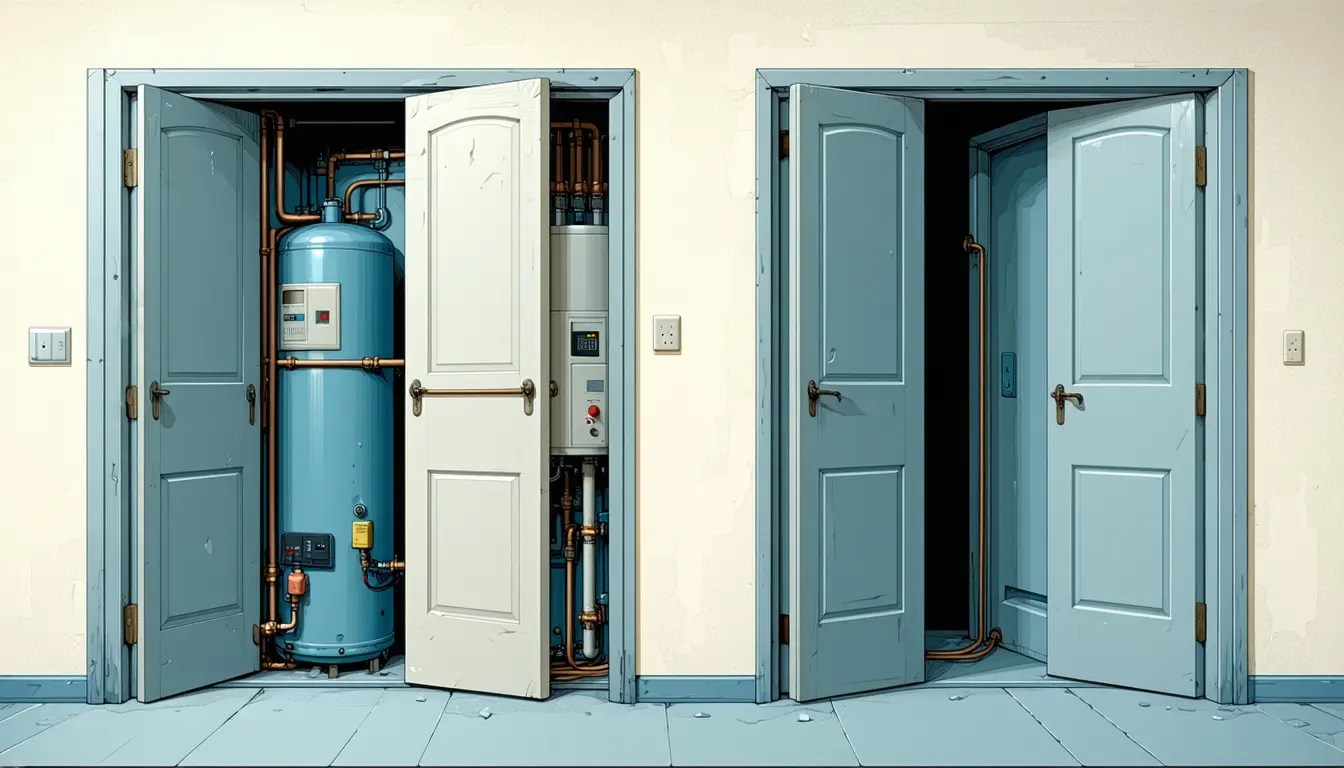
- The unit fits only homes with vented, unpressurised cylinders, the ones wrapped in blue insulation, and it cannot be installed in a house heated by a combi boiler.
- In Essex, two households are testing thermify's freezer-sized HeatHub, which packs almost 500 matchbox-sized computers together and converts the heat they give off into usable energy.
Compiled by The Board RoomSomething wrong?How this is made
Why it matters
- constraint The ceiling on this model is the number of suitable cylinders sitting in the existing housing stock, not the level of demand for cloud compute.
- exposure Heata carries the power cost of every unit it installs, so the operator absorbs electricity price moves while the customer's saving sits on the gas side of the meter.
- capability A cloud operator that owns no building can add capacity one airing cupboard at a time, at about eight laptops' worth of processing per site, with the household's hot water demand taking the heat away.
The household's return is a smaller gas bill. Charlie Beharrell, heata's commercial director, said the company aims to supply about 80% of the heat a home's hot water needs, leaving the boiler for "the peakier moments in the day, like when they have a bath" [9][10]. There is no charge for the installation [12]. Gibson's £10 to £15 a month comes to £120 to £180 over a year [3][27], and domestic energy bills are set to rise again next month, according to the Guardian [26].
Each house runs a modest amount of compute. One unit has the combined power of about eight laptops, so the 100 installed homes hold roughly 800 laptops' worth of processing between them [7][17][28]. Thermify concentrates more hardware in one box: its freezer-sized HeatHub holds 480 Raspberry Pi computers in mineral oil, and the oil feeds a heat exchanger that warms the water going to a radiator [21][25][23][24].
The unit is fixed to the outside of the tank. Engineers cut a hole in the cylinder's insulation and glue the server's container on with thermal paste, so no pipework is touched, and Beharrell said the work "takes a couple of hours and we retrofit it to the domestic water system" [12][13]. He said millions of homes are fitted with vented water cylinders and that the units can also work with heat pumps [15].
A waiting list costs nothing to build. Anyone can join it on heata's website [19], and 3,000 names against 100 installations is thirty to one [17][29]. The figure with a household behind it is Gibson's, and it is an estimate from one customer [3]. "Having one of these units is a no-brainer," Gibson said [4].
For a compute buyer this quarter, 100 hot water tanks and two test houses in Essex are too small to matter [17][20]. The larger claim in the Guardian's account concerns the heat that large datacentres lose into the air [30], and the installed evidence here is domestic. Both companies are selling the processing as well as the warmth: heata routes its clients' jobs to servers in homes [6], and thermify's units carry out tasks for companies that buy time on them [25]. Thermify says the HeatHub could one day replace a domestic boiler [22]. "It's the same basic concept as an induction heater," said Travis Theune, thermify's chief executive [24].
What to watch
- Whether heata's version for unvented cylinders ships, since that decides if the queue can reach homes outside the vented-cylinder stock.
- Whether the hundreds of further installations heata expects next year actually land against its 3,000-name list.
- Whether thermify moves past the two test households in Essex and publishes what a HeatHub costs a household to run.