Invest1 publisher3 min readPublished
Cymphony raises $25M to put AI agents on the same permissions map as employees
Sequoia led the seed and co-led the Series A, so the same investor helped set the price twice for a 23-person company whose only disclosed commercial proof is one customer that ripped out two rival products.
The Investor · Invest desk
What happened
- The platform continuously maps employees and AI agents into one graph linking them to the systems, permissions and information they can reach, then prioritises and routes the resulting risks.
- CEO Shy Dekel says one large paying customer has replaced two leading products with Cymphony, and had previously seen a case of exposed information he believes the platform would have caught.
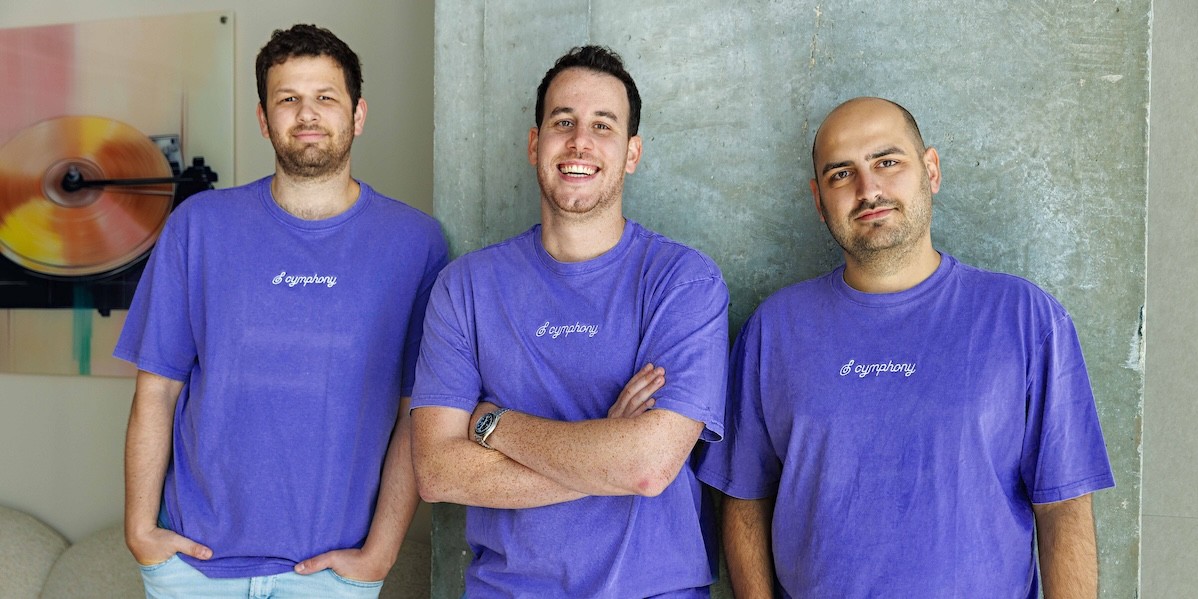
- The company employs about 23 people across Israel and the U.S., and was founded roughly two years ago by three Talpiot graduates, including a former head of Unit 8200's Cyber Department.
Compiled by The InvestorSomething wrong?How this is made
Why it matters
- contradiction The pitch is a new governance problem, but the one disclosed sale is a displacement of two existing products, which reads as consolidating committed identity spend rather than opening a separate agent-security line.
- constraint At about $1.09 million of new capital per current head, the round has to be spent on people and distribution before the category is priced, so the next raise gets judged on customer count rather than on the elegance of the graph.
- decision A security team now chooses between buying a layer that joins identity to information and pressing its incumbent vendors to extend the same coverage to agents, and whichever it picks sets who owns the permission review.
- exposure If one agent inherits an employee's permissions and reaches far more systems than that employee ever did, the cost of a single over-broad grant sits with the buyer, not with whoever sold the agent.
The cap table closes exactly: a $5 million seed plus a $25 million Series A is the $30 million raised to date, leaving no room for an undisclosed bridge, extension or venture debt between the two [1][2][3][5]. Sequoia led the first and co-led the second alongside SMBC Fin Atlas Beyond Fund [1][2], which means part of the price on this round was set by a holder of the previous mark, and since no valuation, revenue figure or customer count was disclosed [17], the only ratios available are headcount ones: roughly $1.09 million of fresh capital per employee at about 23 people, or about $1.3 million per head across everything raised [4][1][2].
That $25 million is five times the seed and 83 percent of all capital the company has taken in [3][4], and at 23 people spread across Israel and the U.S. [4], this is a hiring and distribution budget, spent against a category that does not yet have a disclosed price list.
The commercial evidence in the record is one account. According to CEO Shy Dekel, a large paying customer replaced two leading products with Cymphony's platform, and had already lived through a case of exposed information he believes the platform could have prevented [11]. A replacement of two incumbent tools is money moving out of existing identity and data-security lines rather than a new line opening beside them. If the sale had been incremental, the natural thing to disclose would be the incremental spend.
The mechanism the company is selling is a join. Cymphony continuously maps employees and AI agents into a single graph connecting them to the systems, permissions and information they can reach [8], combining identity, SaaS, AI and data signals so a security team sees not just who holds a permission but what that person or agent can actually touch and in what business context [9], then prioritises the findings and either automates remediation or routes the work to the humans who have to do it [10]. The reason the join matters, on the company's own account, is asymmetry: one agent can potentially reach a far wider set of systems and information than one employee, which makes a broad or misconfigured permission more expensive than it used to be [16]. Dekel's framing is that treating AI as one more application to secure is the wrong model [14], and his description of the gap is blunter: when AI tools and entities arrived in very large quantities, very large gaps were created [13].
The money's source supports more than one reading, and the readings diverge sharply. In the first, Cymphony is a consolidation play whose agent story is the wedge, and its ceiling is whatever it can rip out of budgets already committed. In the second, security teams do open a distinct governance line for what Microsoft has called human-agent teams [15], and an incumbent-displacing product compounds into it. In the third, or rather the more interesting version of the third, the vendors whose products that customer cancelled ship the same identity-to-information graph as a feature, and Cymphony's advantage decays into a workflow layer. On the disclosed record the first reading has the only evidence attached to it.
What would move this desk to the second reading is a named customer whose Cymphony spend was additive rather than substitutional, or a next round led by someone who did not price the seed. Right now the count of disclosed customers is one, and it arrived with two cancelled contracts [11].
What to watch
- A named Cymphony customer whose spend is additive rather than a replacement of existing identity or data-security tools.
- The lead investor on the next round: a new outside lead prices the category, another Sequoia-led round prices the position.
- Whether the vendors displaced in that first account ship an identity-to-information graph covering AI agents as a feature.