Product1 distinct publisher3 min readPublished
Retention caps and search prompts are on by default, reversible by the agency, and apparently absent from systems already installed. Secure Justice's cancellation count, meanwhile, keeps climbing.
The Product Desk · Product desk

Compiled by The Product DeskSomething wrong?How this is made
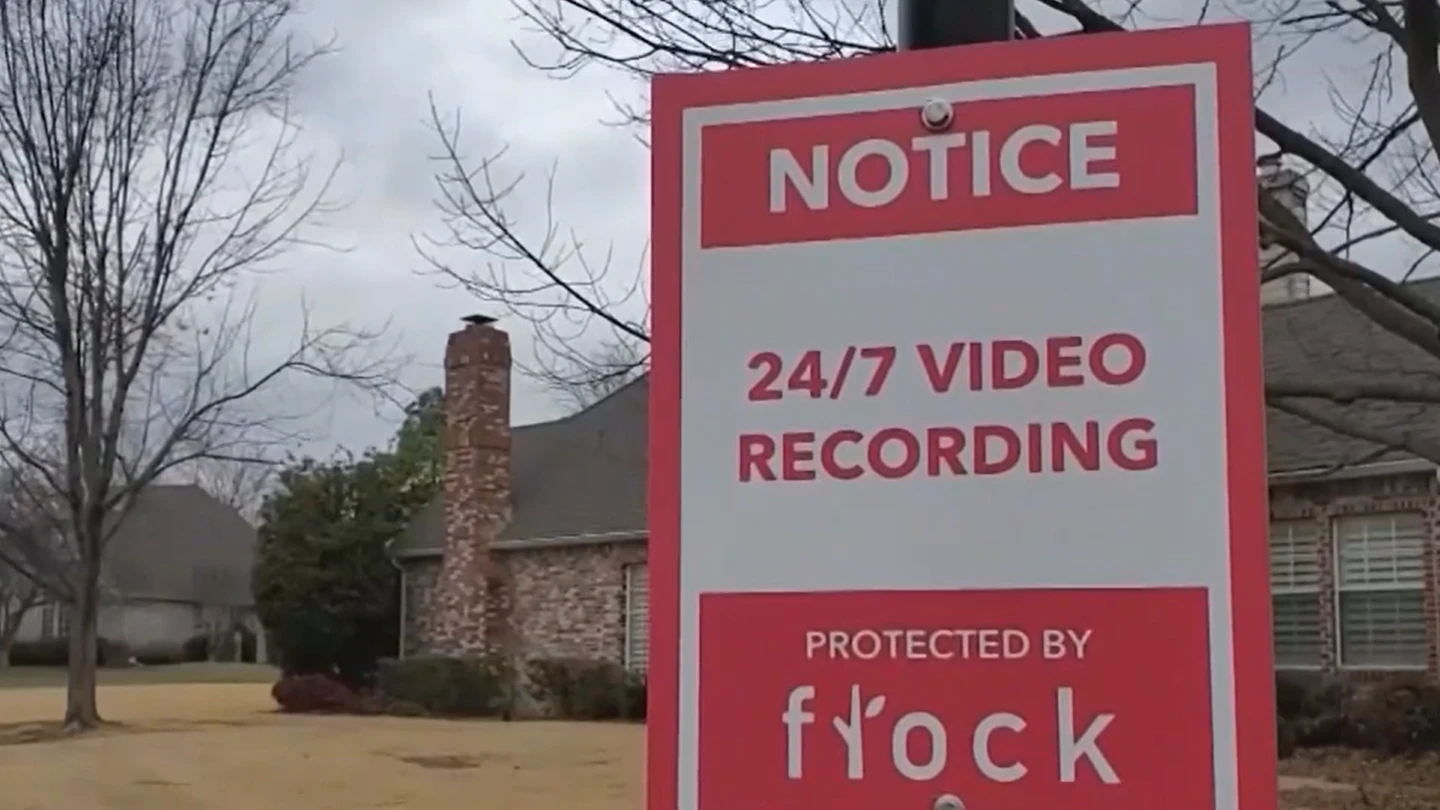
Kenneth Fitzgerald, the police chief in Bellingham, Massachusetts, found out what his cameras could do in the middle of a criminal investigation. In a public letter he said the department learned that Flock "Free Form", an AI tool that searches video using plain-language queries, was available through cameras it already had, and that he does not believe Flock clearly explained or identified those features to the department [8][9]. He had told his own public the system read license plates and nothing else [10]. That gap is about what the buyer knew he had bought, and it closes with a contract and a change notice rather than a settings screen.
The renewal numbers are the part Flock can see from its own side. Secure Justice counts 214 cities and counties dropping Flock since 2021 [4], and 90 of those cancellations fell in August 2026, four times the month before [5]. Techdirt's updated look at the same chart adds 10 more and puts August at 96 [6]. That single month is 44.9 percent of the entire series, 96 divided by 214 [11], and working back from the fourfold figure, July sat around 22 [12]. Cyrus Farivar reported the underlying data for Ars Technica in a piece first published on August 28 [7]. The reasons cities gave include high expenses and unwanted data sharing alongside the abuse reports [13], which is the composition of a procurement complaint rather than a press cycle.
Against that, the guardrails: shorter retention by default, more information demanded of an officer running a search, and a misuse flag routed back to the department [1]. They are reasonable things to ship, and narrower than they sound. Techdirt reports the new restrictions do not appear to reach systems already in use and can be switched off by the agency [3]. The accounts that hold these controls, in other words, are largely the accounts that have not signed yet.
The renewal losses, more than the coverage, are what Techdirt credits for the change [2], noting that for the previous couple of years Flock answered critics by calling the reporting misleading or by suggesting the critics opposed public safety [14]. The material carries no ship date for the new settings, so the sequence is an inference rather than a documented before-and-after.
A vendor's answer here comes down to two questions: whether the control reaches equipment already installed, and whether the local agency can turn it off by itself. The weakest of the four cells is a control that arrives on by default, can be reversed locally, and never touches installed hardware, and that is the cell described in this reporting [3]. The forcing function for a buyer is duller than a settings audit: a written list of every capability the account is entitled to run today, plus a clause requiring notice before that list changes. Fitzgerald's other complaint, that Flock tried to modify some terms of service and access while the contract was still in place [15], is the same gap viewed from the vendor's end. A department that cannot produce that list without calling its rep cannot make the statement Fitzgerald made to his town, and it will be the one issuing the correction.
Ranked by verification strength, evidence, and original report placement.
Flock added new default settings that limit retention periods, demand more information from officers performing searches, and flag potential misuse for review by the police departments using its tech.
Techdirt reports the new restrictions are on by default but do not seem to affect any systems already in use, and can easily be switched off by law enforcement agencies.
Secure Justice, an Oakland-based advocacy group, has recorded 214 cities and counties that have dropped Flock since 2021.
Of the 214, 90 ended their relationship with Flock in August 2026 alone, a fourfold increase compared to the previous month.
Techdirt reports the Secure Justice chart has been updated twice since Ars Technica published, with another 10 Flock drops tallied since August 26, bringing the August total to 96.
Cyrus Farivar reported the Secure Justice data for Ars Technica, in a piece first published on August 28.
Distinct publishers with included, body-backed reporting in this cluster.
1 article · September 4, 2026
Follow any of these and your For You feed starts watching them — no settings page required.
product
Reported dead in May, live by September: Pawtucket's $128,000 Flock deployment1 distinct publisher
product
Florida revokes every highway plate-reader permit with a memo signed by an assistant secretary1 distinct publisher
invest
A bipartisan push against Flock puts 6,000 municipal renewals in play1 distinct publisher
build
Flock cut retention to seven days and published the number that made 30 indefensible1 distinct publisher
Evidence-backed comparisons of source perspectives and observed adoption signals. Read the methodology
Which Builder, Operator, and Investor concerns the observed source mix emphasized—not a truth score.
Evidence, demonstrated adoption, hype gap, incentives, and confidence are assessed independently, each on its own current evidence. How these are measured.
One publisher relaying two records it does not show
Every figure and quote here reaches the reader through Techdirt, which is reading Secure Justice's chart and Chief Fitzgerald's letter without reproducing either, and summarizing Cyrus Farivar's Ars Technica reporting rather than re-checking it. What holds the score up is specificity: named towns, a dated original publication, a count that visibly moved from 90 to 96 between revisions. What holds it down is that the sentence carrying our headline, about installed systems being untouched, is hedged by the reporter himself and backed by no Flock documentation.
Cancellations counted, renewals absent
Contract terminations are the one thing in this story with numbers attached, and they are dated and localized: 214 cities and counties since 2021, 96 of those in August 2026, four Massachusetts departments in the first days of September. The missing side is the denominator. Nothing tells the reader how many agencies renewed in the same period, how many cameras stayed in the ground, or what share of Flock's municipal base has walked, which is the difference between accelerating churn and a loud subset.
Both framings stated harder than the record
Flock's claim to be first to act on police misconduct sits in the same passage as the finding that its new limits skip installed hardware and can be switched off by the agency, and the accelerating-cancellations narrative rests on a chart that gained ten entries in a week with no published counting rule. Neither reading is wrong about direction. Both are asserted more firmly than the underlying material, one by a vendor with a retention problem and one by a reporter working from an advocacy group's arithmetic.
Advocacy count, declared-position relay
The numeric spine belongs to an anti-surveillance group whose purpose is to document exactly the trend it documents, and Techdirt relays it in an openly hostile register, with no Flock response to test the motive it attributes to the company. Flock's own incentive is visible in the timing: the guardrails follow months of critical coverage and a month of heavy cancellations. Fitzgerald's letter is the least interested item on the table, and even there the chief is explaining to his own public why he described the cameras the way he did.
Direction firm, magnitudes soft
That agencies are dropping Flock and that at least one chief learned about AI video search on his cameras after the fact both survive scrutiny, on named towns and a signed letter. The magnitudes are less durable: a single publisher, a single chart that keeps being revised, an unstated counting rule, and no vendor documentation on which deployments the new defaults reach. A reader can act on the disclosure problem now and should wait for a second account before quoting 96.