Invest1 publisher3 min readPublished
House leadership fast-tracks bill urging state regulators to consider making data centers pay full incremental cost of grid upgrades
Chuck Schumer wants a classified all-senators briefing on AI regulation and Speaker Mike Johnson wants a sit-down with AI executives, but the only AI-adjacent bill with floor time this week is about who pays for grid upgrades.
The Investor · Invest desk
What happened
- Chuck Schumer demanded an immediate classified briefing for all senators with Trump administration officials on their evolving plans for AI regulation as the chamber returned Sept. 14 from a five-week recess.
- Speaker Mike Johnson said he will meet top AI executives soon, having told CNN that an emergency session to regulate AI would cost the United States the race to China.
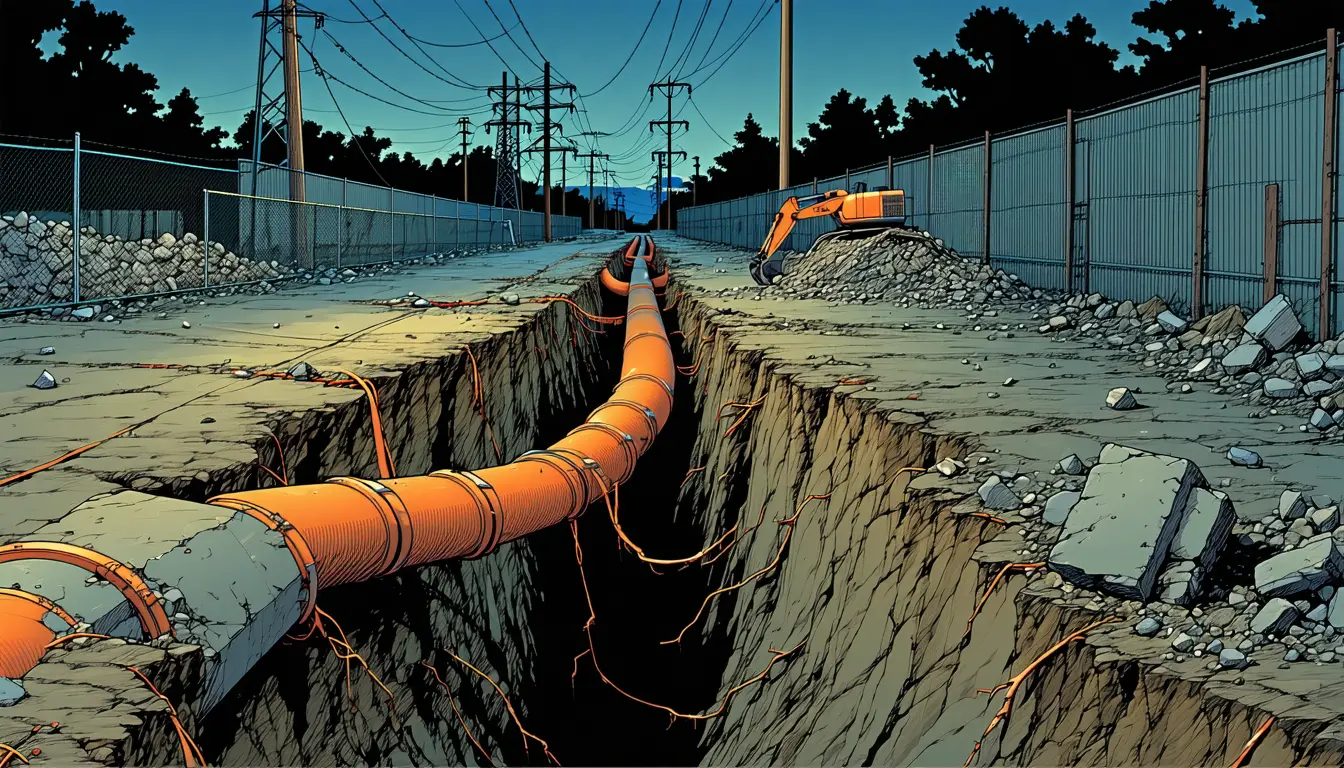
- The House is preparing a floor vote on a bipartisan bill that would require state utility regulators to consider rules ensuring data centers recover the full, incremental cost of energy grid upgrades.
Compiled by The InvestorSomething wrong?How this is made
Why it matters
- constraint A federal statute on models has to clear chambers that will be empty until November, so capital committed to the buildout this quarter meets state utility proceedings long before it meets a model rule.
- cost If state commissions act on full incremental cost recovery, grid upgrade costs move off household bills and onto project economics, with the amount set docket by docket rather than in one federal number.
- contradiction The warning bells and the China argument come from the two men who decide what reaches a floor, so bipartisan voter pressure and scheduled legislation amount to two different exposures.
- precedent Short of session days for a bill, the likeliest deliverable is a voluntary framework negotiated with executives who have already said they would accept regulation of their own companies.
The bill directs regulators to consider rules; it does not set a rate. The binding number would land in state commission dockets, project by project, and the federal text as described is silent on dollars [19]. Rep. Brett Guthrie's Energy and Commerce Committee passed it unanimously in July [9], and he called it a way to force data centers to "pay their own way" [10]. Johnson's office says Republicans will bring it up under suspension, the fast track leadership uses when it is confident of passage [7].
It is the only AI-adjacent item with floor time. Between the Senate's Sept. 14 return and its expected Oct. 2 departure there are eighteen days [18]. The House is expected to sit a few days this week before leaving until November [11]. The midterms are fewer than two months out [12].
Schumer's request is the more interesting item, or rather the more revealing one: he asked for a classified briefing with Trump administration officials about their evolving plans for AI regulation [1]. The plans being briefed belong to the executive branch. Johnson is separately arranging his own meeting with AI executives, and "It will be soon," he told reporters [3]. Dario Amodei and other leaders in the field have said they would support more regulation of their own companies [14]. Endorsing regulation costs an incumbent very little while no bill is moving.
The voter pressure is genuinely bipartisan. Sanders and Bannon were scheduled to speak at the same "pro-human" AI event on Sept. 15, alongside Marsha Blackburn, Chip Roy and Greg Casar [16]. Sanders' office billed it as a forum to "share concerns about the technology breaking outside of human control" [17]. Schumer said "Warning bells are ringing louder than they ever have" [2]. The Speaker who controls the floor told CNN: "If Congress just races in and does some sort of emergency session to try to regulate AI, we will lose the race to China, and that is a threat to every single American" [4]. Trump dismissed concerns about AI and data centers as "a SICK conspiracy" and posted on Sept. 14: "WHOEVER WINS AI, WINS!" [5].
In my view the near-term regulatory cost to the buildout is an electricity cost-allocation question settled in state proceedings. I would price that before pricing a federal rule on models. The administration's evolving plans could arrive as executive action, which needs no session days [1]. Or take the resignation of an Anthropic researcher warning that rogue AI could one day wipe out humanity [13]: repeat that with an actual incident attached and a calendar compresses quickly. The cheapest disproof is procedural: if one of the reemerged bipartisan AI bills [15] joins this week's suspension calendar, this reading fails within days.
What to watch
- Whether the Ratepayer Protection Act clears the House under suspension this week, and whether the Senate takes it up before Oct. 2.
- Whether Johnson's meeting with AI executives produces a voluntary industry framework or introduced bill text.
- Which state utility commissions open dockets on making data centers cover the full incremental cost of grid upgrades.