Product1 publisher3 min readPublished
Cloudera bets nine figures that regulated buyers will host Mistral rather than call an API
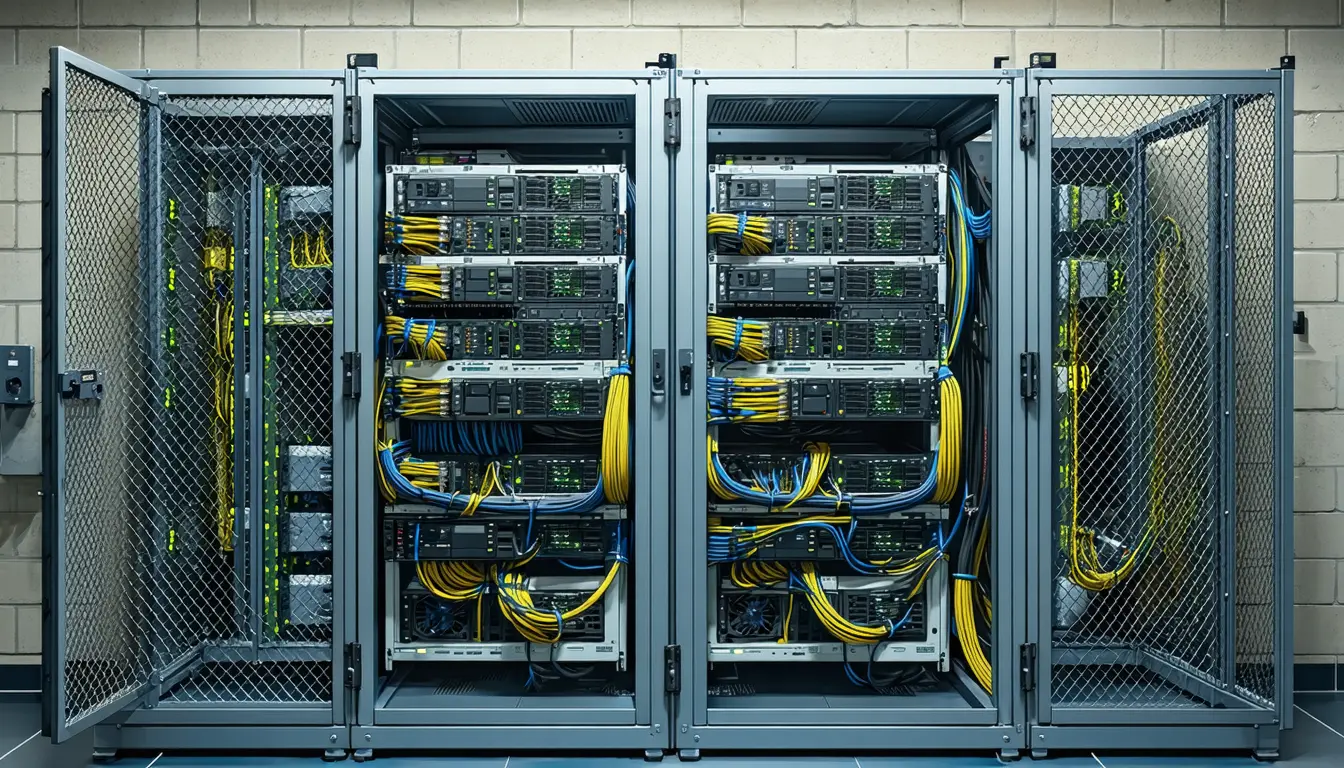
The partnership removes the external API hop for enterprises that cannot let sensitive records leave the perimeter, which also moves the inference bill off someone else's per-token pricing and onto hardware the customer has to buy and keep busy.
The Product Desk · Product desk
What happened
- Cloudera says it has struck a nine-figure strategic partnership with the French model maker Mistral AI SAS, announced at its EVOLVE26 event in Sao Paulo.
- Mistral's large language models will be integrated directly into Cloudera's hybrid data and AI platform, which the company says runs in public cloud, on private servers or across both.
- Cloudera's claim is that customers stop calling an external API, and instead run inference, generative AI and agentic workflows beside the data inside its own security and governance perimeter.
- Customization is handled by Mistral Forge, the model maker's fine-tuning platform for training its models on an enterprise's own data.
Compiled by The Product DeskSomething wrong?How this is made
Why it matters
- decision Once inference sits inside the customer's environment, the spend leaves the API budget line and joins the infrastructure capacity plan, which usually means a different approver and a slower purchase cycle than a card-on-file model account.
- exposure A Forge tune built on regulated records creates weights the customer owns, so the artifact that has to be access-controlled, versioned and rolled back is one nobody had to govern before.
- constraint With no price, availability date, minimum footprint or reference customer published, a platform team cannot size a rollout, which limits this quarter's work to asking the account manager for the numbers.
- cost If the workload does not fill the hardware, residency is bought at the price of idle accelerators, and the bill lands on the same team that signed the guarantee that data would not leave.
The person who has to roll this out usually owns two things: the cluster, and the form that says no regulated record left it. To that person the offer is narrow and real: a model running beside the data with no external API call in the path [5], while the rest of the announcement is a claim about money.
"Nine-figure" is a big number carrying very little information [1]. Counted as digits it is a floor of 100 million and a ceiling just under a billion [13], and the report does not name the currency or say which party is paying whom [15]. What the number does establish is sequencing. The commitment was made before anyone published a count of regulated enterprises willing to buy accelerators and keep them busy so that Mistral weights never leave the building.
Separate the substitution from the sovereignty language and it gets legible. Abhas Ricky, Cloudera's chief business officer and GM of applied AI, describes the win as control over data, infrastructure and economics [7], and ties the economics to running inference in environments the customer owns [8]. Control over infrastructure means buying it, sizing it and keeping it loaded. A public API bill is irritating and honest: it arrives monthly with a per-token line you can read, and Cloudera's own pitch is that those bills spiral [6]. A private deployment converts that into a utilization question you answer once at capex time and then live with, whichever way the pilots go.
The demand case rests on two soft things. One is Cloudera's framing of regulated industries that find it too risky to feed sensitive data to outside models [4]. The other is Steve McDowell of NAND Research, who says provider opacity about data use is making CISOs uncomfortable enough to drive adoption of open-weight and locally hosted models [10], and who calls the pairing a turnkey inference story [11]. Discomfort is genuine, but it doesn't count as a measurement. The numbers that would settle it are the share of pilots that reach production against unredacted records, the elapsed time from request to security sign-off before and after, and accelerator utilization once the novelty wears off. None of those are public.
For most teams, the decision comes down to a pair of questions. Does the sensitive field actually have to be in the context window, or will a redacted extract do the job? And do you already have accelerators, or a private-cloud commitment, inside the perimeter Cloudera governs today?
- Records must be in the prompt, capacity already there: this is the shortest path on offer, and the tradeoff is that you now run model ops yourself. - Records must be in the prompt, no capacity: you are pricing a hardware purchase against a per-token bill, and the utilization forecast is the entire decision. - Redacted extracts suffice, capacity already there: run it, because the marginal cost is close to zero, and do not book it as a compliance win. - Redacted extracts suffice, no capacity: the public API plus a redaction step is cheaper, and its price is already written down.
The first of those four is the only one that can sign this quarter without a utilization forecast. The announcement's numbers stop short of supplying that forecast.
What to watch
- A published SKU with per-node or per-token pricing and a minimum accelerator footprint for running Mistral models inside Cloudera.
- Which Mistral models actually ship inside the platform, and whether the ones customers can fine-tune with Forge run on-premises.
- A named regulated customer running Forge tunes against production records, with utilization figures attached.