Product1 publisher3 min readPublished
Four of the six tools AMEC showed in Wuxi add material to a wafer rather than remove it, which is a real move out of its etch specialism, though the company says the six sit at different stages of commercialization.
The Product Desk · Product desk

Follow any of these and your For You feed starts watching them — no settings page required.
invest
CXMT's ceiling is 240,000 wafers a month, and that is the DRAM price forecast1 publisher
product
China's chip firms are buying 85% of the payroll for under 6% of a revenue target1 publisher
product
A delegation trip through China's AI sector undercut the two-futures story its visitor expected1 publisher
product
Samsung's July foundry price rise moves the AI crunch into your bill of materials1 publisher
Compiled by The Product DeskSomething wrong?How this is made
The person this lands on is a process integration engineer in a Chinese fab with one slot free on the qualification calendar and a choice about which layer to risk. Deposition is not one job. The layers a deposition tool puts down can be conductors, insulators or semiconductor material, and some are only a few nanometers thick [5]. A chamber laying a forgiving film and a chamber that has to hold a few nanometers wafer after wafer are different purchases. A launch announcement counts them as the same unit.
A fab actually does something specific with a new equipment supplier: it runs the tool on a layer that tolerates error, alongside the incumbent tool, until the numbers hold. A six-tool slide invites a different conclusion: that four categories were crossed in an afternoon. AMEC itself says the six machines are at different stages of commercialization and that not all of them have entered large-scale use in factories [7], and moving from a working machine to volume deployment means extensive testing and customer qualification, with equipment expected to hold precision and repeatability while running continuously [8].
The unit arithmetic is worth doing plainly. Four deposition tools out of six is about two thirds of the launch by count [11], which leaves two machines to cover both the etch line AMEC already owns and the silicon-carbide equipment [12]. So the deposition share is not a rounding artifact of a broad catalogue drop. It is the point of the drop, from a company whose business was built around etch [4].
The material leaves the choke-point story unsupported. The report does not say which of the six are running production wafers, does not name a customer, and does not give a target node [13]. Chinese chipmakers are still dependent on overseas suppliers across several equipment categories, and US and allied export restrictions have limited access to some of the most advanced tools [10]. A wider domestic catalogue is consistent with those restrictions biting less over time. It is not evidence that they have.
The number that would settle it is steps run, not products announced. Modern chips can need hundreds of processing steps, cycling through deposition, patterning and etch [6]. Localization is the count of those steps a domestic tool runs on production wafers today, plus the repeat orders that follow a passed qualification.
A forcing function for anyone with this decision, in China or anywhere a single supplier category has been cut off. Draw two axes: how critical the layer is, and how proven the tool is in volume. Proven tool, non-critical layer is where a second source belongs. Proven tool, critical layer is the real win and is rare. Demo tool, non-critical layer is honest pilot work and costs you a quarter. Demo tool, critical layer is where a supply constraint quietly pushes you, because there is no import alternative to compare against, and that is the quadrant to refuse in writing.
The recommendation, with its cost attached: put new deposition chambers on the forgiving layers first and accept that your localization percentage moves slower than your supplier's product count, because a repeatability miss at a critical layer buys you the qualification cycle twice.
Ranked by verification strength, evidence, and original report placement.
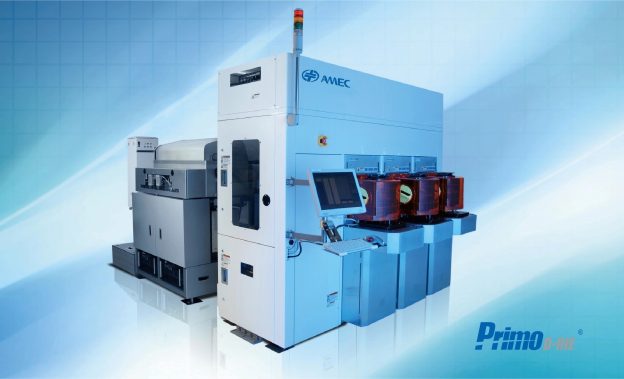
Chinese semiconductor equipment maker Advanced Micro-Fabrication Equipment (AMEC) unveiled six new chip-making machines at an industry conference in Wuxi, China, on September 2, expanding beyond its traditional core in etching.
The six new products include etching machines, deposition systems, and equipment designed for the manufacture of silicon-carbide power chips.
Four of the six newly announced products are deposition tools.
AMEC built much of its semiconductor equipment business around etching and is best known for etch equipment, making its expansion into deposition significant.
Deposition systems add extremely thin layers of material onto a silicon wafer; those layers can be conductors, insulators or semiconductor materials and may be only a few nanometers thick. Etching equipment does the reverse, selectively removing material so earlier patterns transfer into the layers beneath.
Modern chips can require hundreds of individual processing steps involving repeated cycles of deposition, patterning and etching before transistors and electrical connections are complete.
Publishers with included, body-backed reporting in this cluster.
1 article · September 6, 2026
Evidence-backed comparisons of source perspectives and observed adoption signals. Read the methodology
Which Builder, Operator, and Investor concerns the observed source mix emphasized—not a truth score.
Evidence, demonstrated adoption, hype gap, incentives, and confidence are assessed independently, each on its own current evidence. How these are measured.
One trade write-up of a company showcase
Everything traces to Interesting Engineering's summary of what AMEC put on stage in Wuxi. The category split is stated plainly and is easy to check against any transcript of the event, but the account carries no model designations or specifications, and no second outlet in our coverage tested it. A count of tools by category is a thin base for a claim about a supplier changing shape.
Shown at a conference, qualification unstated
AMEC's own framing does the limiting: the six tools are at different stages of commercialization, which is not a claim that any of them is running production wafers. Nobody is named as a buyer, and Interesting Engineering's own description of qualification testing is a reminder that a September showcase and a purchase order sit a long way apart.
Headline runs past the caveat below it
'China's chip giant launches 6 new machines to boost semiconductor production' promises output; the body concedes that not all six have reached large-scale use. The underlying observation is genuinely worth reporting, since four deposition tools from an etch house is a real change of direction, so the overstatement is one of emphasis rather than invention.
Staged launch, receptive write-up
The venue was AMEC's own slot at a Wuxi conference, and the localization drive described at the end of the piece rewards any Chinese supplier that can be seen covering more of the tool set. Interesting Engineering writes it in explainer register, headings included ('AMEC unveils new toys'), without an independent check, so the announcement passes through as progress.
Reliable tally, unresolved significance
We would stand behind the four-of-six deposition split and the Wuxi date; they are specific and hard to garble. Whether AMEC is becoming a broad-line equipment maker depends on which tools ship, to whom, and for what node, and that information is simply not in our coverage.