Invest1 distinct publisher3 min readPublished
Germany now imports more from China than it exports in the very categories it used to own. Its incumbents are answering with cheaper goods made in China, while 71,000 job reductions sit on the books.
The Investor · Invest desk

Compiled by The InvestorSomething wrong?How this is made
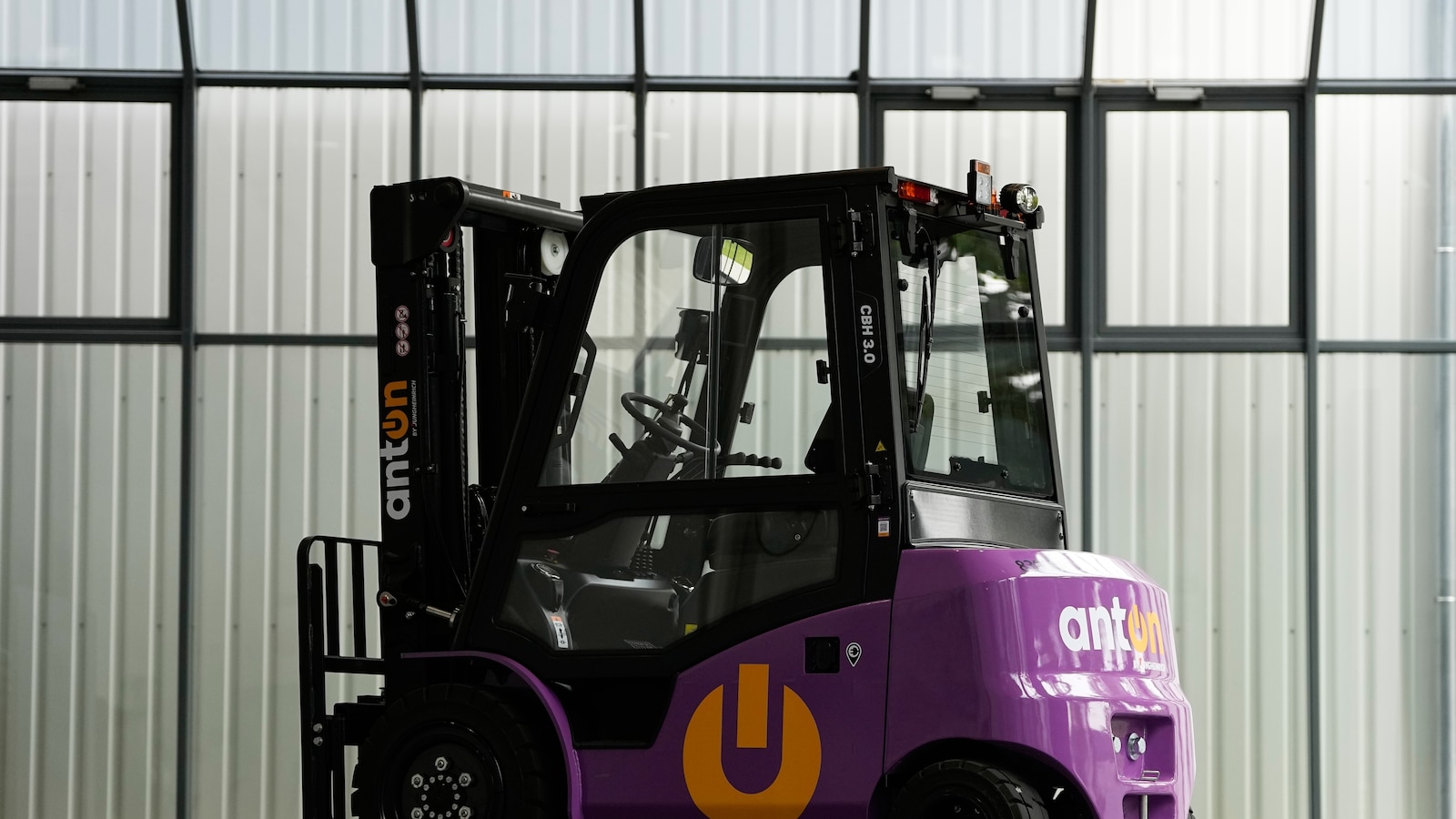
Price is the battlefield now, and choosing it carries unforgiving arithmetic: a purple AntOn at half the price of a comparable yellow Jungheinrich machine [11] means two units have to leave a plant to book the revenue one used to [2], which is why the specification reads as it does, with basic levers where the joystick was and a seat with no cushion [11], and why the build leans on EP Equipment's scale and Chinese cost base rather than on the Moosburg plant near Munich where the sales chief was explaining it [10][12].
Jungheinrich is defending the entry segment with Chinese capacity, not German. Volkswagen's vehicle development center in Hefei, set up to design cars for the local market [16], points the same direction: the incremental engineering and the incremental assembly are both located next to the competitor.
The flow behind that choice is not a quality problem. Beijing supports firms in sectors where German companies compete, and with domestic demand tepid the output goes abroad, Europe included [9], while U.S. tariffs shut off much of the largest alternative destination, autos above all [13]. Volkswagen's finance chief Arno Antlitz put the squeeze in one sentence, saying costs must come down while the Chinese total market is down 20% and Chinese competitors increase exports and competitive pressure in Europe [8]. Both halves of that hit the same P&L.
Add the announced reductions at three of the names that define German industry and you get 71,000 positions [1], with Volkswagen alone about 70% of the total [3], against an economy that shrank in 2023 and 2024 and managed 0.2% growth last year [1], an unemployment rate of 4% that flatters the picture [2], and real wages that only just regained their 2019 level [15]. Germany now buys more from China than it sells in cars, trucks, buses and trains, aircraft, factory machinery and medical devices [6], which is the trade line that matters more than any quarterly order book.
A different reading of AntOn treats it as expansion rather than markdown: if the buyers are genuinely new, customers who never needed a machine running 24/7 [11], then halving revenue per unit purchases an installed base and a decade of service attached to it, and Nadine Despineaux is describing an addressable market rather than a retreat when she calls mid-tech demand a way into new customers and markets [12]. That reading is testable on two checks: Germany's import position in those categories reversing [6], or Jungheinrich's high-end volumes holding while the cheap line grows. Brad Setser and Sander Tordoir's line that China has eaten much of German industry's lunch and is starting on dinner [7] is a claim about direction, and direction is measurable.
Ranked by verification strength, evidence, and original report placement.
Volkswagen has announced 50,000 job reductions, with media reports of plans for more.
BMW has 8,000 buyouts planned by the end of next year.
Auto technology firm Bosch plans a reduction of 13,000 by 2030.
Jungheinrich AG, a German maker of forklifts and warehouse vehicles and one of the world's three leading makers of warehouse vehicles, is partnering with Chinese manufacturer EP Equipment to make AntOn, an entry-level forklift that can match competitors on price, using EP's large scale and lower Chinese production costs with Jungheinrich's global sales force.
The German economy, Europe's biggest, has stagnated for several years, shrinking in 2023 and 2024 and showing only 0.2% growth last year.
Germany's unemployment rate of 4% is lower than the EU average.
Distinct publishers with included, body-backed reporting in this cluster.
fortune.com
1 article · September 2, 2026
Follow any of these and your For You feed starts watching them — no settings page required.
product
The cheapest part in the car is now the one that stops the line1 distinct publisher
invest
The tariff guards the shopper, not the margin: Apollo's read on China Shock 2.01 distinct publisher
invest
Markets charged Rivian 6% for an interim CFO carrying a VP's title1 distinct publisher
build
China is not banning germanium to Taiwan. It is just not clearing it.1 distinct publisher
Evidence-backed comparisons of source perspectives and observed adoption signals. Read the methodology
Which Builder, Operator, and Investor concerns the observed source mix emphasized—not a truth score.
Evidence, demonstrated adoption, hype gap, incentives, and confidence are assessed independently, each on its own current evidence. How these are measured.
One account, but named voices inside it
Fortune is the only outlet carrying this, so corroboration comes from within a single piece rather than across sources. What that piece does well is put people on the record: Volkswagen's finance chief on the 20% Chinese market decline, Jungheinrich's sales chief standing in her own plant describing why the cheap machine has no cushioned seat. What it does poorly is sourcing at the edges — 'media reports of plans for more' at Volkswagen is an unsized number smuggled into a precise list, and the Setser and Tordoir line is quoted without saying where they wrote it.
A product you can describe, not one you can count
AntOn exists in enough detail to have a paint colour, a control layout and a price point, and Volkswagen's Hefei centre is a standing facility rather than a plan — that is genuine, observable behaviour. But the story never reports a unit shipped, an order booked or a euro earned on the entry-level line, and the 71,000 reductions are announcements with end-dates as far out as 2030, not headcount already gone. Direction of travel is documented; scale is not.
One purple forklift carrying an industry
The reporting asks a single product line to stand in for how German industry answers China, and the headline arithmetic — 71,000 reductions — is announced rather than executed. That is a modest stretch, not a distortion: the trade reversal in six product categories is concrete, the executive quotes are unhedged, and Fortune gives Beijing's rejection of the whole 'China shock' premise a paragraph of its own. The overstatement lives in the leap from anecdote to sector, and it is small.
Everyone quoted has a position to protect
Look at who is talking. Jungheinrich's sales chief is introducing a product and gets to call outsourced manufacturing 'German engineering' at the same time. Volkswagen's finance chief invokes a 20% market decline in the paragraph where he argues costs must come down — external shock is the most comfortable frame for internal cuts. Beijing's commerce ministry has published a document whose title does the arguing for it. Merz's government, unpopular days before a vote in Saxony-Anhalt, has a 579-billion-dollar infrastructure fund to point at. None of that makes the facts wrong; it does mean nobody in this story is a disinterested witness.
Believable, unconfirmed
The structural story — a trade reversal in Germany's own categories, incumbents meeting it with cheaper Chinese-built goods — hangs together and is told with specifics. Confidence stops at the middle because there is no second telling to check it against, no statistical release or filing cited for the macro figures, and the one thing that would confirm the strategy is working, AntOn's sales, is absent.