Invest2 publishers3 min readPublished Updated
The QScan seizure turns 390 indicators into a years-deep log review for banks
Three seized domains and a roughly 390-item indicator list arrive with no named bank victim, so any institution running the listed products has to answer a multi-year exposure question out of whatever logs it happened to keep.
The Investor · Invest desk
What happened
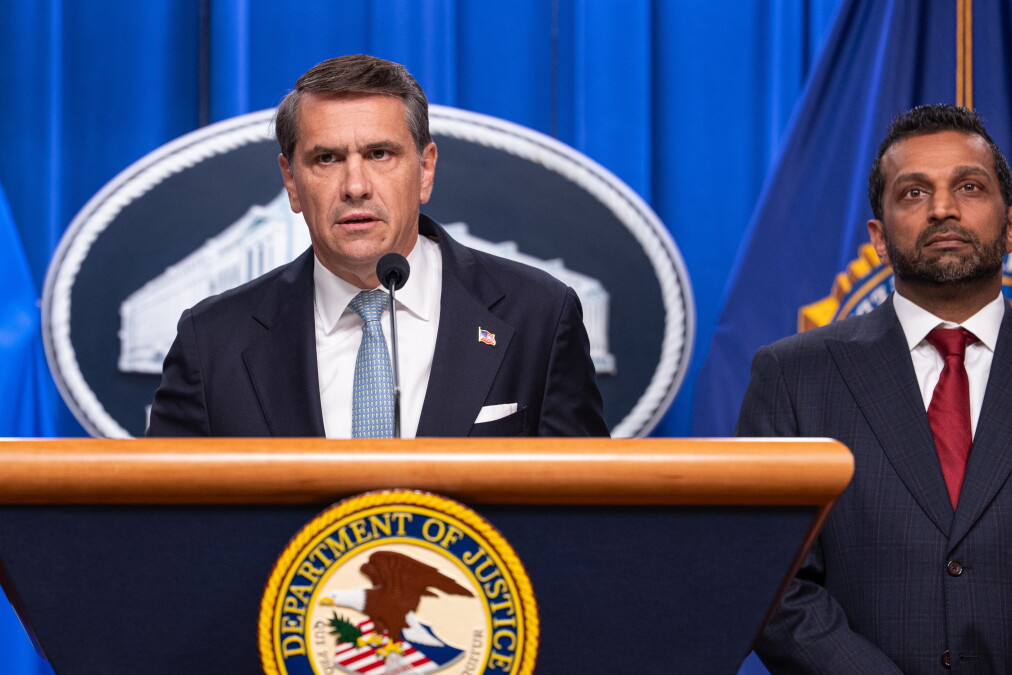
- Justice Department and FBI agents seized three domains running QScan, which scanned the internet for vulnerable machines and broke into them, and QTRouter, a network built to disguise where an attack came from.
- A joint advisory published Wednesday by the FBI, the National Security Agency and the Cyber National Mission Force lists roughly 390 indicators tied to the operation.
- The government attributes both tools to QTFY, a group employed by Nanjing Xinjiuwei Network Technology Co. that sells hacking services to China's Ministry of State Security and the People's Liberation Army.
- The supporting affidavit documents four earlier victims that had each complained about suspicious activity, three of them financial or insurance firms.
- The government frames the case as relevant to all banks, which count as critical infrastructure, and as evidence of what unpatched software costs.
Compiled by The InvestorSomething wrong?How this is made
Why it matters
- cost The takedown removes no part of the retrospective bill, which arrives either as in-house triage hours or as an invoice from a managed security provider for sweeping logs the bank may no longer hold.
- constraint With victims pseudonymised and the 300-plus organisations robbed in 2024 still unnamed, no institution can clear itself from the public record, so its own telemetry is the only available proof either way.
- contradiction Orsi treats the financial skew as a reporting artifact while Healey doubts the sector was targeted at all, and that gap decides whether triaging the indicators is a sector-specific hunt or ordinary patch hygiene.
The four victims in the affidavit are there partly because they complained to the right company: the operators ran those attacks from servers leased from Hostwinds, a U.S. hosting provider, so all four abuse complaints went to the same place [8]. Mark Orsi of the Global Resilience Federation, previously a cybersecurity executive at large banks, reads the financial skew as sector behavior rather than sector targeting, because financial institutions "tend to have stronger detection, reporting and information-sharing capabilities which can make them more visible in investigations" [9]. Jason Healey, once vice chair of the Financial Services Information Sharing and Analysis Center, is blunter: "this does not sound like any major targeting of the finance sector" [10].
Sizes help. The Michigan financial group listed eight of the released addresses attacking it over roughly a month [11], eight out of about 390 published indicators, a little over 2 percent of the list [12]. The sector inference rests on three cases inside a documented sample of four, or 75 percent of almost nothing [20]. The earlier campaign the government describes swept up defense contractors, financial institutions and universities together [19].
Orsi's sequencing is the operationally interesting part. Blocking the listed addresses is one of the last steps a bank should take, not the first [13], because the first is confirming that any named product in the estate was patched and then establishing whether those machines were exposed during the years the group was exploiting them [14]. An initial review "is not a heavy lift for a midsize bank," he says, but someone has to triage the results [15], and a bank without that someone routes the advisory to its managed security provider or incident-response firm for a sweep of old logs [16]. Healey says much of that is already automatic [18]. What is not automatic is retention: a multi-year exposure question can only be answered as far back as the logs reach, and past that line the honest answer is that nobody knows.
Maybe this framing is off, but the seizure looks like the cheap half of Wednesday's announcement, with the advisory as the expensive half. Both tools are inoperable and three domains are gone [1][2], and ETH Zurich's Eugenio Benincasa expects little from that, since "the Chinese market isn't short on scanning services, so this probably won't deter operations over the medium to long term" [7]. The analysis could still turn out differently. A later filing might name a financial victim, and the discretionary log sweep becomes the expected one. Or Healey turns out to be right, and the correct response is ordinary patch hygiene sized to the estate rather than a sector hunt. Or the indicators date within a quarter while the list of exploited products keeps paying rent. All three leave the same line item standing, which is retention policy, a budget decision made years before any advisory arrives.
What to watch
- A superseding filing or advisory update that names a financial victim, which would move the log sweep from discretionary to expected.
- A fresh advisory carrying new indicators on different infrastructure, which would date the current 390-item list.
- Whether charges reach QTFY personnel or Nanjing Xinjiuwei Network Technology Co. itself, rather than stopping at domain seizures.