Invest1 publisher3 min readPublished
Gucci moves its $1,000 sneakers to a Chinese factory chosen for know-how
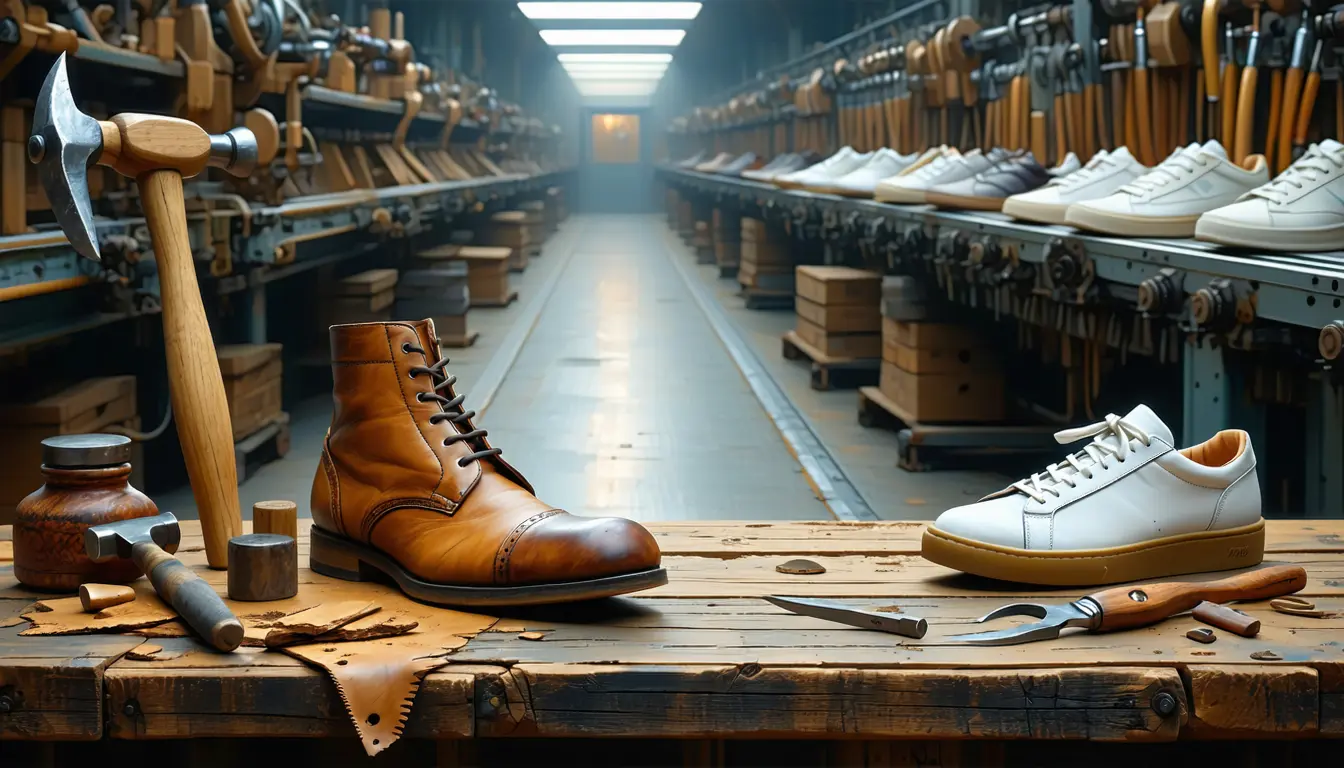
Gucci is making its newest $1,000 sneakers in China at a factory it picked for technological know-how, ending a 105-year Italian tradition. Chinese supplier capability has already cut into German carmakers' sales in China and now reaches a European luxury house, so far through a single shoe.
The Investor · Invest desk
What happened
- Gucci told Reuters it will keep making its other products in Italy, so the China move covers only the new sneaker line.
- Gucci's sales have halved in the last three years, and parent company Kering has cut prices to deal with slow demand.
- Volkswagen, which once drew half or more of its profits from China, saw its deliveries there fall 36.6% in the second quarter.
- Chinese-owned carmakers outsold Japanese brands in Europe for the first time in May, according to the European Automobile Manufacturers' Association.
Compiled by The InvestorSomething wrong?How this is made
Why it matters
- cost Making goods in China is still cheaper than making them in Europe. Whatever reason Gucci gives, Kering gets a lower cost base under a $1,000 price at a brand that is already cutting prices.
- exposure Gucci's Chinese maker now works to a luxury house's quality standard. That leaves it where Volkswagen's suppliers stood before Chinese manufacturers turned from suppliers into competitors.
- constraint Cutting its lineup by up to half leaves Volkswagen fewer models to defend in Europe while Chinese-owned brands gain ground there.
Chinese manufacturing workers earned $629 a month on average last year, against $1,341 in Taiwan and $2,075 in South Korea, according to a survey by Japan's trade agency [5]. Chinese pay is about 47% of the Taiwanese level and about 30% of the South Korean one [6]. A factory chosen for quality still comes with that wage bill. The survey does not cover Italy and the report does not give the shoe's production cost, so the record does not show how much Gucci saves against its own workshops.
One reading is a cost measure described in quality terms, at a brand that needs its margin back. Another takes Gucci at its word, as a capability choice for a single product. The third is the sequence Howard Yu, a professor of management at Switzerland's International Institute for Management Development, describes in cars [8].
Much of China's know-how came from Europe, Yu told Fortune, and Volkswagen has built cars in China since the 1980s [8]. The carmaker "essentially has trained up a generation of suppliers to meet Western standards," Yu said [9]. "The moment Chinese suppliers have enough capabilities, then you want to branch out to develop your own brands for better margins," Yu said [10].
In cars, that sequence has reached the accounts. German car exports to China fell by a third last year [13]. Volkswagen is cutting its model lineup by up to half, along with 100,000 jobs, in the biggest restructuring of its 90-year history [12]. In a recent analysis, European Central Bank economists found that since 2019 China's export mix has come to resemble Germany's, mostly factory machinery and cars. The overlap grew more for Germany than for any other EU country [17]. The EU charges a standard 10% tariff on cars and has added tariffs of up to 35.3%, which Fortune reports as applying to Chinese-made electric vehicle batteries [15]. Economists Brad Setser and Sander Tordoir wrote in May that China has already taken much of German industry's business and is preparing to take more [18].
Apollo Global Management chief economist Torsten Slok is among the economists who call this the second China Shock [4]. I think the label fits the car evidence, which shows up in trade flows, deliveries and headcount. For luxury, the record supports only the smaller claim that Ker Gibbs, former president of the American Chamber of Commerce in Shanghai, made to Fortune: "I think symbolically, China has arrived" [3]. One shoe gives a symbol and a lower cost line. Kering's margins would have to move before it amounts to more. The luxury half of the thesis fails if the sneaker stays the only China-made line and its maker never sells under its own name. It holds if that supplier follows the path of the Volkswagen suppliers Yu described.
What to watch
- Kering's next results, for whether Gucci's price cuts and its China-made line show up in reported margins.
- Volkswagen's third-quarter China deliveries, and how many models its restructuring actually removes.
- Whether other European luxury houses start citing Chinese know-how when they move a product line.