Security1 distinct publisher3 min readPublished
About 8 percent of the Rs 42.4 crore taken in these three cases is publicly traced into a named account, and the people in custody are the ones who received the money rather than the ones who placed the calls.
The Watch · Security desk

Compiled by The WatchSomething wrong?How this is made
Three months of coercion is the mechanism, not a detail. The Gujarat victim lost Rs 19.24 crore over that period to callers posing as police officers [6]. Spread across 90 days, that averages roughly Rs 21.4 lakh a day [3]. No single transfer in a stream like that has to look like the end of the fraud, because the caller is still on the line the next morning. The Karnataka case ran a month for Rs 15.45 crore [7]. The three totals add to Rs 42.36 crore, which is the Rs 42.4 crore the agency announced [1], and an average of about Rs 14.1 crore per victim [2].
The laundering ledger is thinner than the loss ledger. Akash, of Haryana, allegedly received Rs 1.95 crore into an account he opened himself and pushed it onward the same day [8]. Raja Karmakar, of Kolkata, is accused of taking Rs 1.5 crore into his firm's account [9]. Jyoti Rani allegedly received part of the proceeds, withdrew some in cash and transferred the rest, with no figure attached [10]. The two quantified accounts come to Rs 3.45 crore, about 8 percent of the money lost in the three cases [4]. All three are described as beneficiaries in the chain rather than callers, and the CBI says it is still tracing the remaining accused [11].
That is why the seizures carry more weight here than the arrests. The searches were planned from financial and technical analysis, including bank accounts and online account access records, and run simultaneously to prevent destruction of evidence [13].
The national figures are easy to misread. Home ministry data cited before the Supreme Court shows digital-arrest complaints falling from 123,672 in 2024 to 58,249 in 2025 and 16,377 through June 30, 2026, with Rs 18.05 crore restored across 36,290 cases [16]. That is a 52.9 percent fall between 2024 and 2025 [6], and a first-half pace running at about 56 percent of the 2025 total [7]. Those numbers count complaints and money returned, not money taken [8], so they do not establish that less is leaving accounts. The restored figure works out to about Rs 4,975 per case [5].
Nothing published so far explains how the mule accounts cleared onboarding, or names a bank employee, though the December order directed scrutiny of exactly that [14]. In an earlier digital-arrest case, The Cyber Express reports, the CBI charged 13 people and tied the operation to cyber-slave compounds in Myanmar [18]. The tier reached in these three cases sits at home: one self-opened account in Haryana, one firm's account in Kolkata [8][9]. Both moved money onward, and the coercion in each case was described by the agency as the reason a single victim can be worth crores [17].
Ranked by verification strength, evidence, and original report placement.
The three cases together account for about Rs 42.4 crore in losses, according to an official press release.
A second case, in Gujarat, also ran three months and cost the victim Rs 19.24 crore, again to scammers posing as police.
Home ministry figures cited before the court show digital arrest complaints falling from 123,672 in 2024 to 58,249 in 2025 and 16,377 through June 30, 2026, with Rs 18.05 crore restored across 36,290 cases.
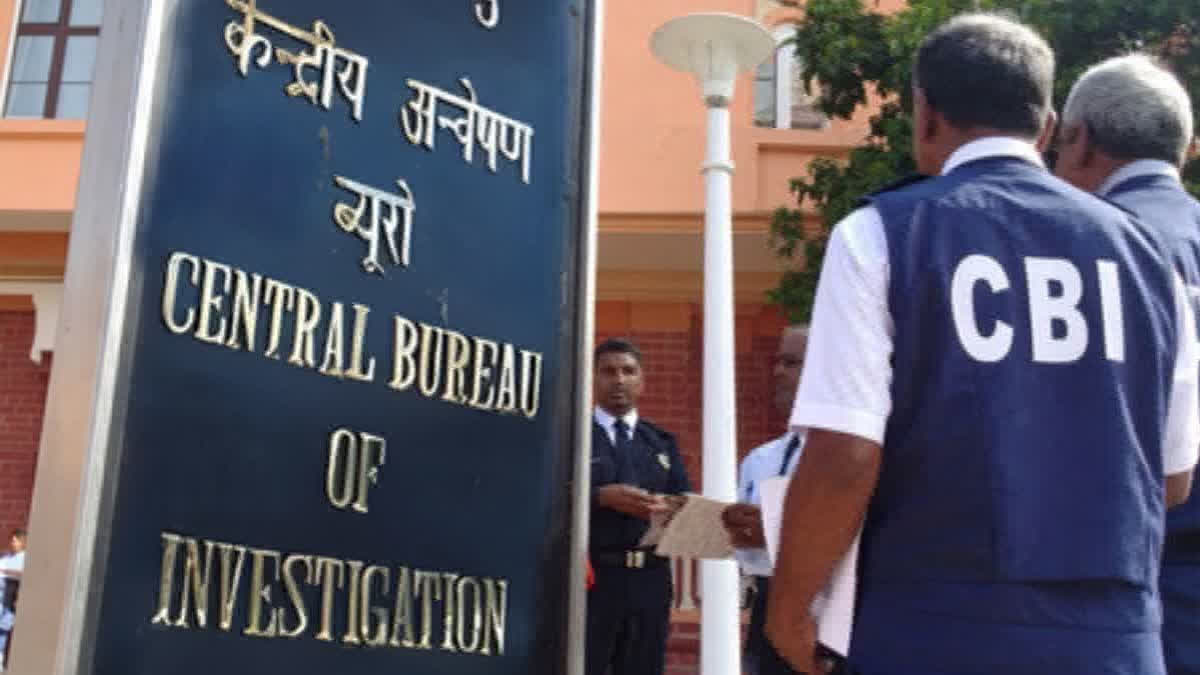
India's Central Bureau of Investigation searched 89 locations across 20 states in three digital arrest fraud cases and arrested three people accused of moving the stolen money.
The searches were conducted under Operation Chakra-VI, the CBI's ongoing cybercrime enforcement programme, and all three cases were transferred to the CBI from state police forces.
In a digital arrest, fraudsters posing as police officers, courts or central agencies contact a victim by phone or video call, allege involvement in a crime, and hold the person under sustained psychological coercion, often forbidding contact with family, while extracting transfers described as bail, verification deposits or asset audits.
Distinct publishers with included, body-backed reporting in this cluster.
1 article · September 4, 2026
Follow any of these and your For You feed starts watching them — no settings page required.
build
Aurora DSQL's second writable endpoint bills every commit for the inter-Region round trip1 distinct publisher
Evidence-backed comparisons of source perspectives and observed adoption signals. Read the methodology
Which Builder, Operator, and Investor concerns the observed source mix emphasized—not a truth score.
Evidence, demonstrated adoption, hype gap, incentives, and confidence are assessed independently, each on its own current evidence. How these are measured.
One release, one outlet
Trace any number in this story back and you arrive at the same place: a CBI press release, relayed by The Cyber Express. The court dates and the home ministry complaint counts are matters of record and hold up as such, but the case specifics — three months of captivity, Rs 19.24 crore from one victim, what each of the three accused allegedly did with the money — are allegations at the search-and-arrest stage, with no charge sheet, no court filing and no bank confirmation offered. The reporting is careful about what it does not know, which is worth something; it is not the same as corroboration.
Wide raids, thin recovery
Institutionally, a great deal is in motion: a pan-India investigation ordered by the Supreme Court, states pushed to grant consent and stand up coordination centres, the RBI told to write a mule-account procedure, and 89 premises hit in one synchronised sweep. What has actually landed is narrower. Three people are in custody, all of them money receivers; Rs 3.45 crore of Rs 42.4 crore is publicly attached to named accounts; and nationally, restitution runs under Rs 5,000 per case where anything comes back at all. Enforcement machinery is deploying faster than results are.
Optics of scale, outrun by the money
Eighty-nine addresses across 20 states reads like a syndicate being dismantled. Three arrests of account-holders who took delivery of Rs 3.45 crore reads like the bottom of the chain. That gap belongs to the official framing rather than to the writing — The Cyber Express says plainly that those arrested are beneficiaries and that the callers remain untraced, and it refuses to turn a halving complaint count into a claim about money saved. A modest overstatement, and it is the press release doing the overstating.
The raiding agency wrote the source document
The CBI is under a Supreme Court mandate to prosecute these frauds nationally and is describing its own progress under that mandate — a straightforward reason to lead with 89 locations and 20 states rather than with three low-level arrests. No commercial interest sits behind the story: there is no vendor, no product and no security firm attached to any number here. The outlet is a cybersecurity publication, whose interest is in the tradecraft detail, and that shows in what it chose to emphasise.
Solid on what was announced, blank on what it yields
We can be fairly confident about the announcement itself, the court dates and the national complaint figures — those are documented and internally consistent, and the case amounts reconcile to the stated total. Confidence drops sharply on everything downstream: whether these searches produce charges, who placed the calls, which banks let the mule accounts open, and whether any of the Rs 42.4 crore returns. One outlet, one release, and an investigation the agency says is still tracing the remaining accused.