Leadership1 publisher2 min readPublished
A Toshiba SVP argues cheap code moves retail's durable value deeper into the stack
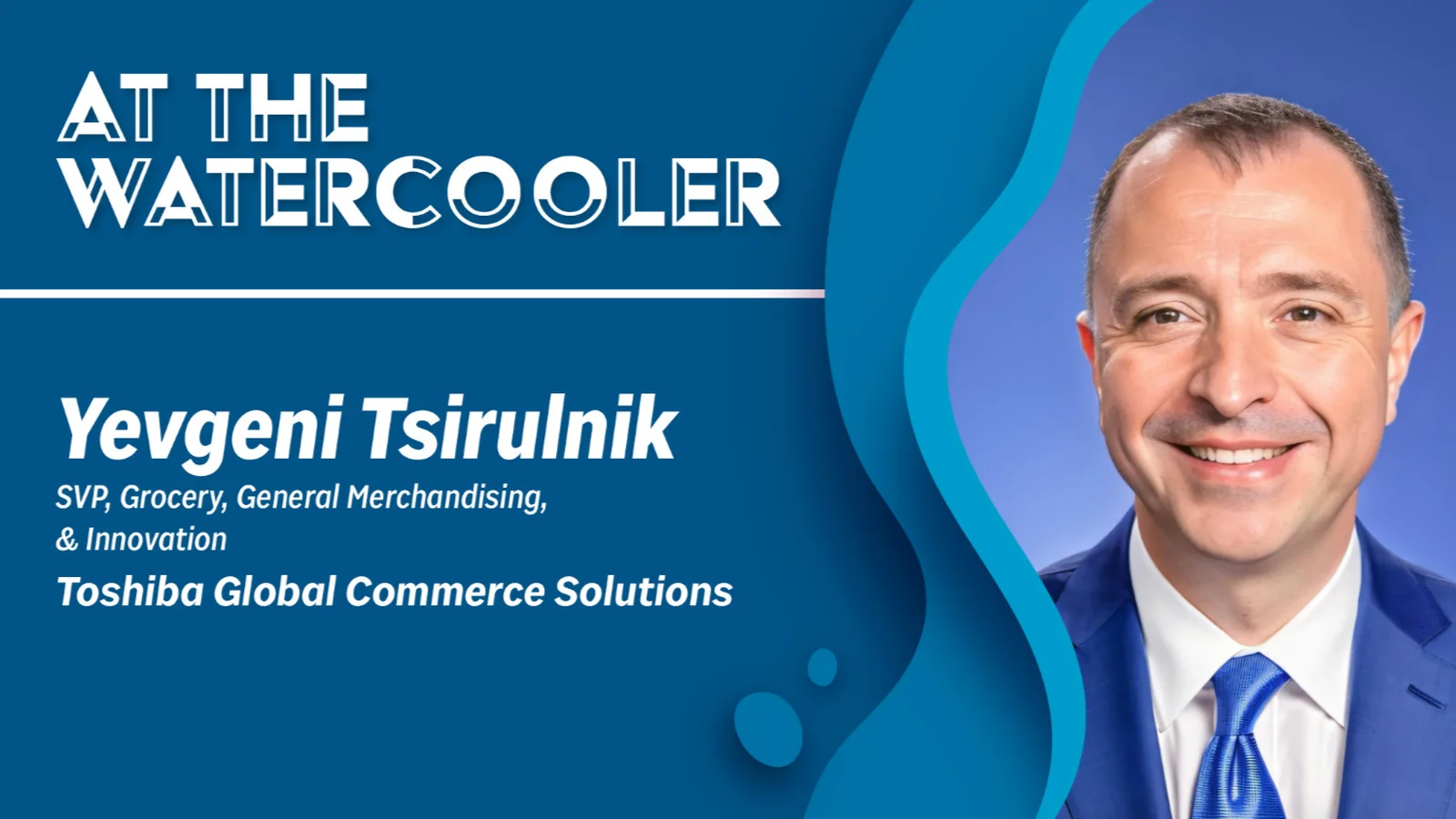
Writing for the Forbes Technology Council, a Toshiba Global Commerce Solutions executive names the posture build on buy and rests it on an unmeasured claim that operating costs are falling more slowly than build costs.
The Board Room · Leadership desk
What happened
- A Forbes Technology Council post names a third retail technology posture, build on buy: purchase the mission-critical foundation, and keep the freedom to build the experiences, workflows and intelligence above it.
- On the cheap side of the author's line sit building an interface, creating a workflow, connecting an API, generating a report and developing an AI assistant, each now a fraction of the old effort.
- On the hard side sit inventory accuracy, price correctness, associate authorization, a payment that fails halfway through a transaction, lost connectivity, reversibility and after-the-fact explanation.
- As visible functionality gets easier to reproduce, the article argues, durable value moves deeper into the stack toward transaction integrity, security, policy, resilience, observability and recovery.
- The foundation purchase is framed as a decision that may stay with the business for years, while infrastructure, security threats, regulations, payment methods and AI architectures all change under it.
Compiled by The Board RoomSomething wrong?How this is made
Why it matters
- capability If build costs are falling the way the article describes, a retailer can differentiate at the workflow and assistant layer without owning transaction integrity. The old binary did not offer that option.
- constraint A posture that depends on freedom to build above a bought platform makes extension points and data access the operative terms of the purchase. A foundation that keeps them closed forecloses the building.
- cost Cheaper construction leaves the on-call roster where it is. The engineers who answer when an in-house workflow misbehaves in one store remain a permanent line in the retailer's budget.
- decision Framing the purchase as today's software plus continuous evolution moves the vendor comparison onto a different basis: each candidate's record of absorbing past payment-method and regulatory change.
Yevgeni's argument rests on a rate comparison he states but leaves unmeasured. "The cost of creating software is coming down much faster than the cost of operating consequential systems," he wrote. If that holds inside a given retailer, procurement follows. The layer whose build cost is collapsing is the layer you can afford to own, and the layer whose run cost is not is the layer worth buying. The post makes that comparison and stops there: no cost figures on either side, nothing on contract terms or staffing.
He is a platform vendor's SVP arguing that platforms matter more, and his employer sells the layer his argument protects [15]. His bio identifies him as SVP of software portfolio management at Toshiba Global Commerce Solutions, delivering retail technologies [1]. The rate claim is checkable without him: a retailer can compare the hours it spent building a workflow this year against what it pays to run the platform underneath. "This is why I believe world-class technology platforms are becoming more important as AI makes development easier," he wrote [10].
The posture as he defines it preserves "the freedom to build the experiences, workflows, intelligence and differentiation above" a bought foundation [2]. That freedom is a property of the purchased platform's interfaces and data access, not of the AI tooling doing the building. He wrote that a world-class platform provider "should absorb much of that complexity and continuously invest in performance, scalability, security, compatibility and resilience" [17]. Which of those absorptions a retailer can hold a vendor to is a matter of the agreement. The article leaves that to the reader.
On capacity, he is careful. AI "helps engineers address these problems but does not remove them entirely," he wrote [8]. The problems he has in mind include whether a capability performs consistently across thousands of locations, different devices, store configurations and network conditions [7]. Building a workflow cheaply keeps the same number of engineers on hand to answer when that workflow behaves differently on one store's network.
The separation worth holding onto is between this quarter and the next several years. This quarter, a retailer decides which experiences to build in-house now that building them is cheaper [3]. The foundation decision underneath sits on a different clock. By his own standard the test of it is the one he names: "The foundation must perform on an ordinary Tuesday and during the busiest shopping day of the year" [11].
What to watch
- Whether Toshiba Global Commerce Solutions publishes extension-point, data-access or upgrade-compatibility commitments that a build-on-buy customer could hold it to.
- A retailer publishing its own before-and-after figures on in-house build hours against platform operating cost. Those figures would test the rate claim directly.
- Whether build on buy appears in retail RFP language. That is the posture moving out of an article and into procurement.