Science1 publisher3 min readPublished
A satellite designed to be bright, cleared by the agency that licenses spectrum
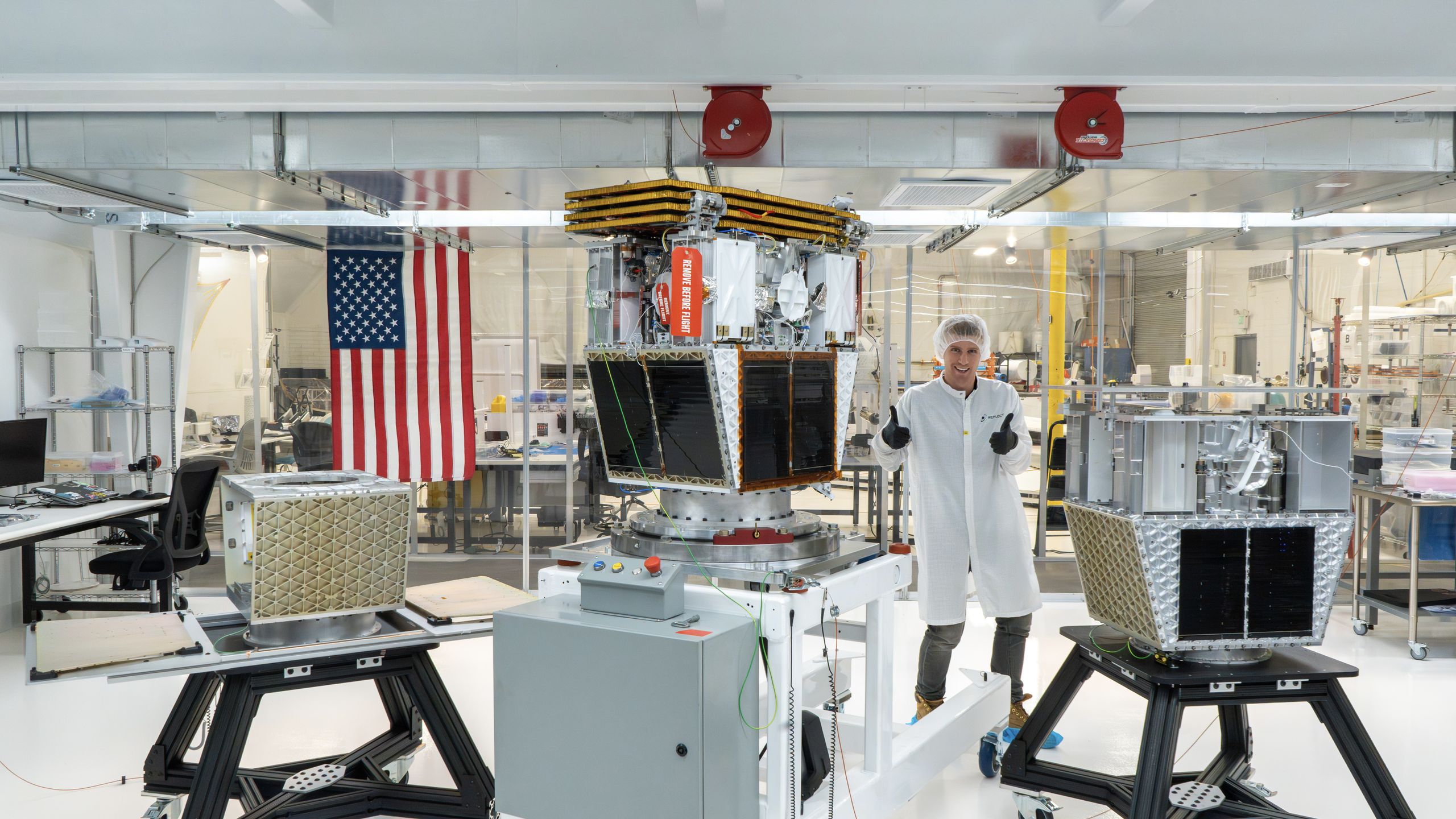
Reflect Orbital won an FCC grant in July for a test satellite meant to reflect sunlight onto the night side of Earth. The review that cleared it covered spectrum. How much light lands on the ground fell outside it.
The Scientist · Science desk
What happened
- Reflect Orbital, based near Los Angeles, wants to reflect sunlight onto the night side of Earth to light disaster areas, nighttime events and solar farms outside daylight hours.
- Active satellites in orbit have gone from 2,000 in 2018 to more than 16,000 today, according to Jonathan McDowell, who has catalogued human-made objects in space since 1989.
- Space observers and dark sky groups say the astronomy consequences could be catastrophic and that reflected light could affect human health and safety and disrupt wildlife.
- The test launch is expected this year.
Compiled by The ScientistSomething wrong?How this is made
Why it matters
- constraint The FCC's authority runs to spectrum and communications licensing. The objections turn on brightness, which sits outside that authority.
- exposure Ground-based observatories absorb the cost of any brightening, and their existing complaint about satellite streaks has yet to produce a forum where they can contest it.
- precedent If a deliberate reflector clears review under the 1967 treaty's harmful-contamination language, that language stops being a plausible brake on the next one.
- decision Independent trackers like McDowell will be the ones measuring the satellite's brightness, which puts the evidentiary basis for any future rule in private hands.
The regulatory gap here is narrower and more specific than "space law is behind". The FCC licenses commercial satellites that communicate with Earth, and it has become the de facto gatekeeper for satellite approval in the United States, while the FAA oversees rocket launches and reentries [8]. Photons deliberately aimed at the ground after dark fall outside both remits. The American Astronomical Society petitioned the FCC in March to deny Reflect Orbital's request to operate the test satellite; the agency granted approval in July, and DarkSky International and other nonprofits then asked it to reverse the decision [4].
International law is thinner still. Over 100 nations have signed the 1967 Outer Space Treaty, which declares space "the province of all mankind", bars national appropriation, and requires that space be kept clear of harmful contamination [9]. Dana Zartner, an international environmental lawyer at the University of San Francisco, said the treaties are voluntary and hard to enforce: nobody can compel a state to do any of these things, and a state cannot be thrown in jail [10]. Zartner also said that "the law has not caught up to the reality of what is happening" [7].
The astronomy objection here turns on intent. A communications satellite is bright by accident. Sunlight reflected on demand is the product. Jonathan McDowell, who has tracked every human-made object in space since 1989 and now holds an honorary professorship at Durham University, keeps a catalog, updated every few weeks, that is more comprehensive than that of most governments [1]. He called the project insane and said there is a failure to understand that darkness is a good thing [1][2].
Active satellites went from 2,000 in 2018 to more than 16,000 today, by McDowell's count [5]. That is a factor of eight in roughly seven years, and the unit being counted is objects; measured sky brightness is a separate quantity. Streaks on telescope images are the documented harm from that population [6]. A single reflector is one object in sixteen thousand, and the argument against it rests on how bright it is and where it points. The record here carries no measured magnitude.
Reflect Orbital's stated applications are lighting disaster areas for search and rescue, illuminating nighttime events, and running solar farms outside daylight hours [3]. Christopher Buscombe, a spokesperson for the company, wrote to Science News: "We believe that exploring how new technologies can help the world forgo fossil fuels is a responsible application of the scientific process" [11]. The solar-farm claim can be checked with numbers. The source does not supply them: no reflected irradiance at the panel, no duty cycle, no comparison against the launch and station-keeping energy.
Stephen Hummel, an astronomer at the McDonald Observatory in West Texas, said the project "amplifies the issue to the point where it's impossible to ignore" [12]. Whether it also produces a rule is a separate question. The tracking community can document a satellite's brightness after launch, and McDowell's catalog does. No agency has the power to weigh that measurement against a licence.
What to watch
- A published on-sky magnitude for the test satellite, measured from a dark site after launch.
- Whether the FCC answers the DarkSky International reversal request or lets the July grant stand.
- Whether any US agency claims authority over deliberate ground illumination, separate from launch safety and spectrum.