Product1 publisher3 min readPublished
The Oudenaarde fab went bankrupt in July 2024 with hundreds of jobs lost, and the espionage investigation grew out of that insolvency file, long after an ownership change Belgium had no power to screen.
The Product Desk · Product desk

Compiled by The Product DeskSomething wrong?How this is made
The mechanism sits in one clause of the Federal Prosecutor's Office statement. While holding his research post at BelGaN, the suspect was "simultaneously acting as a director of a Chinese company engaged in a similar manufacturing activity", a firm that appeared a few months after he joined the Belgian company and was financed by a Chinese investment fund [5]. Prosecutors put the rest carefully: the investigation "may point to" the unlawful transfer abroad of gallium nitride production IP, the seized storage and communications devices are still being analysed, and no court has convicted anyone [5][6].
A directorship is a registry fact before it is a criminal charge. The check that surfaces one is a name search against senior technical staff, and it does not need an export-control lawyer in the room.
Belgium's State Security Service wrote the pattern down before this arrest became public and calls them mirror companies: Chinese investors buy into a small Belgian company, research centre or spin-off with promising technology and not enough money, gain access to the technology, stand up a mirror plant in China to make it at scale, then sell the original on [14]. BelGaN met the entry condition. The Oudenaarde fab was in financial trouble in February 2022 when a consortium of Chinese investors bought it and renamed it, with new chief executive Alan Zhen Zhou describing an opportunity to build a "GaN valley" in Europe [9]. A company called Gankool opened in Fujian province a few months later to make the same technology, VRT reported [10]. The fab ran about 29 months under the new owners before it collapsed [19].
The screening argument cannot reach this deal. Belgium had no foreign investment screening regime when BelGaN changed hands, and the federal mechanism only came into force in July 2023, 17 months later [17]. What existed during those 29 months was internal: conflict-of-interest declarations, egress logging, and whoever held the process recipes. The site opened more than 40 years ago as MIETEC and was Belgium's last industrial chip fab, according to VRT [8]. Belgium had exactly one company in gallium nitride, the material behind fast chargers, EV power electronics, satellite communications and radar [7]. One site's staff list was the national position.
Detection came late and from an unglamorous place. The criminal investigation grew out of the examination of how the company failed, with investigators suspecting the buyers never meant to rescue it, only to obtain what it knew [12]. On the public record so far, the earliest reliable signal was insolvency paperwork. VRT reports the federal prosecutor counted about 15 espionage cases last year [15].
That leaves two axes for anyone running a lab with something scarce in it. The first is control of the entity: ownership, board seats, screening. The second is control of the artefacts: the repositories and process data, and who still holds an account. Screening moves only the first, and it moves it once, at the moment of sale. Distress moves both the wrong way at once, because the money that pays for security staff and the appetite for enforcing conflict rules leave together. The two questions that tell the axes apart are cheap to ask: which of your senior technical people hold directorships elsewhere, and what egress are you still logging in month two of an administration.
Ranked by verification strength, evidence, and original report placement.
Belgian prosecutors have held a 52-year-old man, who holds Belgian and Chinese nationality, in pre-trial detention since 10 May on suspicion of passing chip-making secrets to China.
Police arrested the man at Brussels Airport as he was about to board a flight to Beijing, the Federal Prosecutor's Office said in a statement on Monday, four months after the fact.
Prosecutors are investigating four charges: espionage, participation in a criminal organisation, misuse of company assets, and unlawful disclosure of trade secrets. The man denies them, according to RTBF, and prosecutors are also looking for a second suspect.
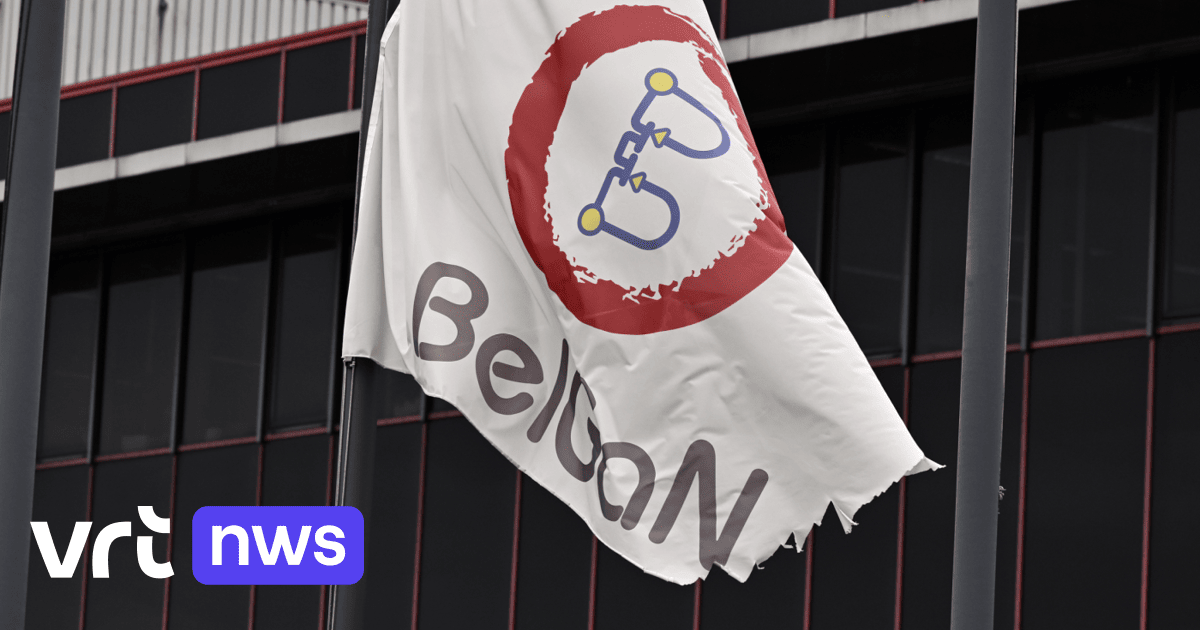
The man held a senior research position at BelGaN, the gallium nitride chip maker in Oudenaarde that went bankrupt in July 2024.
The prosecutors' statement says the investigation "may point to the unlawful transfer abroad of specialised intellectual property and trade secrets relating to the production of gallium nitride chips", and that while holding his research post at BelGaN the suspect was "simultaneously acting as a director of a Chinese company engaged in a similar manufacturing activity". That company appeared a few months after he joined the Belgian firm and was financed by a Chinese investment fund.
Investigators seized data storage devices and communications equipment and are still analysing them. No court has convicted anyone.
Follow any of these and your For You feed starts watching them — no settings page required.
Evidence-backed comparisons of source perspectives and observed adoption signals. Read the methodology
Which Builder, Operator, and Investor concerns the observed source mix emphasized—not a truth score.
Evidence, demonstrated adoption, hype gap, incentives, and confidence are assessed independently, each on its own current evidence. How these are measured.
One prosecutors' statement, three Belgian newsrooms
The corporate spine of this story is documentary and hard to argue with: MIETEC through AMI and ON Semiconductor, the February 2022 sale, Gankool's appearance in Fujian, the July 2024 bankruptcy. The criminal link resting on top of it comes from a single official statement written in the conditional, plus Belgian broadcast reporting that The Next Web relays rather than verifies. Devices seized in May are still being analysed, which means the strongest potential evidence in the file has not been described by anyone.
Screening rules now live in both countries
Whatever the courts eventually decide, the institutional response is already in place and measurable. Belgium's federal screening mechanism has been in force since July 2023, the Netherlands started vetting foreign investment in AI and chip companies in January after conceding Nexperia went unreviewed, and the federal prosecutor's roughly 15 espionage cases a year gives the caseload a number. What has not been adopted is anything that would have applied in February 2022, which is the transaction actually at issue.
Written under the allegation, not above it
The headline could have been an espionage verdict and is not. The Next Web keeps the prosecutors' "may point to" intact, states outright that no court has convicted anyone, declines to adopt two Belgian outlets' naming of the second suspect, and volunteers that espionage cases against dual nationals have a mixed record once tried, citing the overturned convictions of a former Google engineer. The restraint runs slightly ahead of what the file would support.
The prosecutor chose the clock
A four-month-old arrest became public when the Federal Prosecutor's Office decided it should, in a statement that asserts nothing it would have to prove yet. The security service's mirror-company framing arrives from an annual report, a document whose purpose includes making the case for attention and resources. Against that, no commercial interest runs through this reporting, and the only voice for the accused is a denial passed along by RTBF.
Chronology firm, causation open
Dates, roles, ownership changes and the existence of four investigative charges are solid. Whether the technology moved, and whether the buyers intended the outcome, is suspicion attributed to investigators. Because a single publisher carries the story here, any error in the Belgian originals travels through unchecked, and the identification of the second suspect is the clearest place that risk sits.
Publishers with included, body-backed reporting in this cluster.
1 article · September 7, 2026