Product1 publisher3 min readPublished
Roadside amplifier huts expand to meet AI-driven fiber demand
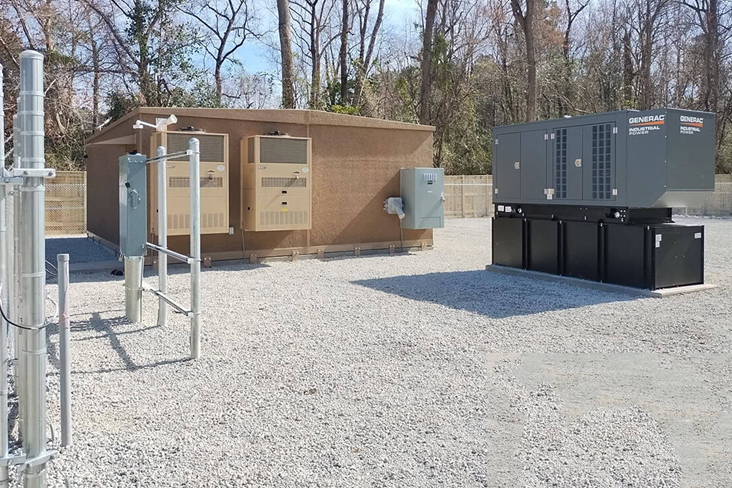
Long-haul fiber depends on unmanned shelters spaced every 80 to 100km and built to a 1970s pattern. The power and cooling inside them now limits how much traffic a route can carry. Zayo and Lumen are building them at record rates.
The Product Desk · Product desk
What happened
- In-line amplifier huts sit every 80 to 100km along long-haul fiber to keep optical signals strong, and their design has changed little since the first deployments in the 1970s.
- Zayo runs more than 1,300 of these sites across its 148,000-mile network and, its engineering SVP Aaron Werley said, deployed more of them in 2025 than in any other year, largely because of AI demand.
- In Europe, CityFibre has deployed more than 100 of its FEX fiber exchanges and GlobalConnect operates more than 100 amplifier sites across the Nordics and Northern Europe.
Compiled by The Product DeskSomething wrong?How this is made
Why it matters
- constraint Spacing is set by attenuation, so operators cannot consolidate amplifier sites to save power or cooling. A longer corridor means more sheds, each needing its own generator, UPS and air handling.
- exposure Inter-data-center traffic rests on unmanned roadside shelters whose failure takes long-haul city-to-city connectivity down with them. An AI campus interconnect depends on a diesel generator in a field.
- decision Diligence on a route moves from the two endpoints to the sites in between, and the figure a buyer needs is the per-rack power and cooling design at the weakest hut on the path.
- precedent Where an AI corridor runs through new territory, the interconnect schedule now includes land, utility connections and shelter construction, not just new amplifier shelves in an existing hut.
A typical amplifier shelter holds about 24 racks, and Data Center Dynamics puts the total draw for the networking gear inside one at less than 100kW [10]. Fill those 24 cabinets at the 12kW figure quoted for high-density hyperscaler deployments and the same shed needs 288kW [18]. The generator, the uninterruptible power supply and the air-cooled units in a concrete box beside a service road have to carry roughly three times the load.
Interconnect gets discussed at the endpoints: ports, wavelengths, cross-connects at each campus, but delivery is decided in between. At 80 to 100km spacing [3], a 900km route between two campuses runs through roughly nine to eleven amplifier sites [21], and each one needs rack space, A and B power, cooling, a generator and security monitoring [5].
Lumen built maybe ten of these a year before the current AI boom, according to Kye Prigg, its EVP and chief commercial operations officer, and had works underway at around 176 sites in 2025 [14][13]. That is about 17.6 times the earlier rate [19]. Zayo's SVP of engineering, Aaron Werley, said the company deployed more amplifier sites in 2025 than in any other year and expects the next few years to be "on par or above" that [12].
"They are crucial," said Patrik Gylesjo, head of tech and delivery at Nordic fiber firm GlobalConnect. "They have everything that a big data center has, but in a smaller format." [7][8] The huts themselves are containers, pre-cast concrete or other prefabricated boxes [5], and they are bought from specialist telecoms shelter makers including Thermo Bond, Sabre Industries and Module X Solutions as well as from conventional prefab data center suppliers [17].
The published numbers do not divide neatly. Zayo's 1,300-plus sites across a 148,000-mile network [11] work out at about 114 miles, or 183km, per site [20], wider than the 80 to 100km interval the amplification itself requires; the article does not explain the gap [22]. Anyone using a route-miles figure to estimate how many huts sit on a path will be low.
Nothing in the reporting shows a route capacity-limited by a hut today, and no cost is given for upgrading one. The case here is built on the design trajectory: from 600 to 800W per rack in early shelters to 2 to 4kW now, 5 to 6kW expected, and 12kW per cabinet at the high end [9]. That is a fifteen to twentyfold increase in per-rack power at sites whose basic form has not changed since the 1970s [2].
For a team buying capacity on a new corridor, the useful questions are about the middle of the route. How many amplifier sites does it cross. What per-rack power was each designed for. Does the air cooling hold at 12kW cabinets. And is the corridor an upgrade of an existing route, or the newer kind Prigg described, where the fiber has to be deployed from scratch [15]. An upgrade is an equipment swap inside a shed that already has power; the other case is land, a utility connection and a new building every 80 to 100km.
What to watch
- Zayo's 2026 amplifier site count against Werley's stated expectation for the next few years.
- Whether the 12kW-per-cabinet designs appear as retrofits at existing huts or only in new builds.
- Whether air-cooled units hold at 12kW cabinets, or liquid cooling arrives at roadside shelters.