Invest1 publisher2 min readPublished
APR's consumer beauty device moved up to 2.40 times more minoxidil into animal skin
APR says the radiofrequency microporation inside its Medicube Age-R Booster Pro X2 raised minoxidil deposition in animal skin, and it wants that delivery route to become a scalp and hair loss platform. The clinical work is still to come.
The Investor · Invest desk
What happened
- APR said on the 13th that its industry-academia research on scalp health and androgenic hair loss treatment using radiofrequency microporation has been published in the journal Pharmaceutics.
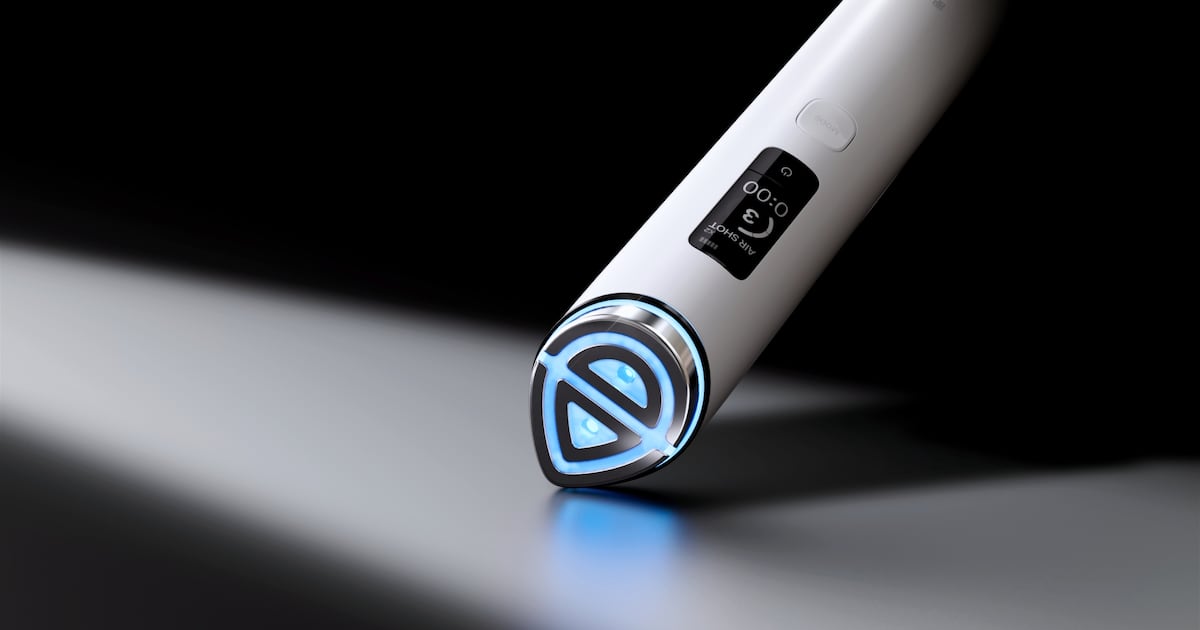
- Researchers tested the microporation used in the Air Shot mode of APR's Medicube Age-R Booster Pro X2 home device alongside topical minoxidil in animal models, measuring drug delivery and hair regeneration.
- Applying the microporation with minoxidil raised deposition in the epidermis and dermis by up to 2.40 times compared with minoxidil alone, according to the preclinical results.
- In animal models of androgenic hair loss, hair coverage, hair length and hair thickness all improved significantly.
- APR plans to build the technology into a platform spanning scalp environment management, hair health and hair loss treatment, and expects it to improve absorption of active ingredients beyond minoxidil.
Compiled by The InvestorSomething wrong?How this is made
Why it matters
- constraint The evidence stops at animal skin, so any treatment claim APR wants to make has to wait on clinical research the company says it will run but has not dated.
- decision APR now chooses between citing a free journal result in the marketing of devices it already sells and funding human trials whose cost it has not stated.
- capability If the temporary microchannels carry actives other than minoxidil, one verified delivery route would support several products on hardware already in customers' homes.
The delivery gain converts to 140 per cent more minoxidil in the epidermis and dermis than the drug applied on its own, the top of the reported range [14]. It was measured in animals [7]. APR says it will run further clinical research to verify the applicability, efficacy and safety of the technology in hair loss treatment [8]. The company did not give a start date or a cost for that work, or a size for the patient group it names [15].
The hardware side of this is paid for. The technology tested is a mode on a device APR already sells to consumers [3]. The clinical work still has to be funded.
An APR official said the paper "shows that we are continuously verifying the operating principles and efficacy of our own device technology scientifically, beyond simply developing products" [13].
The cheapest use of the paper is a citation in the marketing of devices already on shelves, now that the study sits in Pharmaceutics [2], and it requires no further outlay. The second is the platform APR describes for other scalp and hair actives [9]. That one needs the microchannels to work with more than one molecule [4]. The third is a delivery claim carried through human endpoints. That one costs trial money.
The patient logic is narrow and specific. Finasteride, the main ingredient in Propecia, is strictly restricted for women of childbearing age because of risks including birth defects in male fetuses [11]. For that reason minoxidil, applied directly to the scalp, is recommended as the main drug treatment for female pattern hair loss [12]. APR points at that group, and at patients who must rely mainly on topical treatments [10].
In my view the paper supports one narrow thing: more drug crossed animal skin, and hair grew in animals bred for androgenic loss [5][6]. The company APR describes on top of that is still a stated intention [1]. What would move it is a second publication with human deposition figures or human hair counts, funded with dates attached. If the follow-up is another animal study on another mode of another consumer device, the platform language is selling devices.
What to watch
- Whether APR's next publication reports deposition or hair counts in people rather than animal models.
- Whether APR attaches a start date and a budget to the clinical research it says it will run.
- Whether the platform claim appears first in device marketing copy or in work on actives other than minoxidil.