Build1 publisher3 min readPublished
Apple relocates image provenance from the edit chain to the iPhone sensor
Reference mode on the iPhone 18 Pro signs pixels as they leave the sensor and finishes the picture inside Private Cloud Compute, so anyone building a verification pipeline now has an Apple trust root to handle alongside C2PA.
The Engineer · Build desk
What happened
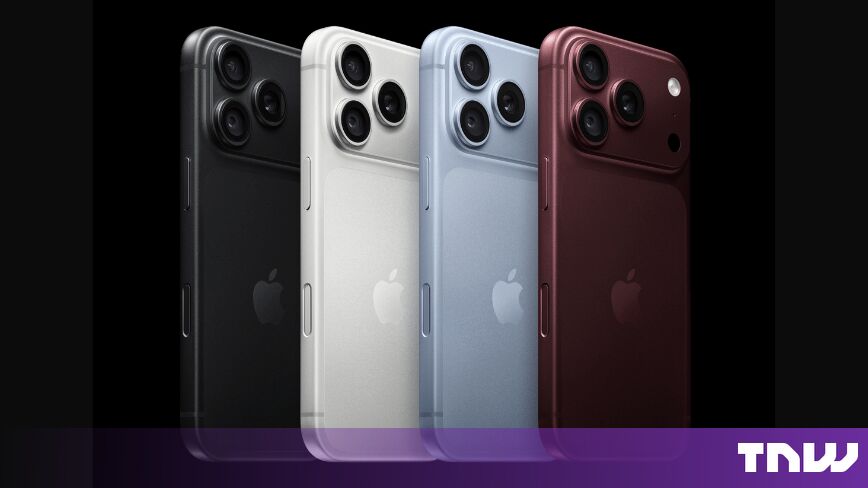
- Apple published the design of Apple Reference Image, an opt-in mode on the main sensor of the iPhone 18 Pro and iPhone 18 Pro Max that produces a timestamped photograph verifiable as a real sensor capture.
- In Reference mode the sensor secure-boots into a dedicated state and signs pixel data immediately after capture, while the Secure Enclave signs metadata that originates elsewhere, such as zoom and focal length.
- Apple's stated objection to C2PA is that the standard attaches provenance after capture, leaving the chain open to compromise before signing, and that it can tie an image to a public identity.
- Third-party apps can view reference images through APIs in iOS, iPadOS and macOS 27, and Apple has not described a verifier for other platforms or the web.
Compiled by The EngineerSomething wrong?How this is made
Why it matters
- constraint Checking a reference image becomes a platform dependency: a claims desk or newsroom that is not running Apple software has no published route to do it, so verification either moves onto Apple devices or waits for someone to reverse the format.
- decision Anyone maintaining a media-integrity pipeline has to decide whether to accept a second root whose images have no device credential, or to keep treating C2PA manifests as the only provenance the pipeline understands.
- exposure The privacy property rests on Apple's servers behaving: PCC sees the device certificate chain and substitutes Apple's signature, so unlinkability is an operational promise about PCC nodes.
- precedent A signature that verifies today can be withdrawn later, for one photograph or for every photograph a given sensor has produced. That makes provenance a status downstream archives must re-check.
Revocation decides whether this can sit in a production pipeline. Before signing, Private Cloud Compute computes a confidence score for whether the image has the physical characteristics of raw sensor output, using what Apple describes as a neural network with hidden weights, and a companion service keeps a running score for each sensor [11]. Apple published the development code for inspection, but not the model that informs revocation [12].
The checkable half is the chain. PCC verifies the signatures back to factory certificate authorities and confirms that the sensor and the Secure Enclave belong to the same device, then performs demosaicing, tone mapping and JPEG compression [7]. Builds are recorded in a transparency log with binaries available for inspection [8]. The output carries a composite ML-DSA-87 and RSA-3072 signature, which Apple describes as the only quantum-secure image provenance scheme [9].
For a team that already emits C2PA manifests, this is a second root with different semantics [1]. C2PA can tie an image to a public identity, which Apple names as one of its objections to the standard [3]. A reference image has no photographer or device credential, and Apple's signing service signs it, so an observer cannot tell whether two images came from the same device [14].
Two signed RFC 3161 timestamps bound the capture. One is collected over the push notification heartbeat before the shutter and one is requested after, with both requests routed through Oblivious HTTP [5]. The negative is stored in DNG [6].
The sharpest objection in the public discussion was about what the sensor is pointed at, and the split was less about the cryptography than about what the scheme proves [15]. Commenter tristanj described the route: "Photoshop / AI-gen an image -> display on a high-resolution monitor -> photograph the monitor with iPhone 18 Pro -> valid Apple Reference image." [16] HALtheWise countered that a 48-megapixel sensor makes that harder than it sounds, since a monitor without several times as many pixels would likely leave detectable moire patterns, and suggested this is presumably what the hidden-weights confidence score is for [17]. For that defense to transfer to your threat model, two things have to be true: the display has to under-resolve the sensor, and the classifier has to catch the cases where it does not. The classifier is the half you take on trust [12].
A second thread went at the anonymity guarantee. There, commenter microtonal pointed out that PCC briefly holds both the device's original certificate chain and Apple's replacement signature [18], and said: "So in the end it all depends on how much you trust Apple's cloud and PCC nodes." [19] In the same discussion, lxgr asked why Apple did not use Direct Anonymous Attestation, which provides similar privacy properties without a centralized server [20].
On Hacker News, commenter dwaite disagreed that identity verification was a good fit: "This tech would just indicate that they got authentic pixels capturing a potentially fake license." [21] He added that identity verification is moving to digital credentials such as mobile driving licenses and eIDAS 2, and that the system does not support video or protect against man-in-the-middle attacks [22]. Commenter tgsovlerkhgsel called journalism the PR story, argued the real demand lies in insurance claims and identity verification, and noted that people will verify images by looking at a reposted screenshot of the verification UI instead of checking the original [23]. On Reddit, b_a_t_m_4_n noted that almost all websites transcode uploaded images to save storage [24]. turtleship_2006 replied that in cases where it matters, such as a court case or an important news article, the original would be used or linked [25].
What to watch
- Whether Apple documents the reference image format well enough for a third party to build a web or Android verifier.
- Whether Apple publishes criteria, or any appeal path, for a photograph revoked by the confidence score after publication.
- Whether Reference mode extends beyond the main sensor of the two Pro models, and whether it ever covers video.