Product1 publisher3 min readPublished
Googlebook is Google's Android-based replacement for ChromeOS, and the public record so far amounts to one demoed pointer feature, two spotted apps and leaked laptops. That is not enough to scope a fleet migration.
The Product Desk · Product desk

Compiled by The Product DeskSomething wrong?How this is made
The person who has to answer for this is whoever signs next year's Chromebook order. A platform replacement is a scoping exercise before it is anything else: which devices carry over, which admin policies map across, which web apps break, and when support on the old thing stops.
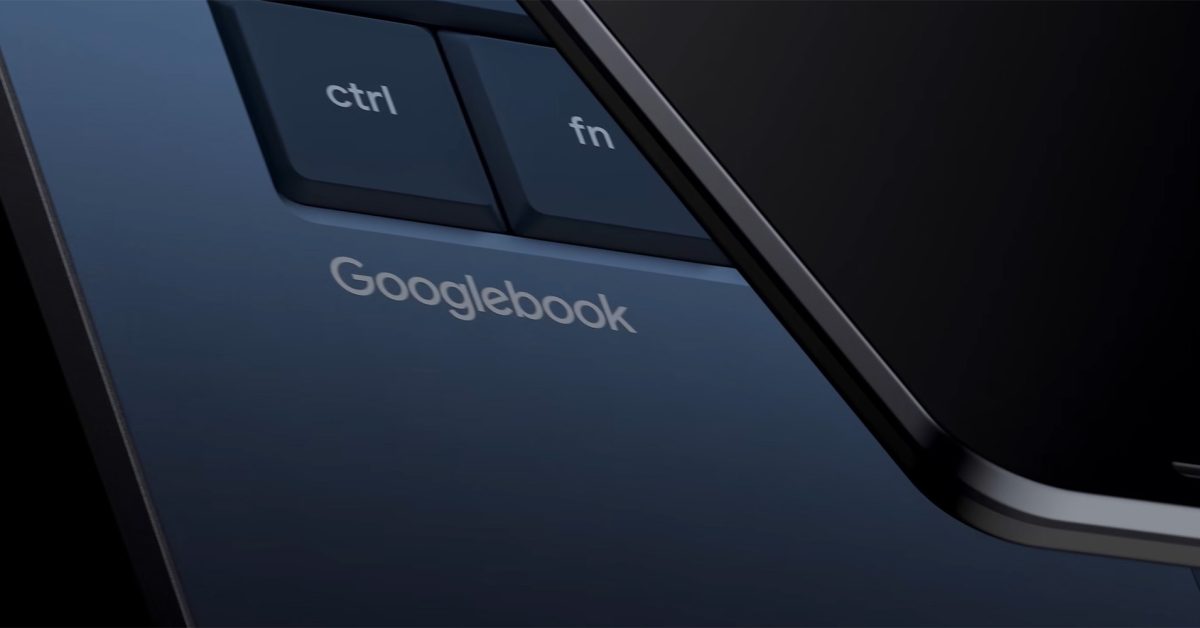
Google's Android-based desktop platform has been public since earlier this year, and according to 9to5Google the single new platform feature Google itself has shown off is called Magic Pointer [1][2]. Two more apps have been spotted rather than demonstrated, a Desktop Camera app and an AI-powered "Look up" that pulls definitions and flight tracking out of text you point it at [3]. Look up also runs on some Android phones [4], so it is not evidence of anything the desktop platform does that a phone does not already do.
The demo count: three named apps in public, one of them shown by Google, which leaves two that arrived by app sighting [13]. On the hardware side, Asus and Lenovo laptops have surfaced in leaks, plus an Acer machine teased at IFA in Berlin [5], so three PC makers are attached to a platform with one demonstrated feature [14]. The most concrete theory of what it is for in the public record belongs to 9to5Google's Damien, who suggested in June that the pitch might centre on AI-aided vibe coding [16].
Google is not short of things to announce. It shipped Gemini 3.8 Flash about three weeks after its previous model [6], and it pushed through a $50 increase on the Google TV Streamer plus price rises across nearly every Nest camera and doorbell, pinned on rising component costs [7][8].
The uncomfortable part for anyone who bought ChromeOS on the numbers rather than the features: the old pitch was stable, usable software on low-cost hardware, with later generations adding AI and more capable machines [9]. 9to5Google reads Googlebook as aiming at premium hardware instead, and cites rising RAM costs as further damage to any cost-based story [10][17]. In the same week, Lenovo's IdeaPad Vibe and the Dell 14S were announced as direct answers to Apple's budget-conscious MacBook Neo [11]. If that read holds, the replacement is walking away from the reason fleets bought the original.
What the available account does not contain is a migration path, a management story, or a date after which ChromeOS devices stop getting what they get today [12]. That absence leaves the migration unscopable, a step beyond simply unknown. A project whose first published capability is a cursor behaviour cannot be costed or scheduled.
So the workable rule until Google publishes more: leave Googlebook off the roadmap entirely, and price ChromeOS hardware on a depreciation schedule you would still accept if support ended a year earlier than the current promise. That costs money now, because you are assuming a shorter life than the machines may deliver, and it buys out the risk of an unbudgeted rip-and-replace. Nobody has published the support end date, the number that actually decides this budget, not the feature list.
Ranked by verification strength, evidence, and original report placement.
Googlebook debuted earlier this year as Google's Android-based desktop platform that will replace ChromeOS, according to 9to5Google.
"Magic Pointer" is the one new feature Google has actually shown off from the Googlebook platform, according to 9to5Google.
Other early Googlebook apps that have shown up include a "Desktop Camera" app and "Look up," an AI-powered experience that lets users interact with text to find information such as definitions and flight tracking.
Leaks have shown the first Googlebook laptops from Asus and Lenovo, and Acer was spotted teasing its Googlebook at IFA in Berlin.
Google released Gemini 3.8 Flash roughly three weeks after its previous model release.
Follow any of these and your For You feed starts watching them — no settings page required.
Evidence-backed comparisons of source perspectives and observed adoption signals. Read the methodology
Which Builder, Operator, and Investor concerns the observed source mix emphasized—not a truth score.
Evidence, demonstrated adoption, hype gap, incentives, and confidence are assessed independently, each on its own current evidence. How these are measured.
One outlet, no Google briefing
Every Googlebook fact we have traces to a single 9to5Google weekend column, and that column's own author says he still cannot tell what the platform is for. The checkable items are secondhand: leaked Asus and Lenovo machines, an Acer booth tease, three app names, one demoed pointer feature. Google contributes nothing here, not a spec, not a price, not even a date, so there is no primary document to hold the reporting against.
Hardware attached, nothing shipped
No Googlebook exists in anyone's hands. What can be counted is intent: three PC makers attached to unreleased laptops, one of them only as a show-floor tease. The genuinely measured adoption in this reporting belongs to neighbouring products — Gemini 3.8 Flash arriving three weeks behind the last model, and price rises on the TV Streamer and most of Nest.
Billing ahead of the record
The overstatement is Google's, not this publisher's. Calling a platform the successor to ChromeOS is a large claim to carry on one pointer feature and a laptop teased behind glass. 9to5Google discounts rather than inflates it, so the gap stays modest; the piece's own weak spot runs the other way, since it labels Googlebook hardware premium and prices it out of the market without a single disclosed configuration to work from.
Google-beat site selling its own newsletter
9to5Google's business is covering Google for people who buy Google products, and this particular piece is the Weekender, which opens by advertising the subscription it is part of and closes by cross-linking 9to5Mac and Electrek. The commercial pull is toward covering every IFA announcement fast rather than waiting for a briefing. It pulls the other way on the judgement, though: a site whose audience arrives for Google news gains little from souring on a Google launch, which is a point in the column's favour.
Thin but internally consistent
The direction of this story is reliable: an Android desktop platform is coming, and OEMs are building for it, though Google itself has said almost nothing about what it actually does. Confidence stops there. With one publisher, no Google statement and no independent check on the leaks, the specifics that would matter to a buyer or an administrator, such as configurations, prices, and a ChromeOS support cutoff, cannot be pinned down at all.
product
Google's Googlebook merges Android and ChromeOS at last, with the Gemini terms still blank1 publisher
product
Lenovo caps its 16-inch Spark laptop at half the memory of the 15-inch Pro1 publisher
invest
Amazon stopped eating the memory bill, and the Echo Dot went up 60%1 publisher
product
Dell debuts new lower-end 14S starting at 8GB, but withholds pricing until fall1 publisher
Publishers with included, body-backed reporting in this cluster.
1 article · September 6, 2026