Product1 publisher2 min readPublished
Ramirez moves to terminate the border towers, citing 1,100 deaths in range
The Department of Homeland Security does not track deaths near its surveillance towers or any other measure of whether they work, so the count MIT Technology Review published is the number a Homeland Security Committee member is now quoting.
The Product Desk · Product desk
What happened
- Delia Ramirez, a Democratic representative from Illinois who sits on the House Homeland Security Committee, announced plans to introduce legislation terminating the surveillance tower program on the southern border.
- The announcement followed MIT Technology Review's "Dying on Camera" investigation, which found nearly one in four deaths it analyzed between 2015 and early 2026 fell within the towers' advertised range.
- The same investigation reported that the Department of Homeland Security does not keep track of those deaths, or of any other metric on the towers' success or failure.
- The bill, the Reimagining Safety Act, is meant to sit inside a broader proposal to replace DHS with a Department of Community Safety and move CISA, FEMA, TSA and customs functions to other agencies.
Compiled by The Product DeskSomething wrong?How this is made
Why it matters
- constraint Any defence of the towers has to be argued against a dataset assembled outside the government, because the department that runs them has no outcome figures of its own to put beside it.
- precedent The sentence that put a termination bill on the table was about whether the hardware detects anyone. Outcome audits become a standard line of attack on surveillance procurement.
- decision Program owners buying detection systems now have to decide in advance who logs the misses, since somebody will eventually count them and publish the number first.
- contradiction Ramirez's own framing mixes the performance case with limits on state surveillance and data abuse, so the bill's fate will not be a clean test of whether efficacy findings kill programs.
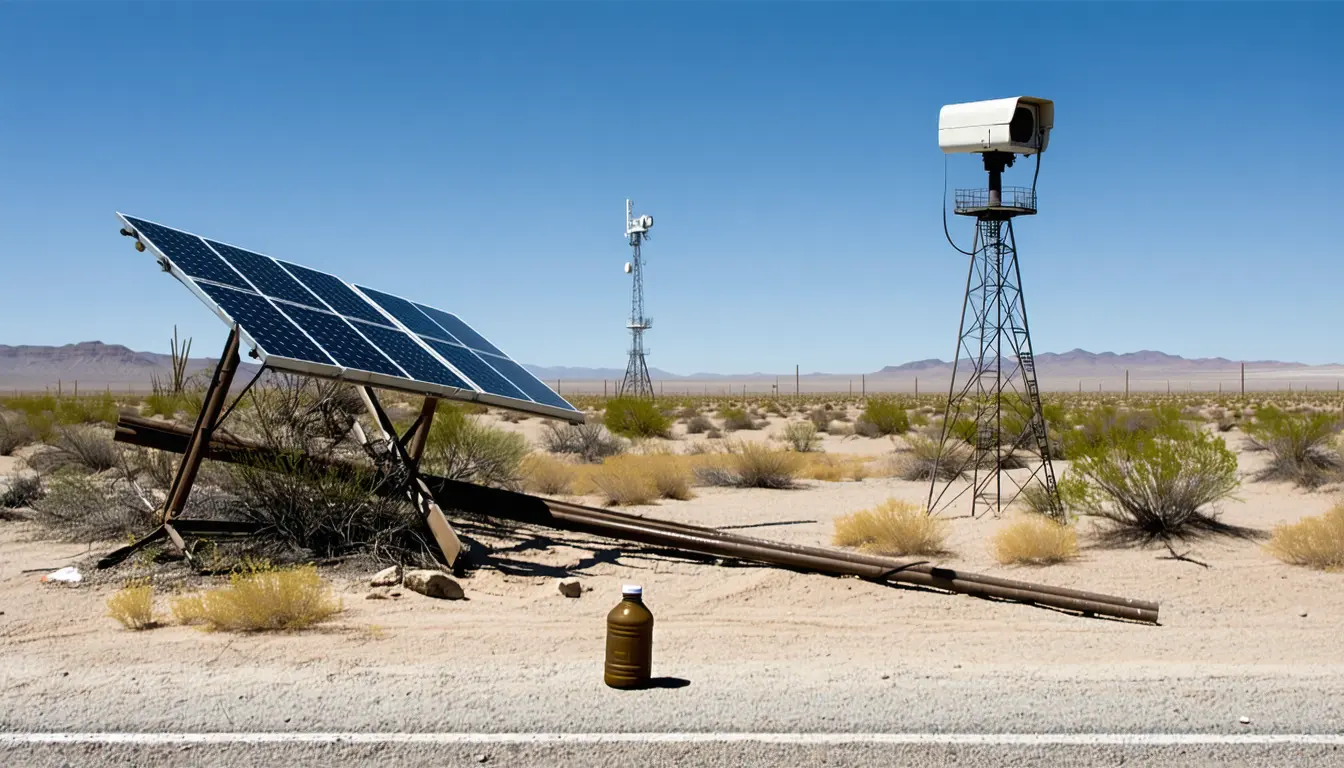
More than a thousand people moved through areas watched by these towers without being caught, and died there, MIT Technology Review reported [16]. The system was sold on the opposite outcome: the government promised the virtual wall would help detect and apprehend border crossers and save lives [17].
Ramirez cited the publication's finding that nearly "1,100 people have died within range of a billion-dollar surveillance tower system between 2015 and 2026" [6]. Against the near-quarter share the investigation reported for deaths inside advertised range [3], that puts the analyzed set at roughly 4,400 deaths, or 1,100 divided by one in four [18]. "The towers that we have paid a billion dollars to just don't work," Ramirez said [7].
DHS keeps no outcome figures on the towers [4], so an outside dataset is the only performance review a committee has to work from. DHS and CBP did not offer an immediate response for comment [15].
Ramirez leads with the performance finding. The bill around it is broader than performance. The Reimagining Safety Act was developed in consultation with community groups and local and state representatives [8], and two advocacy organizations, Just Futures Law and Mijente, helped shape the call to end the tower program after a joint report earlier this year on the technology ICE uses [9]. "We're limiting state surveillance, we're reigning unlawful abuses of data and curbing the militarized enforcement. We're beginning the process of establishing a separate civil immigration system," Ramirez said [13].
At a press conference in Chicago on Wednesday she said, "There's no question that DHS has to be dismantled. We need to provide them a road map in how we do it" [14]. Bills to dismantle the department have been introduced before and did not go very far, and even some Democrats favor reforming it instead [12]. The efficacy finding has moved a termination bill onto a committee agenda without yet ending a program.
For anyone running a deployed detection system, the towers separate two jobs that usually sit with the same team. One is the spec: what the system claims to detect, and at what range. The other is the log: who writes down what happened inside that range on the occasions nothing was detected. Hold the first without the second and the claim cannot be tested from inside, so the first credible outside dataset becomes the program's record. Ramirez's office says the text of the bill will come in the next few weeks [11].
What to watch
- Whether the released text defunds a named tower contract or budget line, or only the program in general.
- Whether DHS or CBP publish any detection or apprehension figures for the towers in answer to the death count.
- Whether any committee Democrat who prefers reforming DHS signs on, given that earlier dismantlement bills stalled.