Product1 publisher2 min readPublished
AEVEX wins $92.2M to fly hypersonic test telemetry aboard converted Global Hawks
The three-year award covers airborne telemetry, payload integration and range networking for SkyRange, the program that instruments hypersonic tests from former RQ-4s because fixed ground stations see too little of the flight.
The Product Desk · Product desk
What happened
- AEVEX Corp. has landed a potential $92.2 million contract supporting the US military's SkyRange hypersonic test program.
- The award runs three years and brings the company into flight operations across Western US and Pacific test corridors.
- Its engineers will handle airborne telemetry, communications, payload integration and distributed range systems for the program.
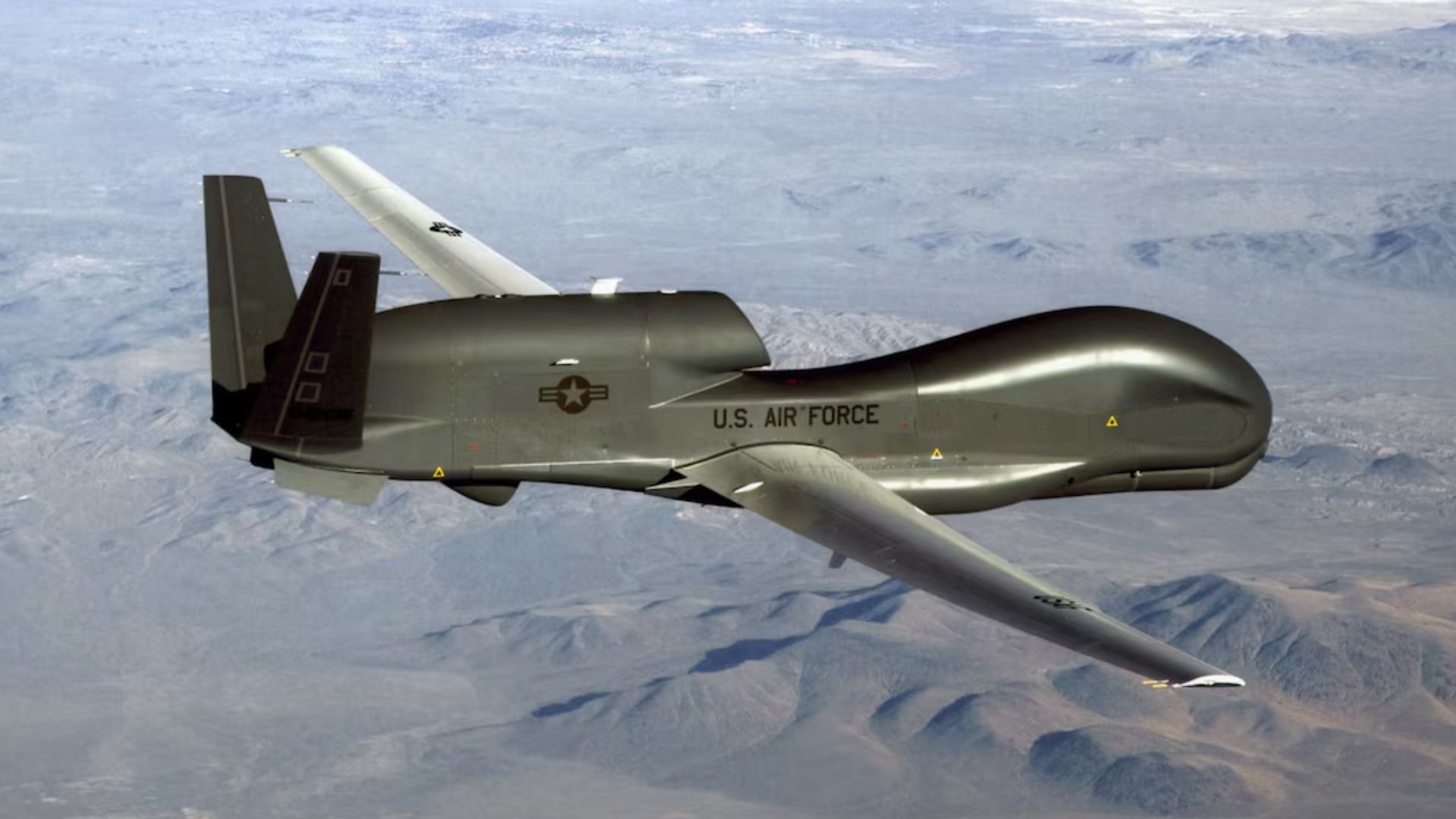
- SkyRange flies its instrumentation on unmanned aircraft called Range Hawks, including converted RQ-4 Global Hawks carrying sensors built to track hypersonic vehicles in flight.
- A hypersonic vehicle can cross large distances in minutes, so fixed ground stations collect only a limited amount of useful data.
Compiled by The Product DeskSomething wrong?How this is made
Why it matters
- constraint Instrumentation that flies can be grounded, so a test window now depends on aircraft readiness as well as on the vehicle under test.
- capability Range planners can set the sensor geometry for each mission by flying upward-looking sensors toward the trajectory they expect, instead of accepting the coverage the fixed sites happen to give.
- decision One supplier now holds telemetry relay, resilient communications, distributed range networking, mission data and payload integration together, so the government's data path through a test rests on a single integrator for three years.
- precedent With aircraft rated easier to reposition than instrumented ships, long-corridor test plans get written around a flight schedule that someone has to keep.
The person this award is for is the range planner with one shot at a window. In hypersonic testing those windows can be difficult to repeat [13], and telemetry is what gives engineers the measurements taken during the flight so they can examine vehicle performance and reconstruct the event afterwards [16].
SkyRange's answer is to stop keeping the critical tracking equipment at fixed sites and carry most of it aboard aircraft [4]. TRMC set the program up to expand the infrastructure available for hypersonic flight testing [11]. Former RQ-4 Global Hawks have the size and endurance to haul specialised range equipment, and engineers can fit them with upward-looking sensors designed to observe a vehicle during flight [12].
AEVEX supports those aircraft with engineering, systems integration, flight operations, communications and mission-data work [15]. "Rapid hypersonic development depends on scalable airborne infrastructure," said Mike Jackson, AEVEX senior vice president for Global Solutions [9]. Jackson also cited resilient telemetry architecture and rapid collection of operational test data as important requirements [10].
Scalable airborne infrastructure is the pitch. The job is having a relay path up, calibrated and inside coverage on the day of the test.
Divide $92.2 million by three years and the ceiling comes to about $30.7 million a year [14]. Hold that against whatever the program returns, remembering that the figure is a potential value and that the announcement did not say how many Range Hawks are in the fleet, or how much has been obligated so far [17].
If you are making the same call at a smaller scale, sort it on two axes: whether the instrument can be moved to where the event will be, and whether it is available on the day. A ground station scores well on availability and badly on placement. A flown sensor is the reverse, and it can be grounded by maintenance, weather or crew. What shows the trade paid off is data returned per window and how quickly a repeat run gets scheduled. The stated reason for preferring aircraft to instrumented ships is that aircraft can reposition more easily between missions and across different testing areas [7].
What to watch
- First-year obligations against the $92.2 million ceiling, which would indicate whether the Range Hawk fleet is growing or holding at its current size.
- Any published count of Range Hawks and their availability rate across a test campaign.
- Whether Pacific corridor tests get aircraft based forward or ferried from the Western US.